it / en
it / en

Venini

The story of the world's most famous glass factory
The Venini glass factory represents one of the greatest examples of excellence in the history of artistic glass, capable of uniting the tradition of Murano craftsmanship with a continuous search for innovation in both form and technique.
 
Its history is linked with that of the most important exponents of the art and design world of the 20th century, including Carlo Scarpa and his son Tobia, along with Gio Ponti, Ettore Sottsass, Tapio Wirkkala and Timo Serpaneva. These collaborations contributed to making this Murano factory a leading player in the Italian and international art scene.
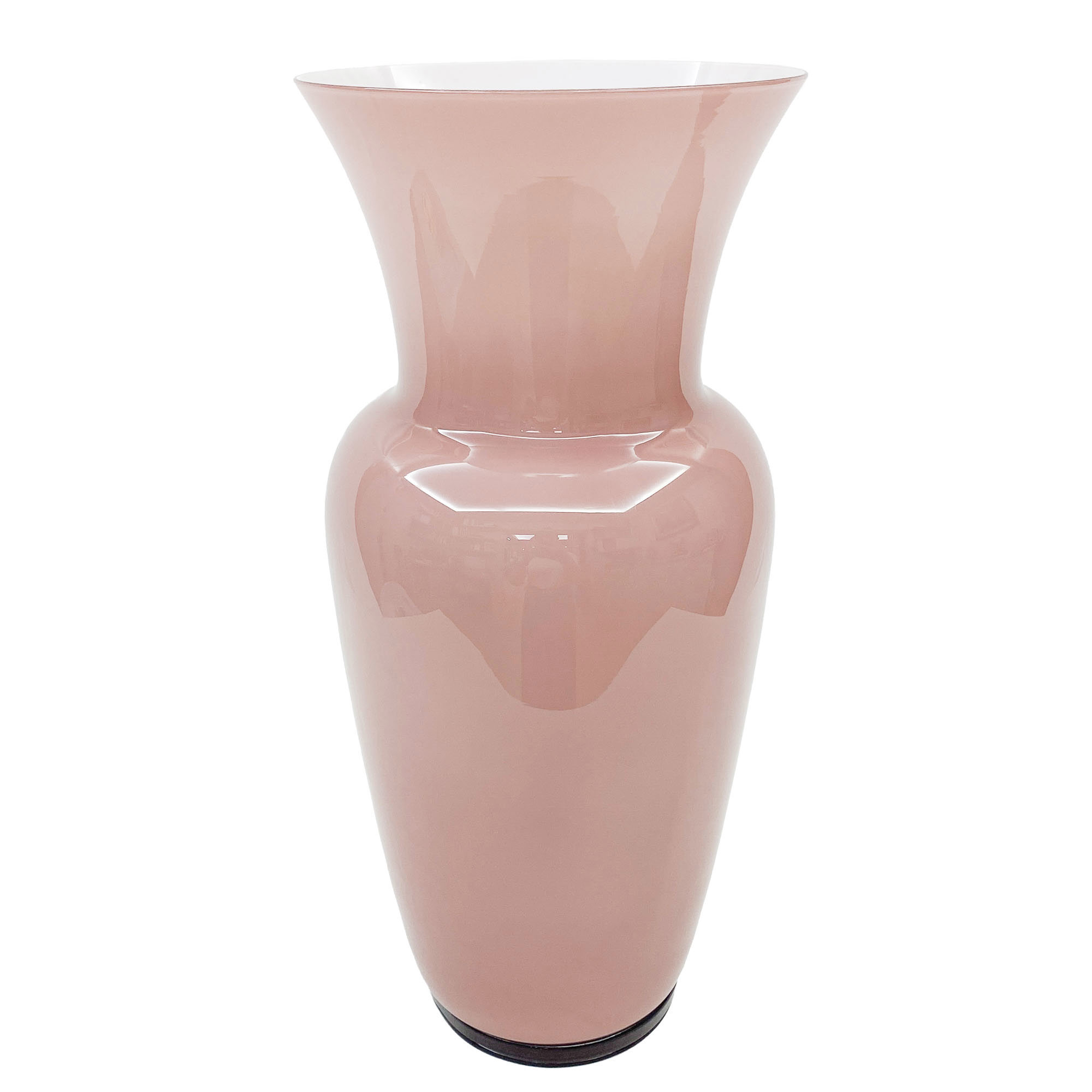
Opalino vase
1950s
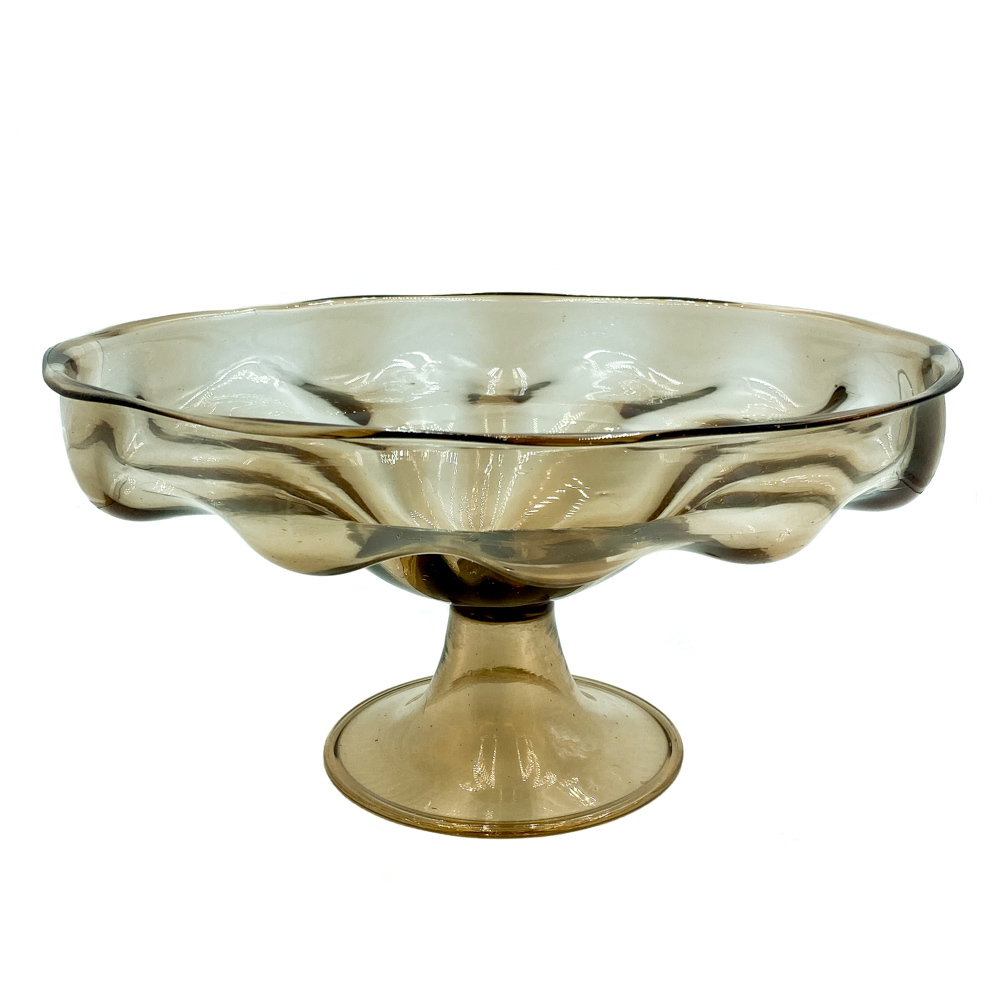
Glass stand by V. Zecchin
MVM Cappellin
1920s
The roots of the manufacture date back to 1921, when Paolo Venini, a young and courageous lawyer from Milan, decided to embark on this entrepreneurial adventure together with the well-known Venetian antiquarian, Giacomo Cappellin. The two founded “Vetri Soffiati Murano Cappellin Venini & Co.,” a company where Cappellin's aesthetic sense and passion for art were combined with Venini's entrepreneurial vision and enthusiasm.
 
The two were soon joined by Vittorio Zecchin, an already well-known Murano artist whose linear and refined style helped give the glassworks' production a distinctive character, distant from the heavy decorations typical of the time. The objects produced by V.S.M. were inspired by the forms of the Renaissance, a very fertile era for Murano whose essentiality and lightness matched well with contemporary taste. The chandeliers, vases and glasses executed by Zecchin, in fact, seemed completely modern and up-to-date in the eyes of the public, who was used to the sharp, taut lines of Art Déco.
However, in 1925 the collaboration between Cappellin and Venini came to a stormy end due to disagreements, and while the former founded the “Maestri Vetrai Muranesi Cappellin & Co.” in which Vittorio Zecchin immediately went to work, Paolo Venini, determined to pursue his project, gave birth to the new company that bore his name: “Vetri Soffiati Muranesi Venini & Co.”
 
After four years of experience with glass, Paolo began his solo career having acquired such knowledge that he fully understood the material with which he was working, so much so that several times he personally designed and created beautiful works. Moreover, empowered by his metropolitan background, he decided that his factory would combine Murano's craftsmanship with contemporary artistic sensibility, reaching out to the best-known artists, designers and architects. In this way, Paolo Venini laid the foundation for what would become one of the most celebrated glass companies in the world.
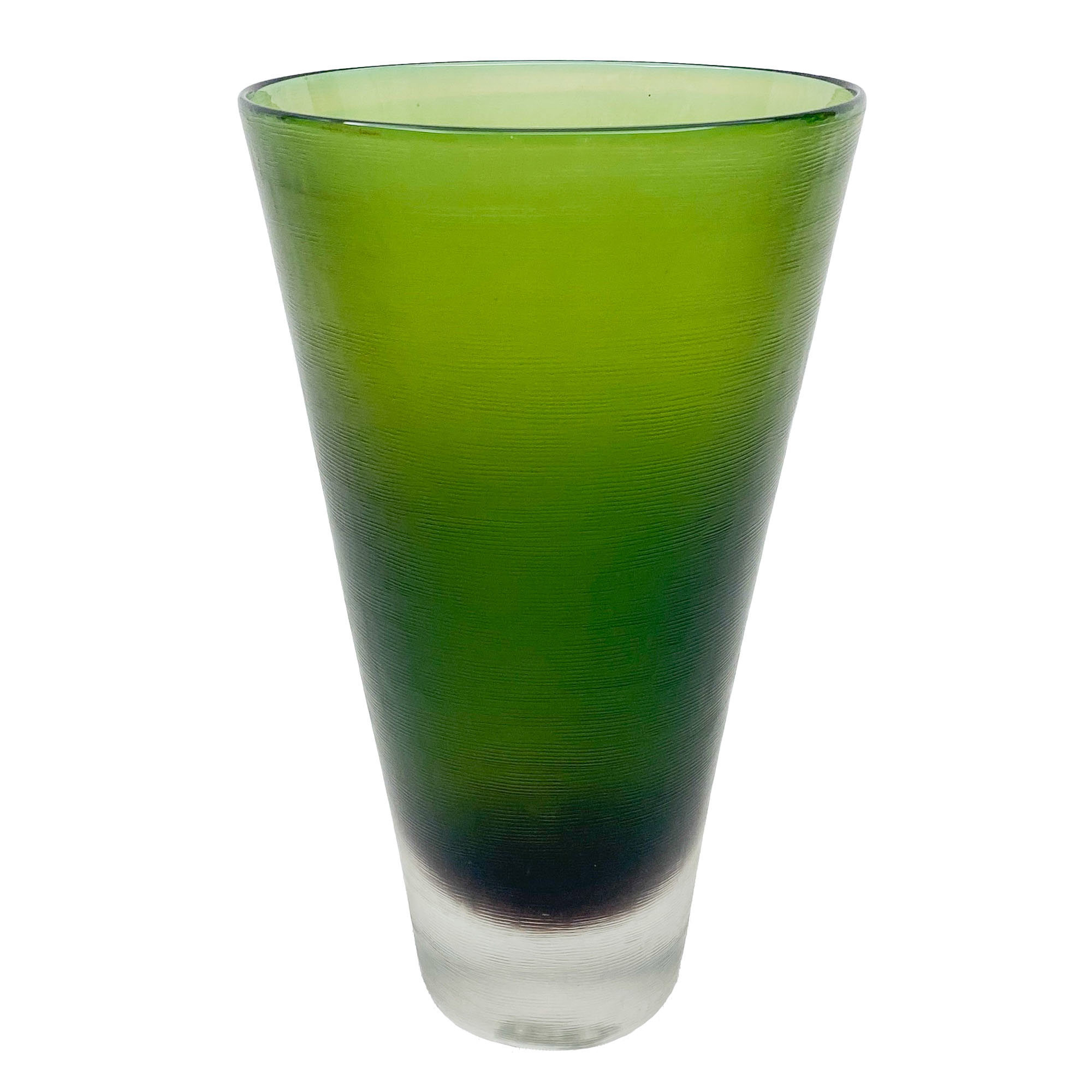
Incisi vase
P. Venini
1956
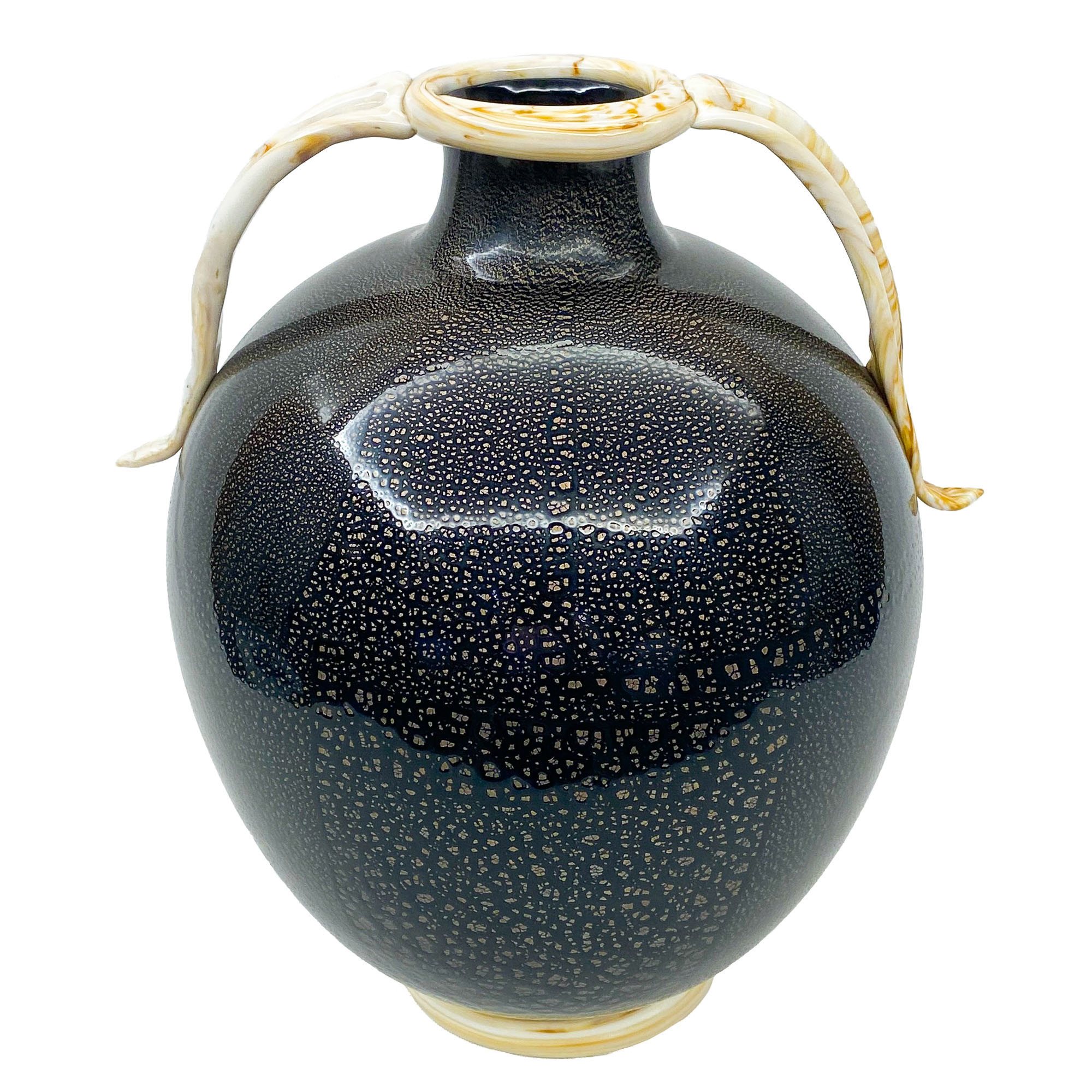
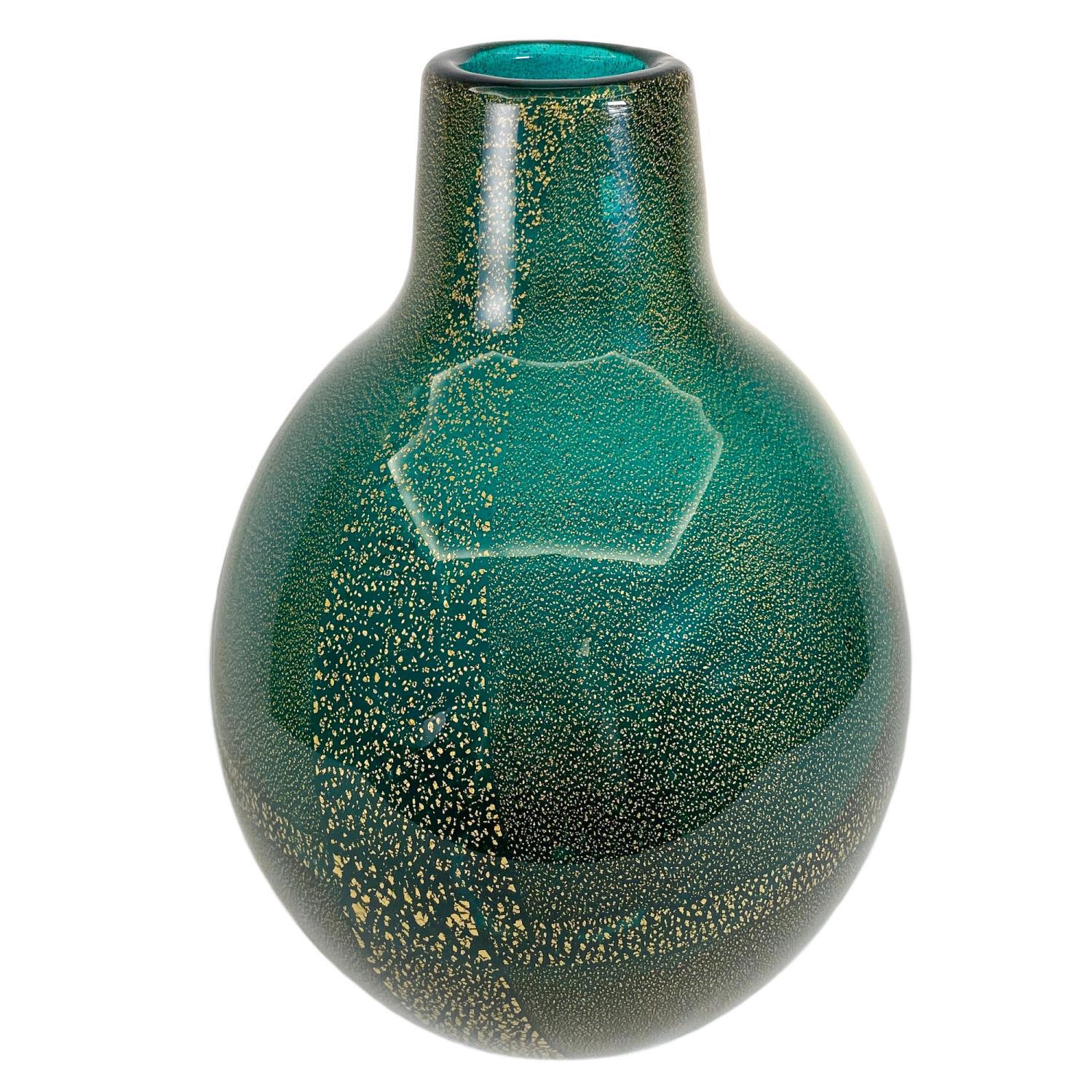
Aurati anphor
C. Scarpa
1930s
Venini's first artistic director was Napoleone Martinuzzi, an artist and sculptor who was born right in Murano and was also extremely involved in the artistic scene of the time, bringing with him a new experimental vision that helped radically transform glass design. Following him was Tomaso Buzzi, a very talented Milanese architect and designer, who collaborated with Venini for only a couple of years, but left a strong mark, helping to consolidate the company's reputation among collectors and art connoisseurs.


Central to Venini's history was the figure of Carlo Scarpa, whose work marked one of the most innovative and experimental periods for the company. From 1934 to 1947 Scarpa was Venini's artistic director, and during these 13 years he transformed the language of glassmaking, leading Venini to be recognized as one of Murano's most innovative forges. His research rather than on forms, which he often took from the classical repertoire, focused on materials and techniques, which he loved to rework in a modern key.
Up until this time Murano glass had always stood out as the only one in the world to be worked exclusively hot, but with the close and trusting collaboration between Carlo Scarpa and Paolo Venini this axiom broke and cold working techniques began to be used as well, expanding the possibilities of expression of this material.
 
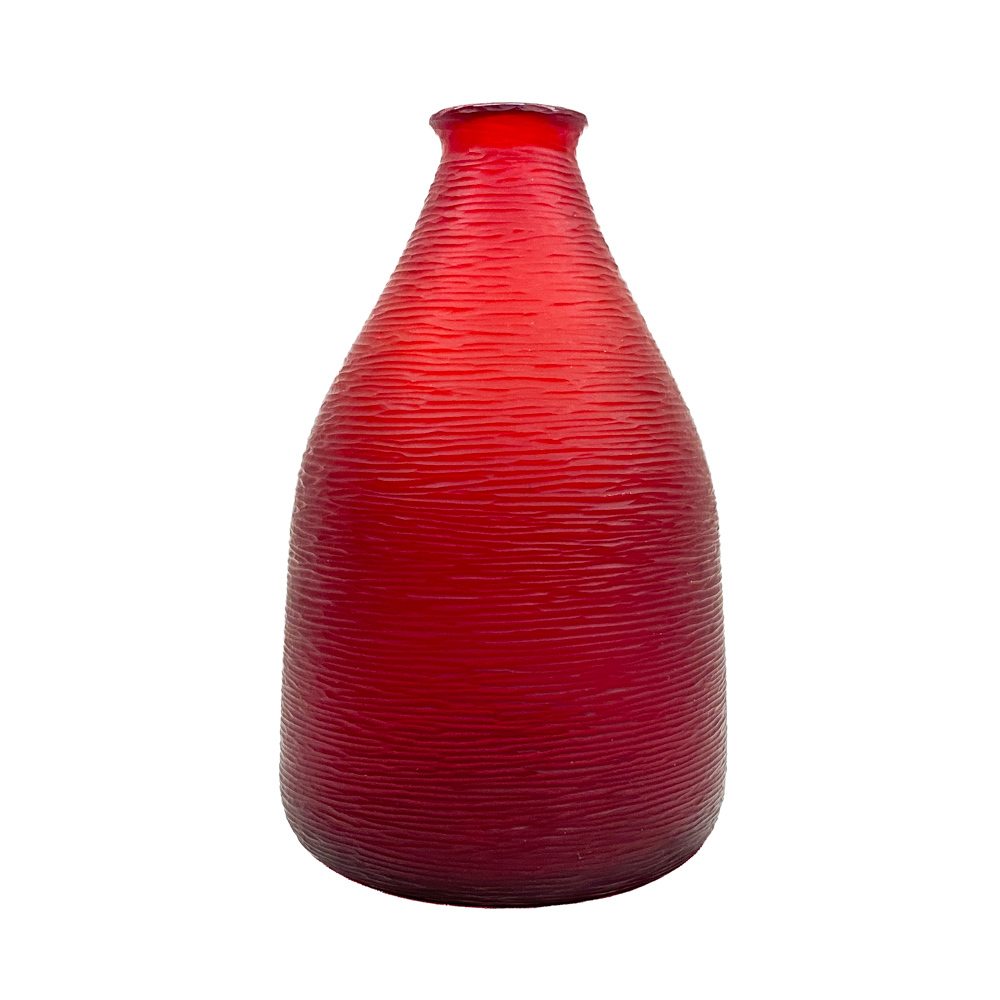
Thus was born, for example, “battuti” glass in which a grinding wheel is used to create small, repeated etchings on the surface of the glass object so as to create an irregular, satin-finished texture, which allows one to play with light in a completely new way, creating changing and unpredictable reflections depending on the angle.
Battuti vase
C. Scarpa
1940s
 
 
Another technique with which he experimented was that of “corrosi" glass, obtained by immersing objects in acids that made the surface opaque and irregular, making them look as if they had been ruined by time and natural elements. Scarpa saw glass not only as a transparent and shiny material, but as a living surface, capable of absorbing and returning light in unprecedented ways. His creations for Venini reflect an almost philosophical search for the meaning of the material, a constant tension between form and its essence.
Sommerso a bollicine vase
C. Scarpa
2005
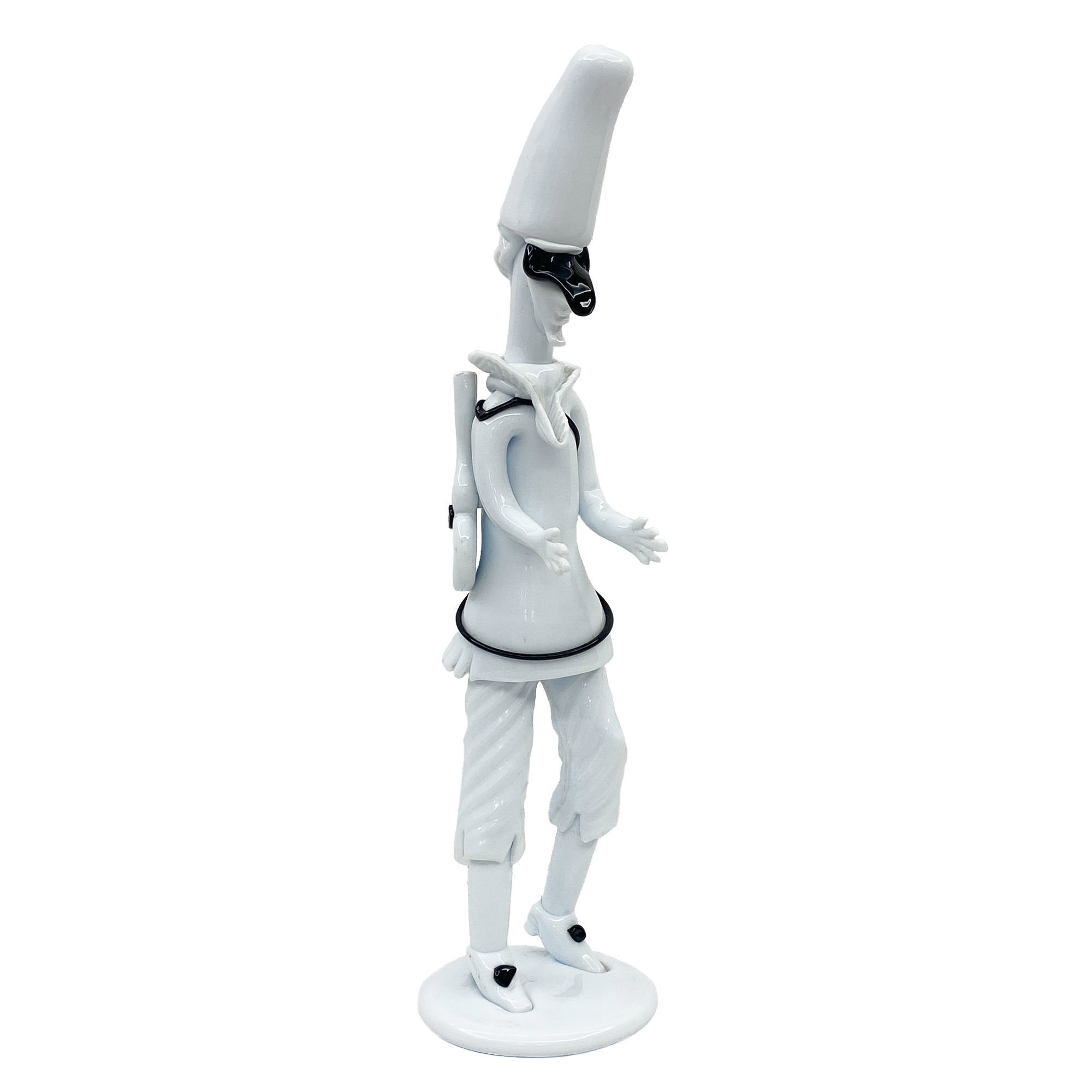
Pulcinella con chitarra
F. Bianconi
1950s
In 1947, after the dark period of World War II, during which the glass factory was closed for a full two years, the artistic direction passed to Fulvio Bianconi, a graphic designer and illustrator who arrived in Murano brimming with new ideas, shapes and colors. His creations represented a break from the stricter aesthetics of his predecessors, proposing a more playful and experimental vision of glass. One of the most famous and beloved contributions was the “Tiepolo” series consisting of lattimo glass figurines with small black glass trim, which Bianconi designed inspired by the Pulcinella figures in Giandomenico Tiepolo's frescoes. Characterized by soft, supple lines, they fully display the artist's extraordinary ability to translate the movement and vitality of Baroque painting into three-dimensional forms.
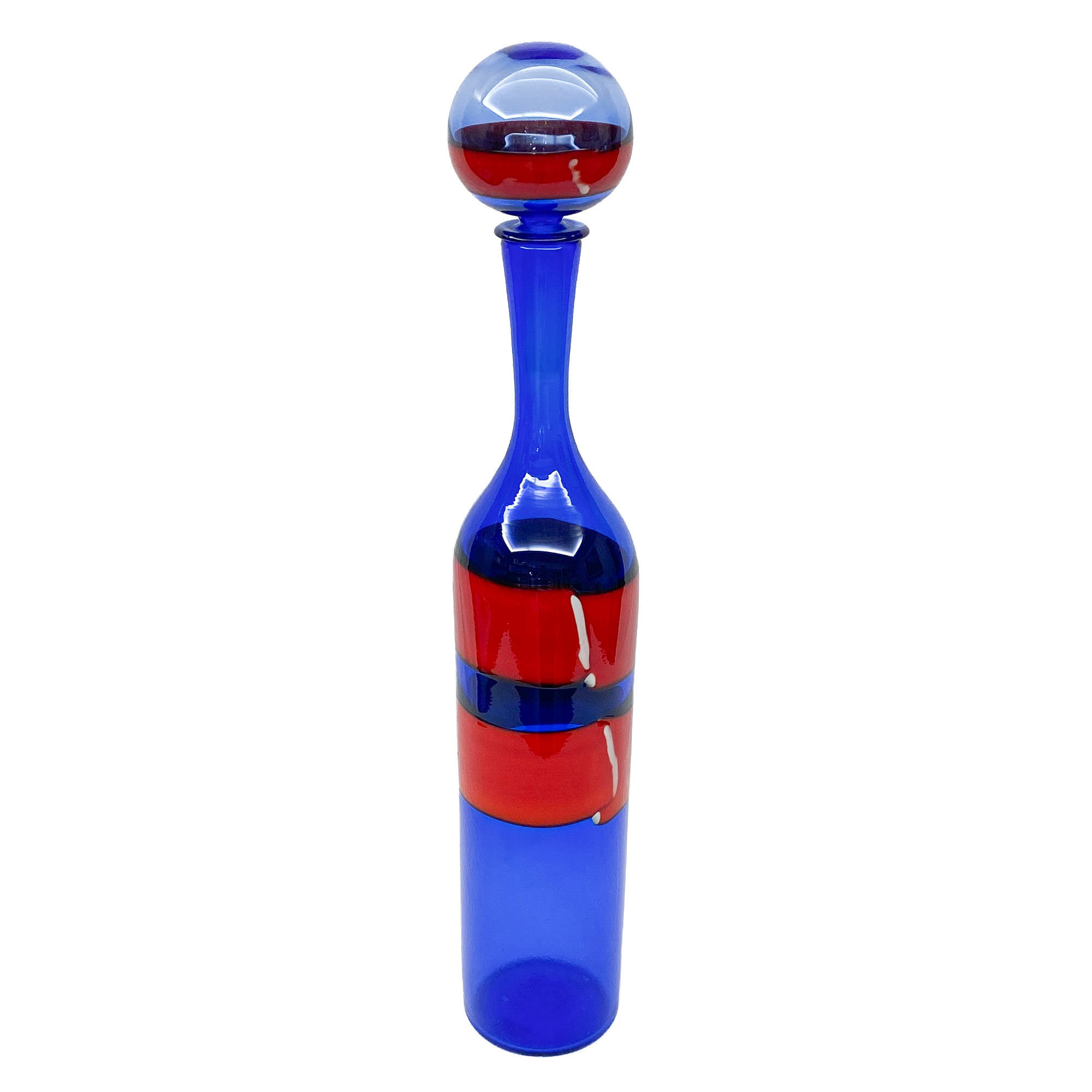
Another passion of Bianconi's were the bands, which soon became among the most iconic motifs of his production for Venini. They represent a deep study of color and movement applied to the material of glass. In this case objects such as
vases and bottles are characterized by broad horizontal bands of color that wrap around the shapes, creating a visual rhythm that captivates the eye. Bright and contrasting colors play with each other in a harmonious balance and define all objects.
A fasce orizzontali bottle
F. Bianconi
1950s
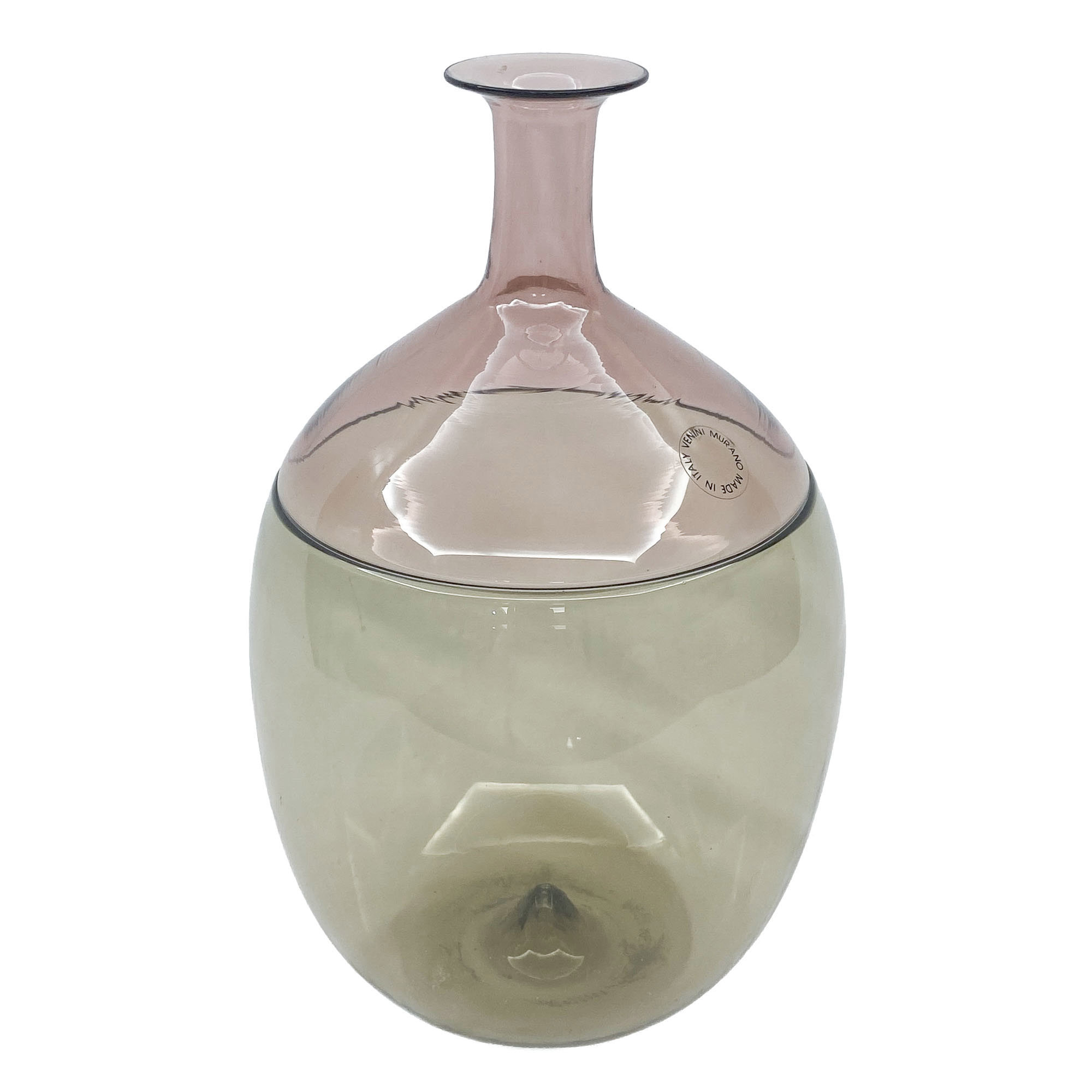
In 1959, Paolo's death marked a major turning point for the company, which remained in the hands of his wife Ginette Gignous and son-in-law Ludovico Diaz de Santillana, who had the burden of replacing what had become one of Murano's greatest masters. Continuing with the approach given by Paolo and keeping his innovative spirit alive, Venini continued its collaborations with international artists. In particular, in the 1960s and 1970s the Finnish designer Tapio Wirkkala joined the company, bringing an essential and minimalist Scandinavian vision that proved revolutionary for the Murano glassworks. His works for Venini, such as the “Bolle” vases are characterized by transparent and delicate surfaces, where Wirkkala fuses his sensitivity to nature and organic materials with the tradition of blown glass.
Bottiglia Bolle
T. Wirkkala per B.M.W.
Anni '60
Chiacchiera vase
Toots
1984
In the second half of the 20th century, Venini glassworks also became famous in the United States of America, where people had long preferred crystal glass. Evidence of this new and close relationship between the U.S. and Murano was the collaboration with various artists such as Toots and Thomas Stearns. The latter, a young American designer, moved away from traditional Murano techniques to explore new forms of expression. His work, well exemplified in the “Nebbia di luna” series, combined opaque and transparent colors in unprecedented and highly experimental ways.
In 1986, the Venini family decided to sell the company, marking the beginning of a new phase for the brand. However, if nowadays Venini has become synonymous with Murano glass throughout the world, the credit is largely due to the vision and inexhaustible passion of Paolo Venini, a man who was not only an entrepreneur but also a pioneer capable of envisioning the future of glass. After his passing, his family continued his work with determination, maintaining high the quality of their production and the prestige of the brand Venini. Their commitment allowed the company to evolve without ever losing the identity that Paolo had built: Venini is a perfect blend of art, design and Murano tradition.


Centerpiece
2000

Watch the video e see up close all the beautiful Venini vases.

Become a Passionario

Chat with us