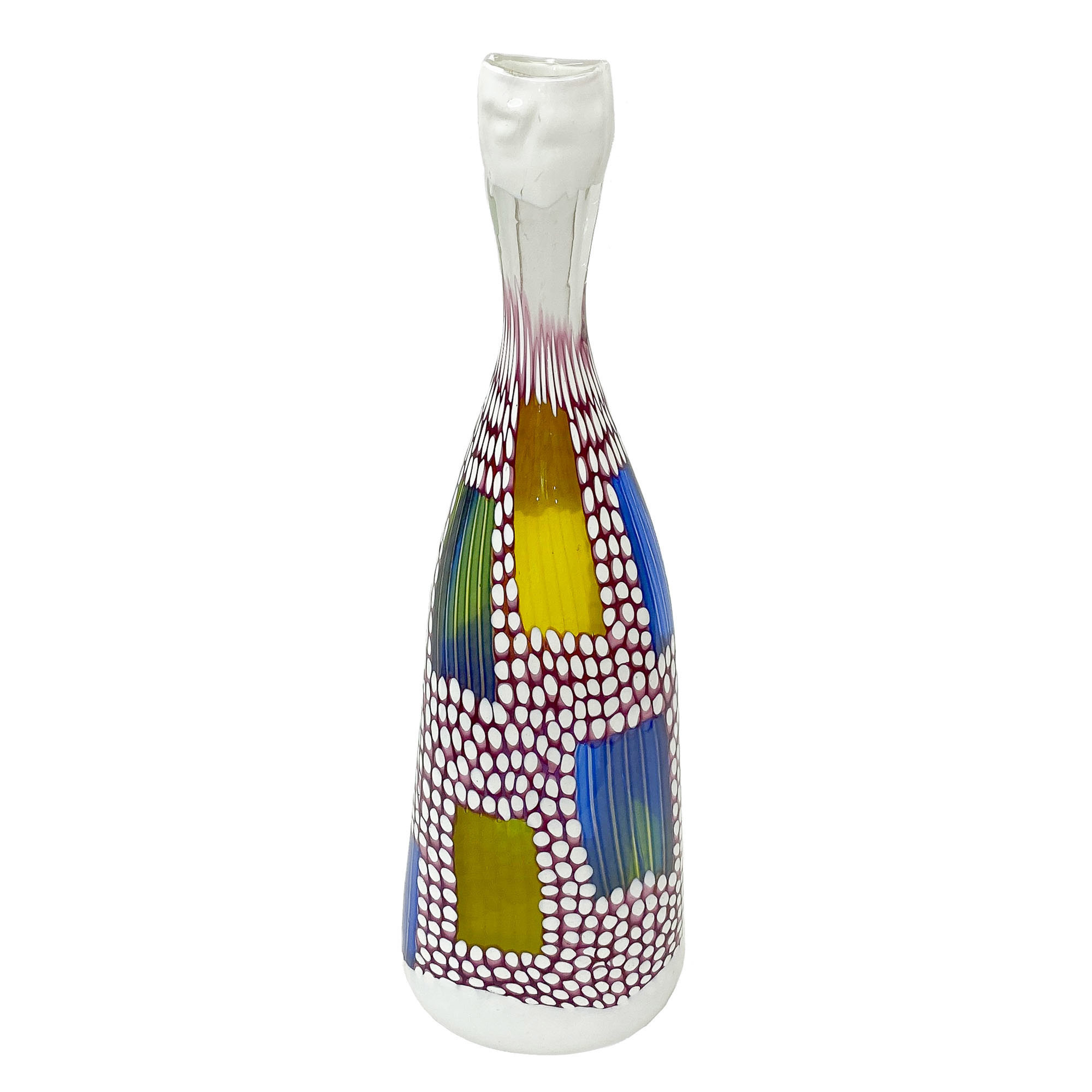
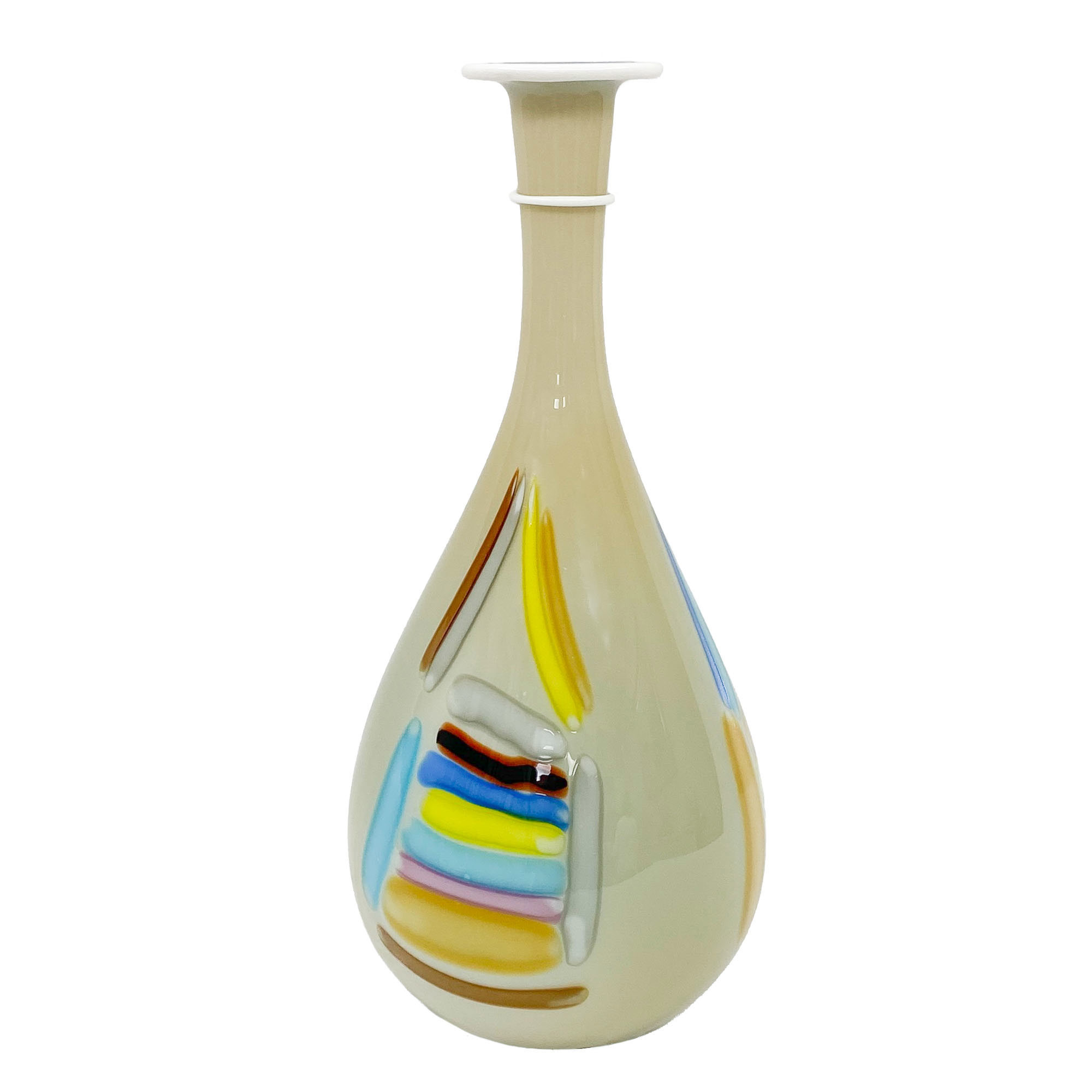
Between the Fifties and the Sixties, a further development takes place, characterized by an increasing openness toward a more contemporary conception of glass. Within this context, the figure of Anzolo Fuga stands out, already a leading presence in the field of glass art and active at the Venice Biennales. His contribution to A.Ve.M. introduces a language that definitively overcomes the distinction between decorative object and artistic research.
In his works, surfaces are never subordinate to form, but become the primary site of composition. Through the use of murrine, polychrome glass pastes and bold chromatic juxtapositions, glass is structured as a dynamic visual fabric, marked by rhythms, contrasts and depth.