it / en
it / en

Writing an Icon

The fascinating Russian art
The icons' world is truly extraordinary, but icons are, as is often the case in art, either liked or hated ... we love them!
 
When speaking about icons, Russian art automatically comes to mind, and it is in fact in this country that they have mostly been used as the prominent mean to show with images what the scriptures have revealed; to express in a sensitive manner the inexpressible.  However, icons were not first developed in the country that later made them famous. In fact, they originated in the Eastern Roman Empire. At least until the year 726, when Emperor Leo III promoted an iconoclastic campaign, which was also supported by many theologians. According to them, the cult of icons was a form of idolatry. Some monks, fleeing Byzantium, brought icons to Russia to save them from the devastating fury of the iconoclasts. For two centuries, icons had time to consolidate, but they were not the symbol of Russian culture yet.
Our Lady of Sinners
19th century
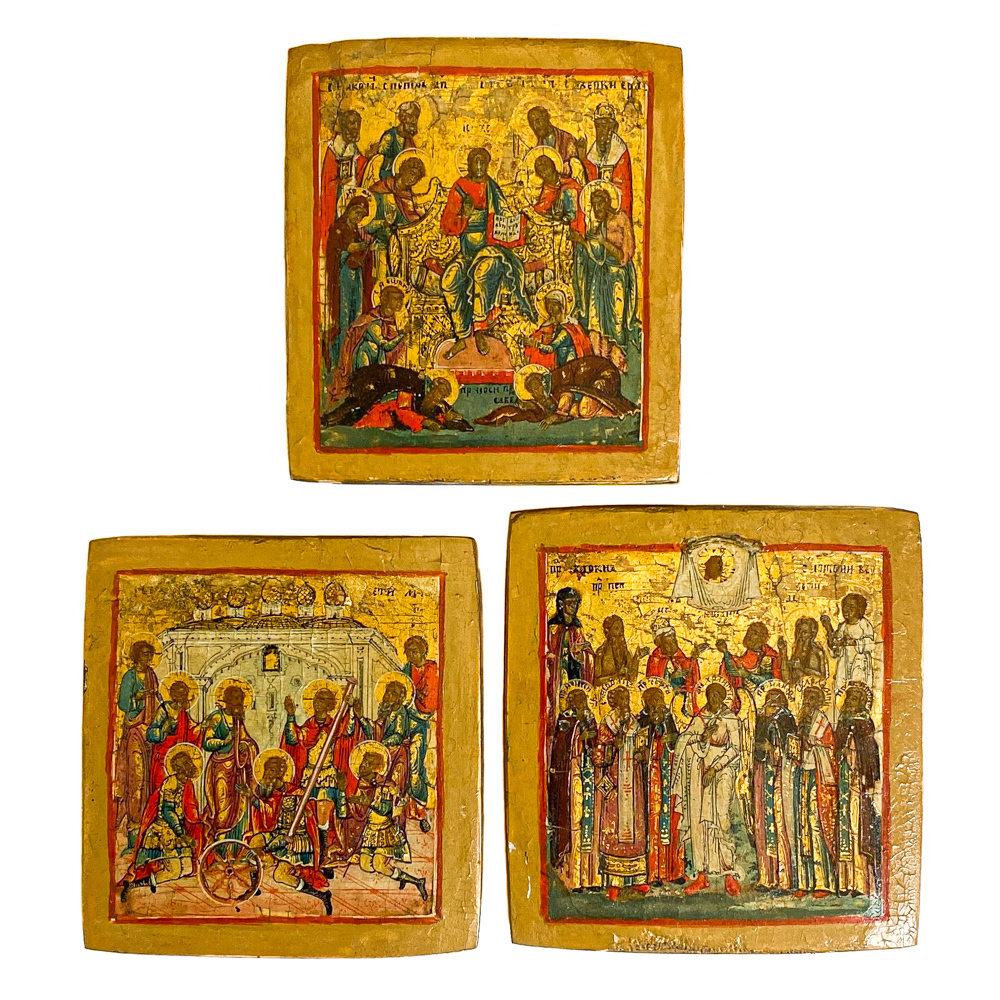
Travel triptych
19th century
At the end of the 10th century, the prince of the Kievan state, Vladimir, and his wife sent commissioners around all the territories of their kingdom to understand which cults and ways of expressing religiosity were present. They wanted to choose a common faith for their many subjects. Fascinated by its magnificence and beauty, the two rulers chose the Orthodox cult. Prince Vladimir converted and was baptised in the river Dnerp, and openly confessed his need to venerate icons. Churches were adorned with icons, which quickly became very important to the devotees. Indeed, they were conceived as a way to unite with Christ, a gateway to the Celestial Kingdom.
 
In Russia, icons were not only worshipped in churches, but were placed on city gates, carried at the head of armies on battlefields or in processions through streets and fields to prevent from dangers or to beg for the grace of an abundant harvests. But above all, they were kept in homes, where the family's protective icons were exposed. To these, people addressed their most intimate prayers. It is these panels, smaller in , that have mostly arrived to us.
WHAT IS AN ICON?
 
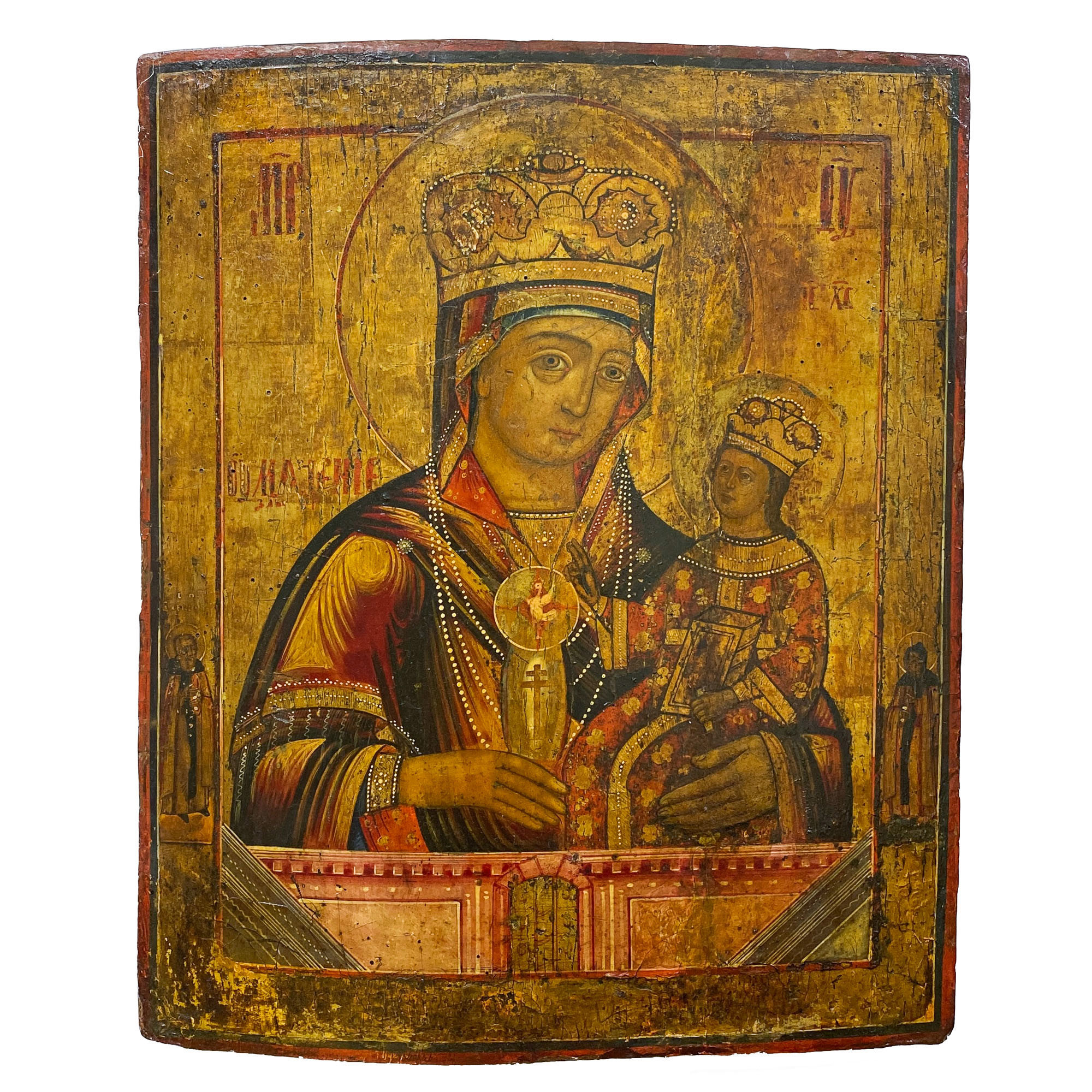
The term icon comes from the Greek 'Eicon' , meaning image, in the sense of representation. However, icons were not created as works of art, but as devotional objects: they were a prayer. For this reason, the name of the author is rarely inscribed. Usually they were made by monks who created them as a humble offering to God and as a gift of charity for the world. Using the correct Russian terminology, icons are said to be 'written' by isographers in order to honor the memory of tradition. The verb 'to write' is also used because in the past, in order to be considered valid religious documents, icons had to contain some inscriptions, which were often in Old Slavonic.
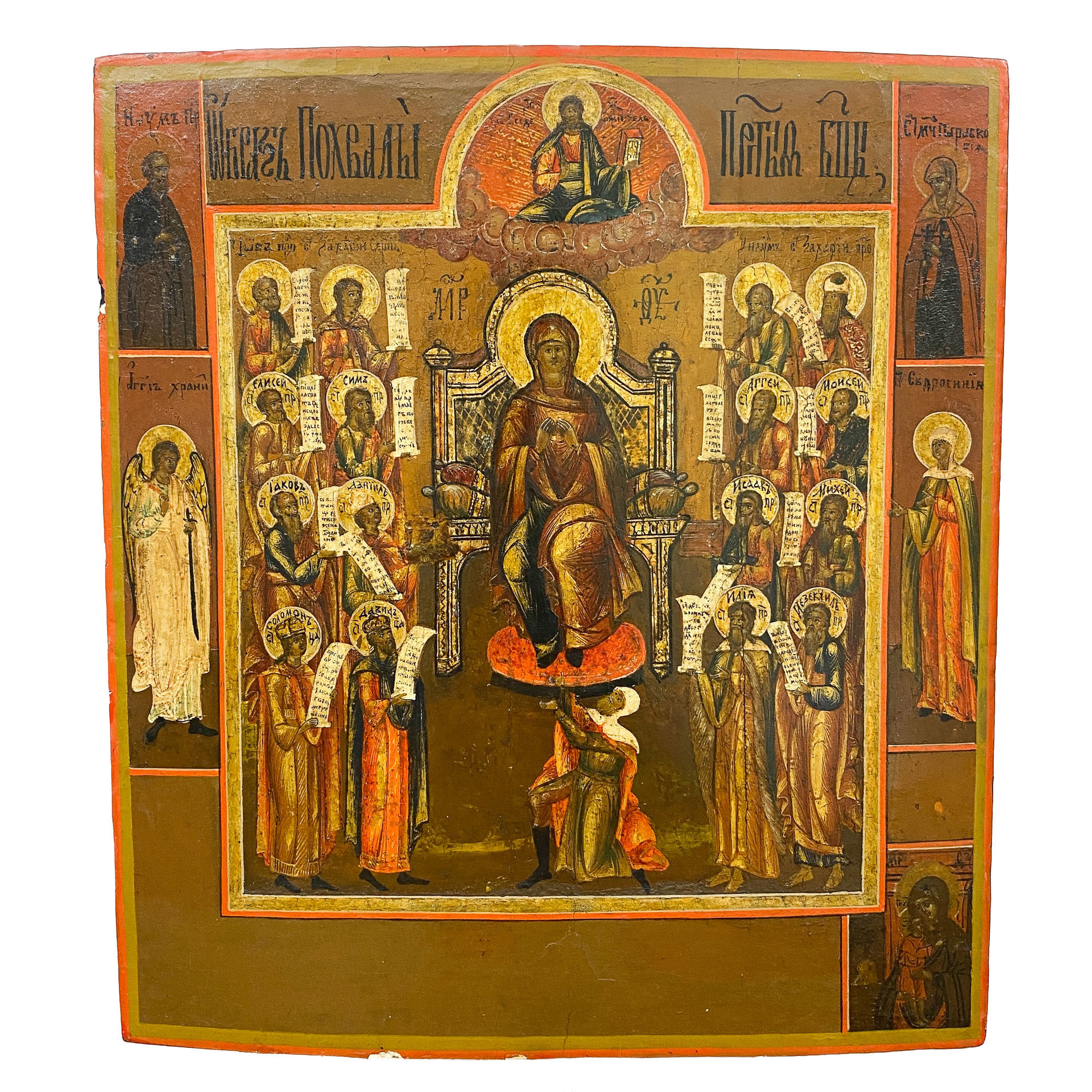
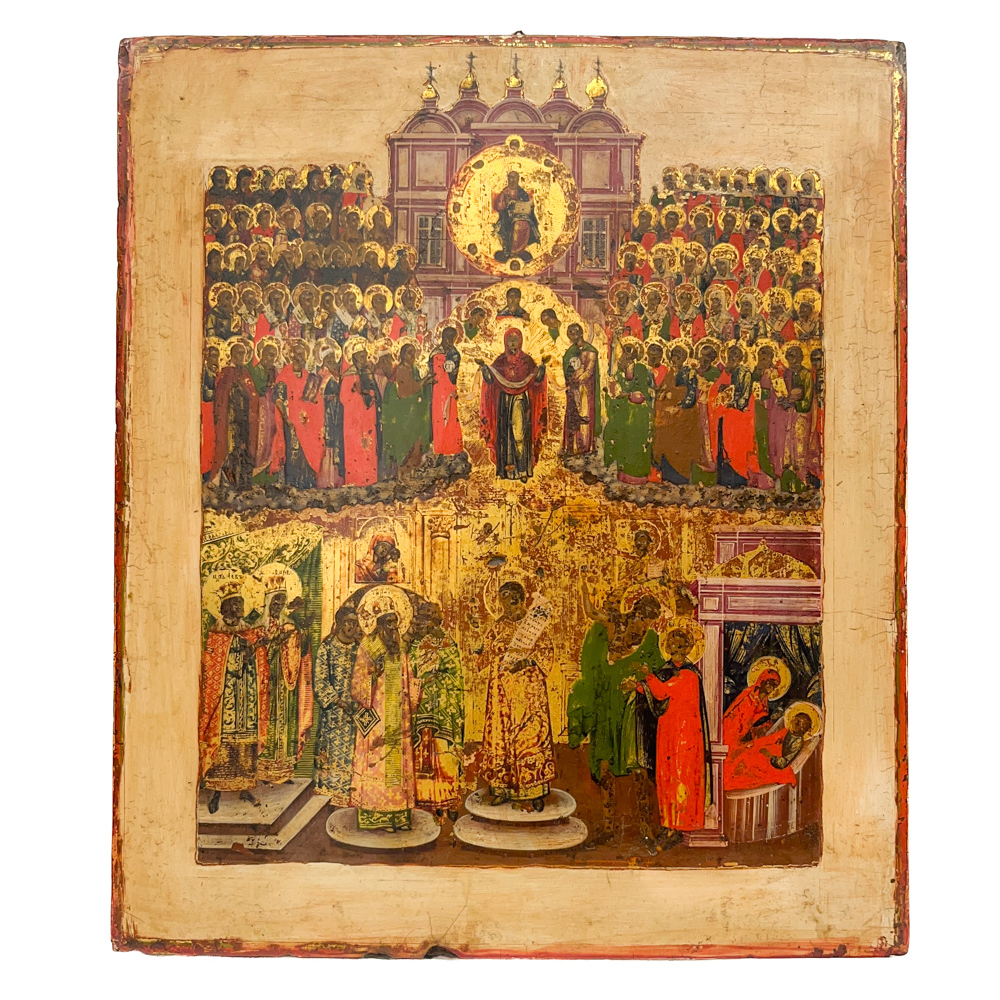
Glorification of Our Lady
18th century
The concept of beauty in Russian culture has always been highly semantic, carrying with it the great weight of meaning. The stylization used by isographers is not to be considered trivial or outdated. This technique was used to overcome an overly personal, sensitive and subjective expressiveness in favor of greater universality. In icons, concrete space, natural light and the random element of the ephemeral disappear. The law of perspective used in these works differs from that of the Renaissance; in fact, 'reversed perspective' is used in icons, where the lines do not converge towards the eye of the beholder, but open up, leading to infinity.
 
When reading an icon, it is essential to abandon the schemes associated with Western representation, based on the concepts of verisimilitude, and to observe these suggestive works with a different gaze. Do not stop only at the two-dimensionality and rigidity of the characters, but grasp the symbolic richness and pure message of these fascinating works.
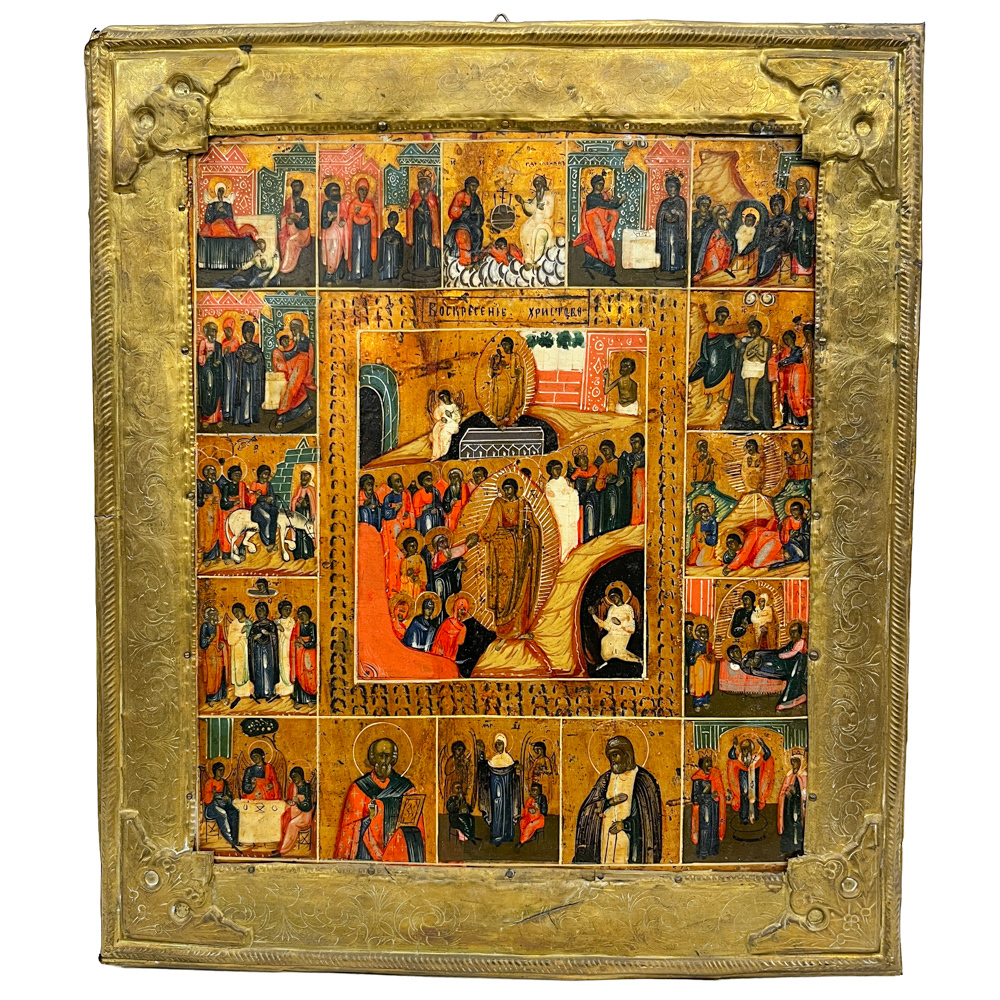
Resurrection of Christ and Sexteen festivities
19th century
 
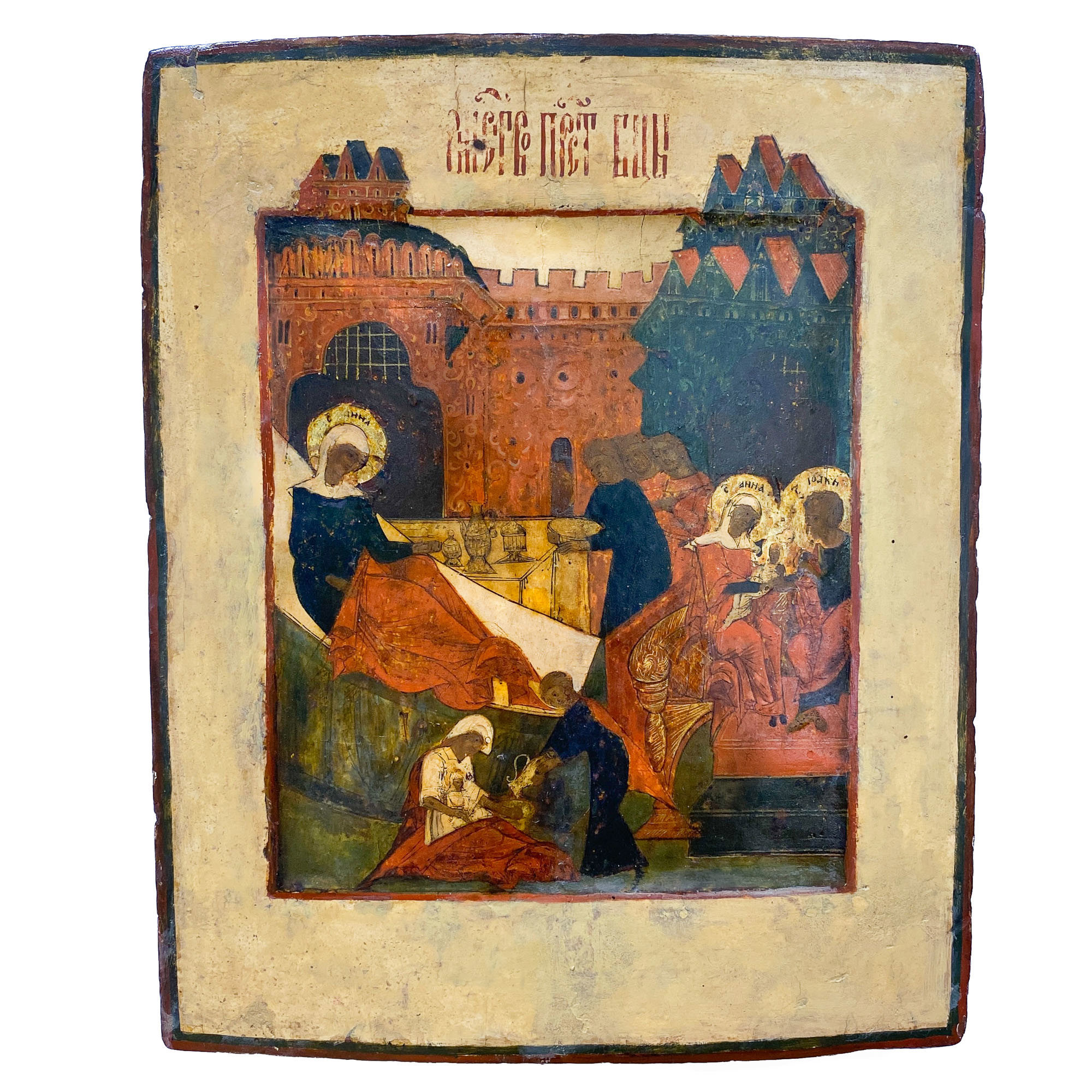
Birth of the Mother of God
18th century
HOW IS AN ICON MADE?
 
The long and meticulous process of creating an icon is composed of ritual gestures rooted in the medieval practices of
painting on wood. Nothing happens by chance, not even the choice of the wooden support. In fact, this material has the dual meaning of metaphor of the tree of life and, at the same time, of the cross on which the Saviour died.
 
It is important to choose a compact, strong and well-seasoned type of wood to prevent as much as possible the icon from deforming over time. Sometimes, in order to strengthen the board, crosspieces are fitted on the back, simply sliding them over rectangular grooves without using nails or glue. The surface is then prepared in a very complex and elaborate way. First, the intel phase takes place. A linen cloth is glued to the front of the icon to ensure resistance during the contraction and expansion of the wooden fibre. This canvas also has a very deep meaning: it symbolizes the sheet that covered Christ's body in the tomb after his death.
A smooth, white primer layer is then applied, and only then the painting phase can begin. The Story of Salvation is painted with natural pigments of mineral, vegetable or animal origin such as earths, ochres, lapis, malachite, charcoal, ivory ...
 
Obviously, the different colors conceal a liturgical meaning: white symbolizes light, the transfiguration; black, on the other hand, darkness and the entrance of death that occurred in sin. Gold is associated with infinity; while red with the fire of spiritual love, and thus often colors the mantle of Christ and the martyrs. Finally, blue, the colour of the priests' mantle, refers to the figure of the Mother of God, and green to the Holy Spirit.
Mother of God of Pokrov
18th century
THE MOST WORSHIPPED ICONS
 
One of the most venerated icons is that of Christ. Every representation of the face of the visible God is based on the acheropite icon, the Mandylion, the icon not made by human hand. According to tradition, it was Jesus himself who covered his face with a cloth, leaving his image imprinted on the canvas. Icons of the Mother of God are also widespread, as the Virgin holds an eminent position in the theology and liturgy of the Orthodox Church.
 
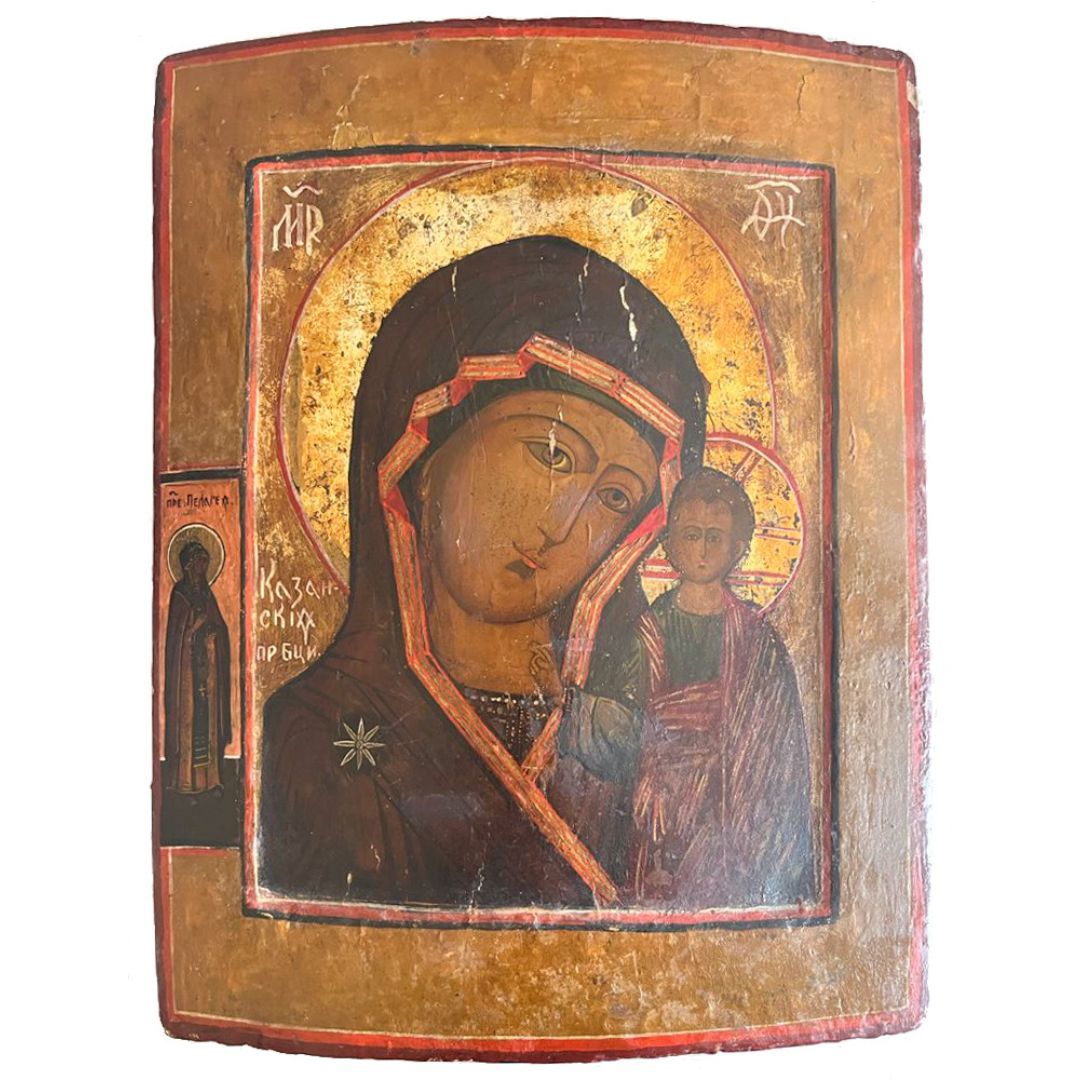
Although there is no Marian cult, she is the privileged link between humanity and the divine. Tradition ascribes to St Luke the Evangelist the painting of the first three icons of the Mother of God, from which the three main types of icons representing her were derived: the Eleusis, or the Virgin of Tenderness; the Hodighitria, or She who shows the way; and the third which depicts the Virgin without the Child, in an attitude of supplication.
Mother of God of Kazan
18th century
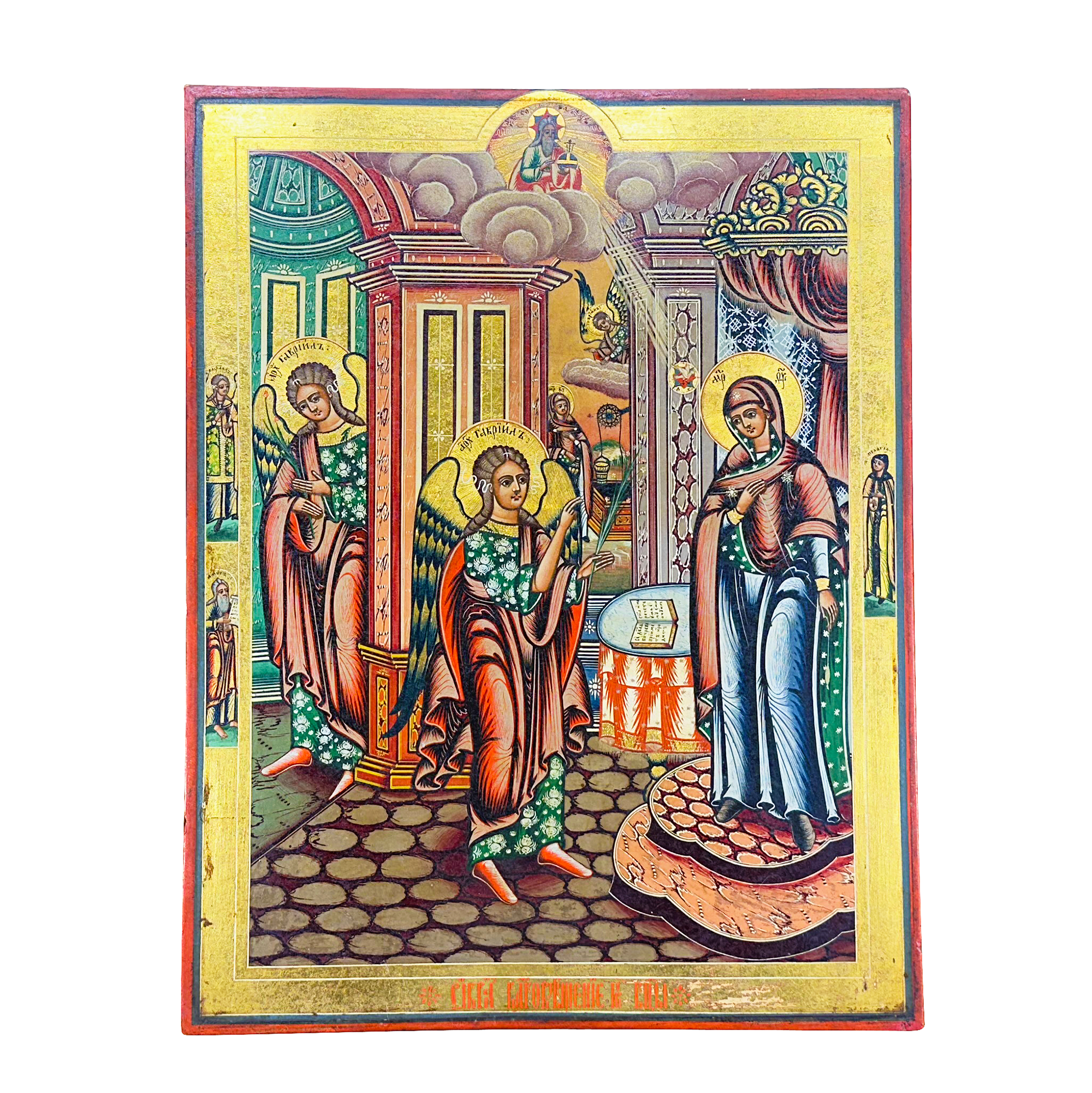
The Annunciation
19th century
Liturgical feasts are another topic of great importance in the Orthodox tradition. In the 15th century, it was established that, in the holy year, there are 13 feasts, the most important of which is Easter, considered the Feast of Feasts.
 
The 12 other celebrations include the Annunciation, celebrated on March 25, in which the Archangel Gabriel announces to Mary the conception of the Son of God. Interestingly, the typical setting of this icon is the interior of a richly ornamented palace, characterized by arcades and columns embellished with Baroque-style decorations, symbolizing the Temple of Jerusalem. There are often several scenes depicted in the same panel. The work begins to be read from the figure of God, at the top, who gives Gabriel the task of announcing the Virgin of her destiny. The archangel slowly approaches the chosen woman: he first observes her while she is at the well, and then from a distance, almost hidden. Finally, in the foreground, he is shown communicating the message of which he is the bearer.
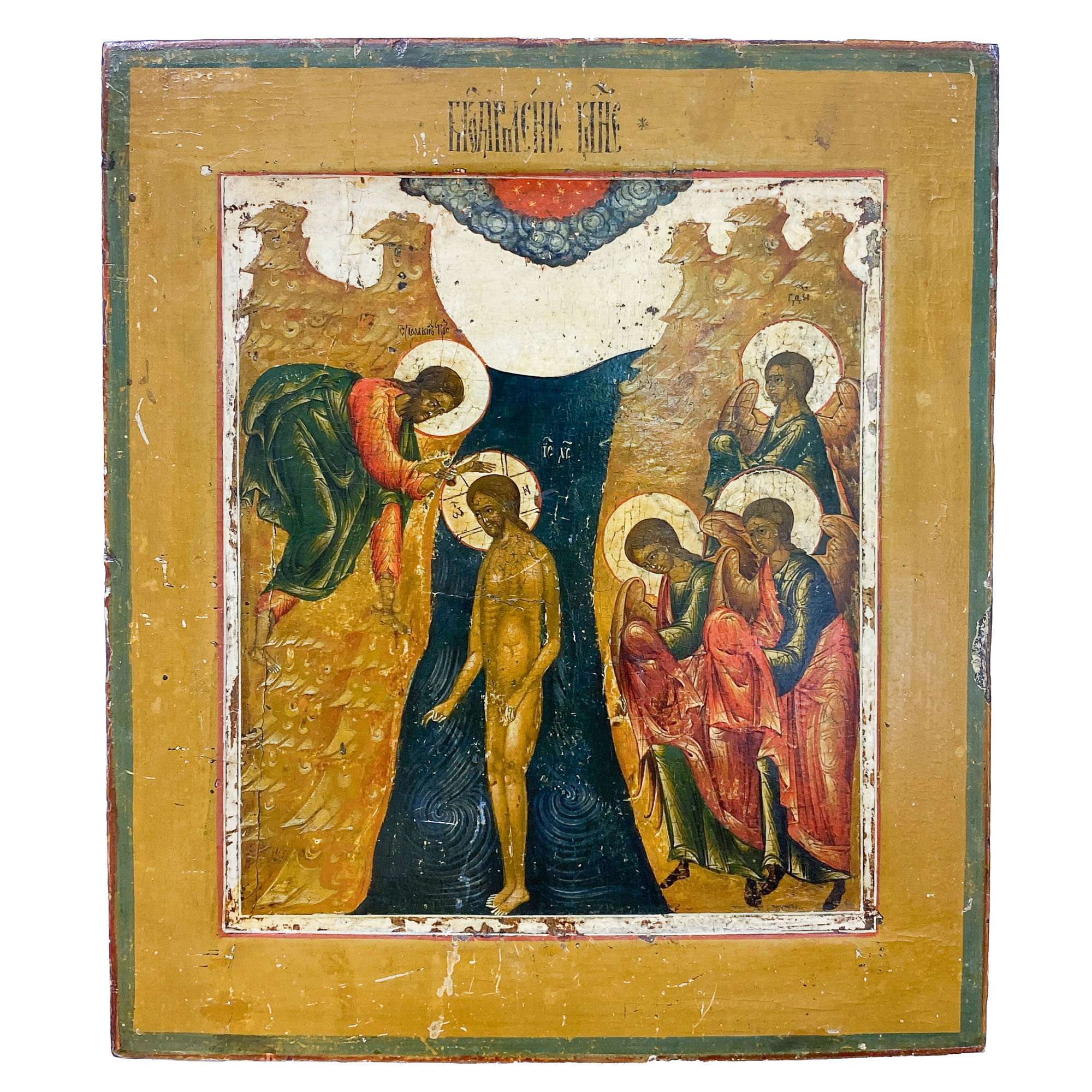
The baptism of Christ, besides being the feast celebrated on January 6, also stands out for another reason. It is, in fact, the first moment of Theophany, the first manifestation tangible to the human senses of God, who makes himself perceptible to testify that the baptised person is his Son. In the icons, God is represented as a ray of light ripping through the sky above the River Jordan. The iconography of these icons is extremely traditional and canonical, formulated as far back as the Byzantine period. The waters of the Jordan divide the scene in two. John the Precursor stands on the left bank, while some angelic figures stand opposite to him. Christ is naked, just as man is naked at birth, since Baptism represents our rebirth in Christ. He waits for the Father's will to be done upon him, already aware of what he will encounter. In this scene there is a reference to the passion of Christ. The waters of the river, in fact, seem to recede into a cave, a symbol of the Saviour's future death and burial.


Baptism of Christ
18th century
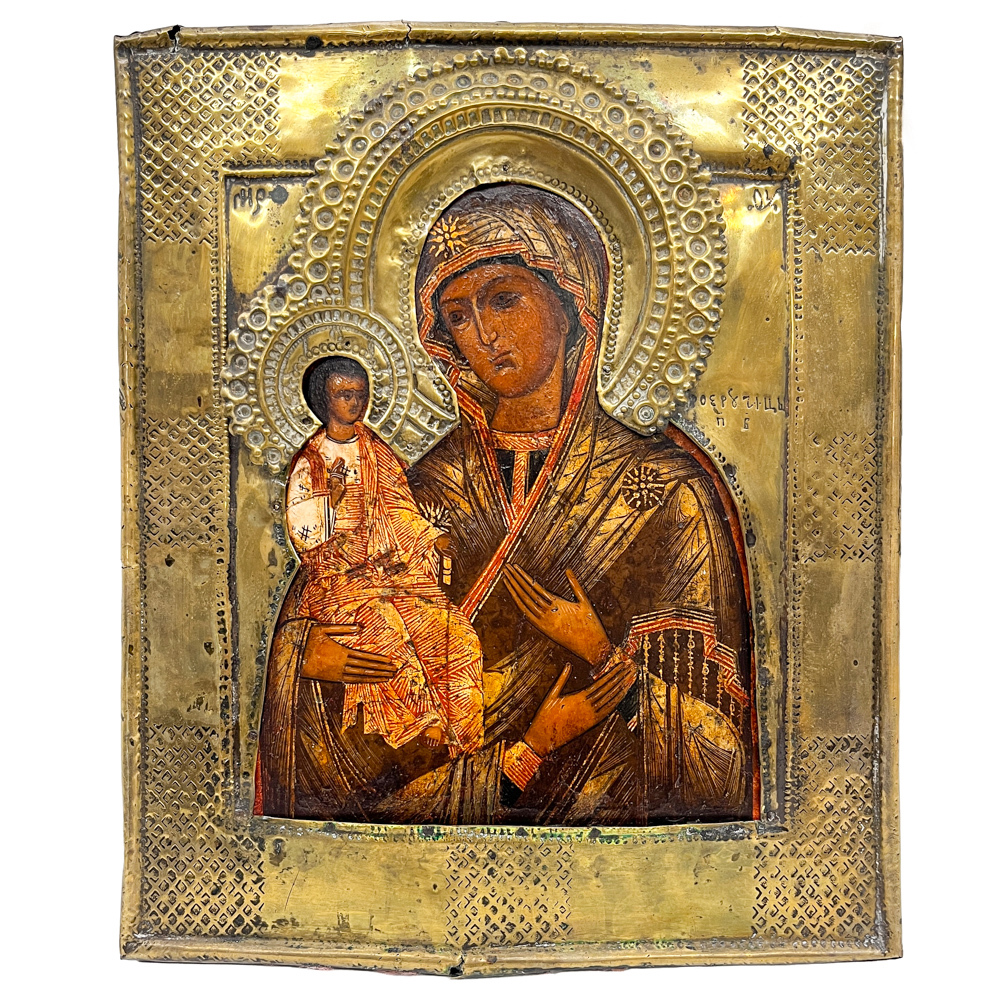
Mothe of God of the Three Hands
19th century
COVERING
 
Some icons have metal coverings, usually in silver. In some cases, these are metal bands that are used to frame the delicate panel. Other times, however, the covering, called riza, is more substantial, leaving only the bodies or a few details visible. This technique was used to add further symbolic meaning to the works. The splendour of metals, in fact, is comparable to the celestial light emanating from the sacred images t emphasise their immaterial nature.

Watch the video and let the true Tussian icons fascinate you.

Become a Passionario

Chat with us