it / en
it / en

Gio Ponti

Not only an architect
Gio Ponti (1891-1979) was one of the most influential Italian architects and designers of the 20th century. He was capable of leaving an indelible mark not only on the Italian landscape, but also on industrial and decorative design. Having graduated from the Milan Politecnico, Ponti was a pioneer in redefining the relationship between art and function, bringing innovation and beauty to every area of his work. He founded the Domus magazine in 1928, and played a crucial role in spreading Italian design around the world.
 
His most famous projects include the Pirelli skyscraper in Milan, homes in Rome's EUR district, and numerous pieces of furniture that helped define the modern style. However, Ponti was also remarkable for his collaboration with important manufactures and industries, including Richard-Ginori and Venini, in which he reinterpreted secular traditions with a distinct contemporary sensibility.
AT RICHARD GINORI
 
Founded in 1735 by Marquis Carlo Ginori in Doccia, near Florence, the Richard-Ginori Factory is one of Europe's most prestigious porcelain businesses. Since its origins, the company has excelled in combining excellent craftsmanship and stylistic innovation. In the years after World War I, though, it experienced a setback: production was declining, and the risk of dispersing ancient knowledge and squandering a prestigious tradition was real.
Thus, in 1923, the young and vibrant Milanese architect, Gio Ponti, was appointed as the company's artistic director. In agreement with the then director, the competent and attentive Augusto Richard, and in close collaboration with the factory workers, he proposed a radical 360-degree program update that successfully led Richard-Ginori to modernity.
 
Well aware that the Italian industry and the so-called decorative arts needed a boost because they were subordinate to the past and falling behind the international scene, Gio Ponti used all his creative imagination and deep culture to embark on the path toward a renewal that was still respectful of tradition.
The collaboration with Ginori's skilled craftsmen was crucial for the architect because it allowed him to have full awareness of the material he was going to work with. In fact, to achieve the desired results, he had to learn all the secrets of ceramics, a technique different from those he already excelled in, and in which it is the material and its skillful and sophisticated use that make the depicted figures and scenes vibrant and captivating.
 
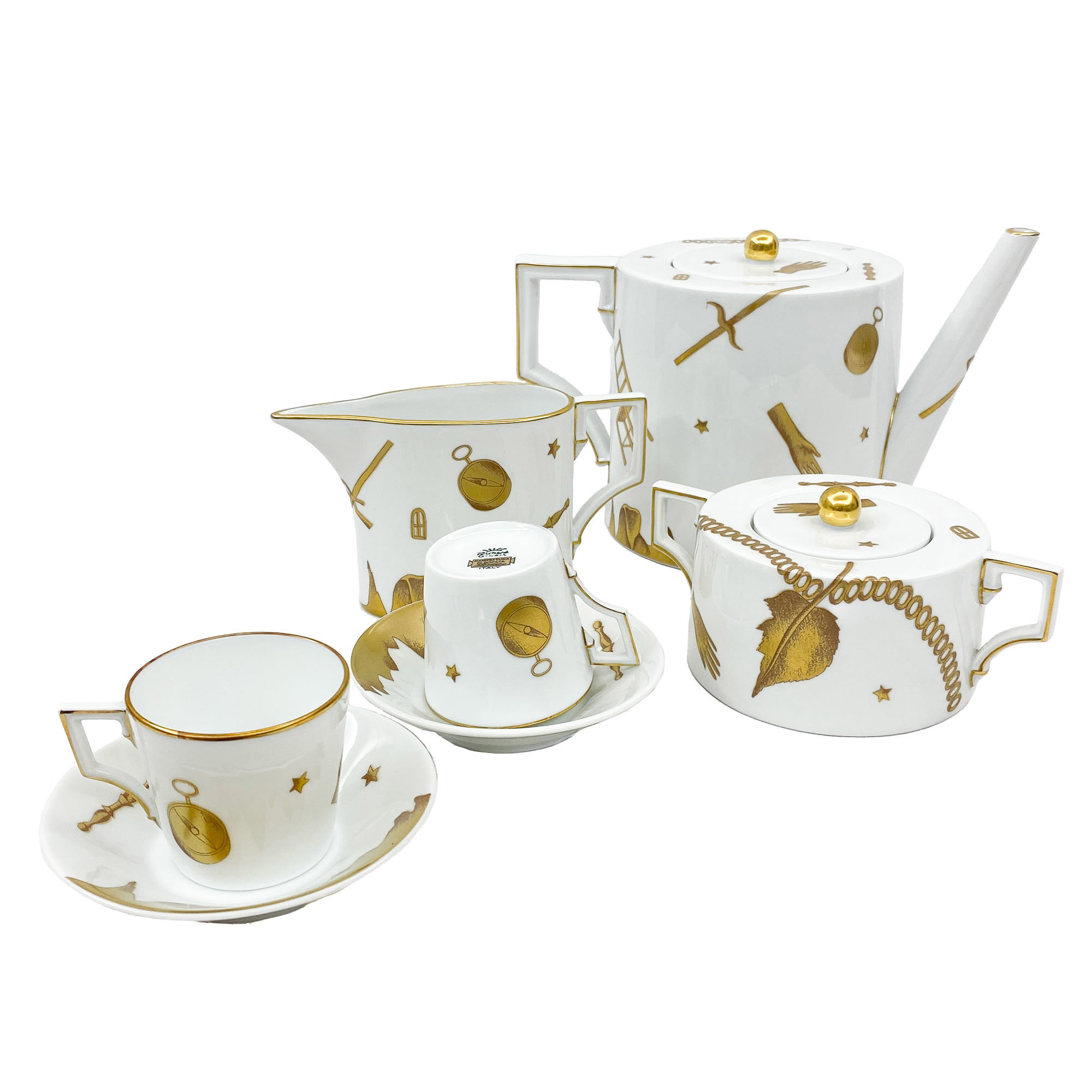
During Ponti's era, Ginori experimented not only iconographically but also technically by perfecting the glazes and their firings. Even catalogs and magazines of the time praised the skilful use of blu a gran fuoco, gran rosso di Doccia, agate-tipped gold, and, last but not least, metallic black, which contrasts sharply with the beautiful timbre of the white paste.
Trionfo Italiano
Le Muse
Ponti's figurative ideas were a surprise right from the start, to the extent that as early as 1925, only two years after his arrival at the Doccia factory, Richard-Ginori was awarded the Grand Prix for ceramics at the Exposition Internationale des Arts Décoratifs et Industriels in Paris for the commercial success it had achieved internationally. Ginori production had already become a leading example in the debate on the prospects for economic revival and renewal of Italian art manufactures.
 
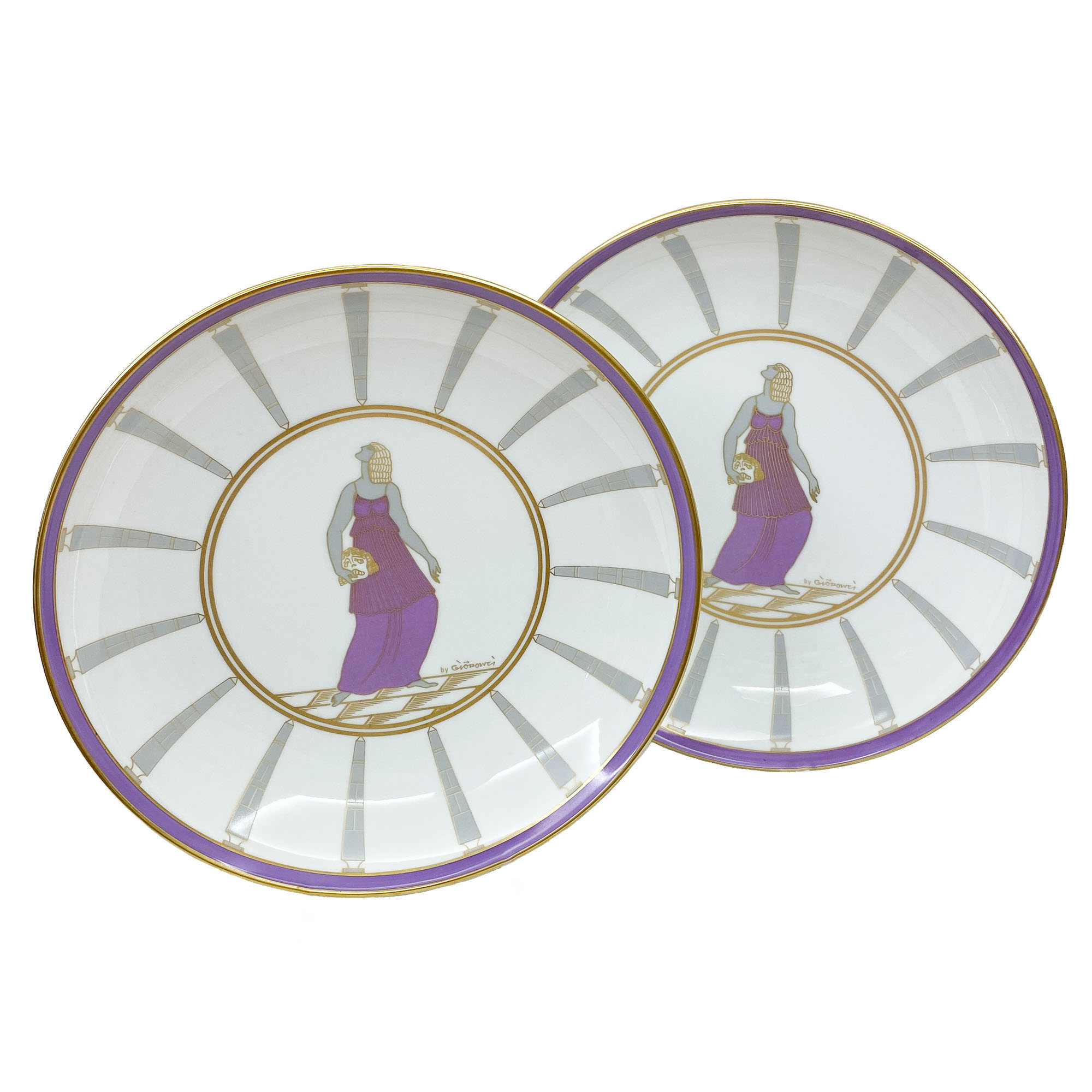
Gio Ponti's design combines pure, stylized and very modern lines with deep classical inspiration. Elements belonging to different styles and contexts are extrapolated and then elegantly reinvented with remarkable taste and irony. In addition to ancient models, Ponti echoes Renaissance perspective, Palladian-derived modularity, and neoclassical simplifications, enriching them with contemporary flair and elegance.
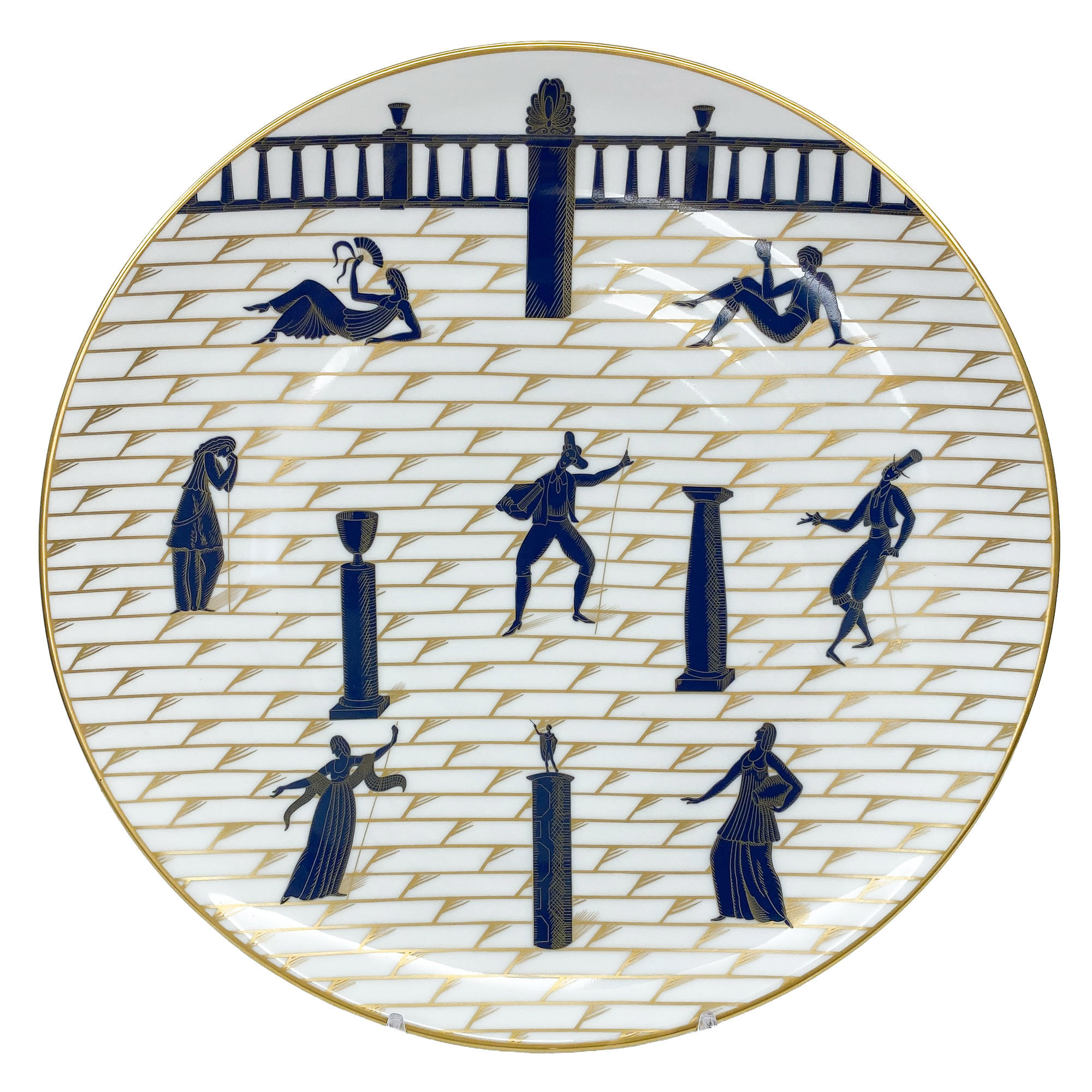
One of the first motifs addressed as early as the 1923 Monza Biennial, the first in which Richard-Ginori participated under Ponti's leadership, is that of the “Passeggiata Archeologica”. Set on a terrace created with an excellent perspective, a clear homage to the 15th-century artists, these pieces tell us about the Grand Tours that 18th-century European noblemen used to undertake in various Italian cities. The contemporary element of the work is found in the title: this is a precise quotation of the route with the same name (lit. Archaeological Walk) inaugurated at the Roman ruins in 1918.
Passeggiata archeologica
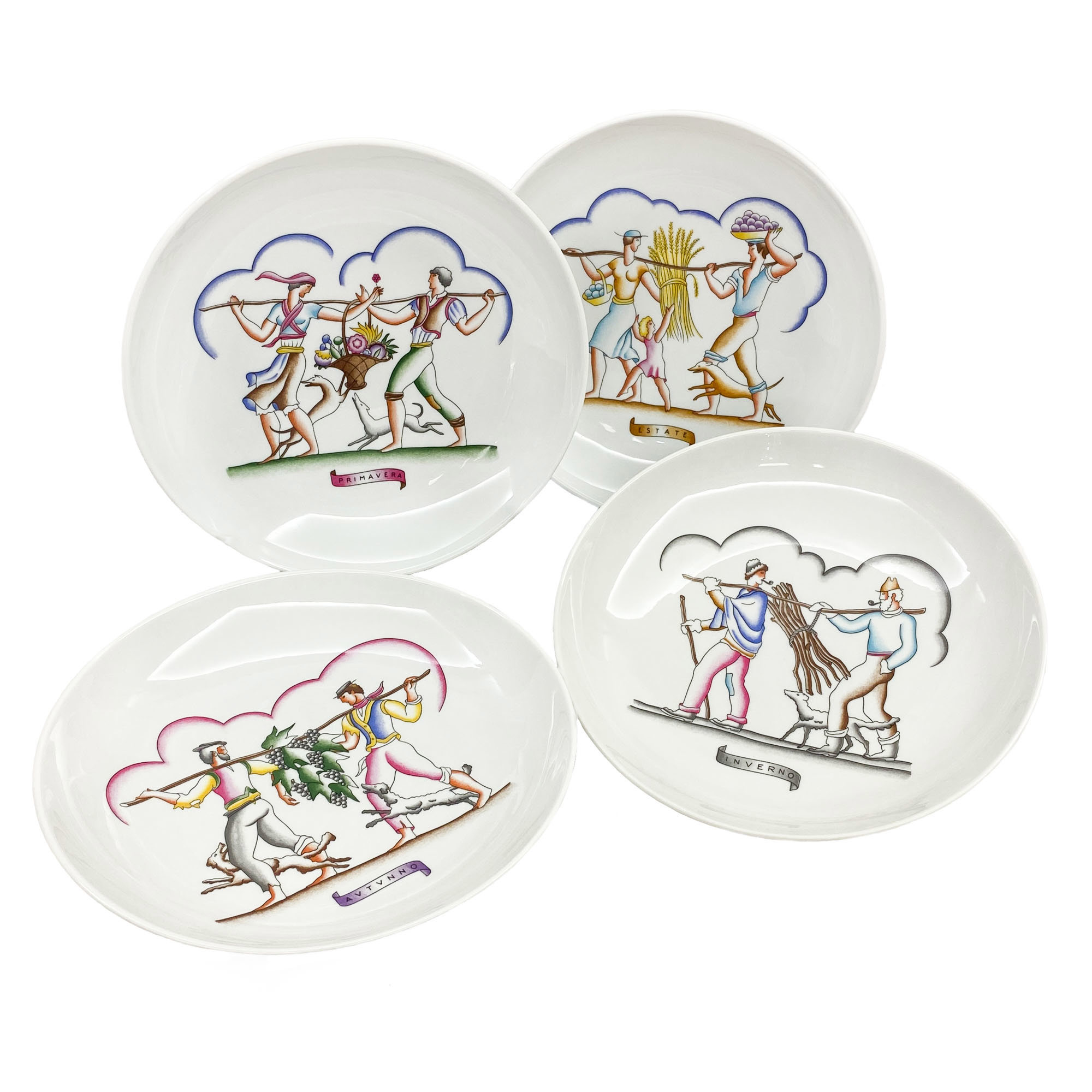
Reinterpreting the forms of the past with vivacity and shrewdness, Ponti, for his ceramic works, designs characters who at first glance may appear to be pawns as they are extremely precise, controlled and composed. On closer inspection however, they come to life and seem eager to get on with the activities they are performing. In the 1929 Emporium magazine, art critic Raffaello Giolli wrote, «In front of almost all of Ponti's ceramics, one stands still and fantas as if reading a romance or a novel,» a quotation that is confirmed, for example, in the series “Le Quattro Stagioni,” (lit. The Four Seasons) where each season of the year is represented with stylized motifs and vibrant colors.
 
The plates become a medium for telling the story of the cyclical nature, and the images are so engaging that it is almost as if viewers can enter the scenes and smell the scent of freshly picked spring flowers or the bitter cold of winters in the countryside. Through harmonious, elegant and simple forms, perfect glazes, brilliant colors and unprecedented creative verve, in his ten years as artistic director Ponti reinterprets the Richard-Ginori tradition with playfulness and irony without ever forgetting the roots of the past.

Le quattro stagioni
 
AT VENINI
 
When lawyer Paolo Venini opened his factory in Murano in 1925, one of his founding goals was to innovate the ancient traditions of blown glass. Therefore, he understood that he could not rely exclusively on the lagoon workers, hence why he immediately invited other artists and designers to collaborate, such as his first artistic directors Napoleone Martinuzzi, Tomaso Buzzi, and Carlo Scarpa. Following this strategy, the enlightened businessman offered his good friend Gio Ponti to experiment in his firm as well. Ponti, who by the 1930s had distinguished himself as one of the central figures in Italian architecture and design, collaborated with the Vetri Soffiati Muranesi Venini & Co. to redefine the boundary between art and industry once again.
Morandiane
Morandiane
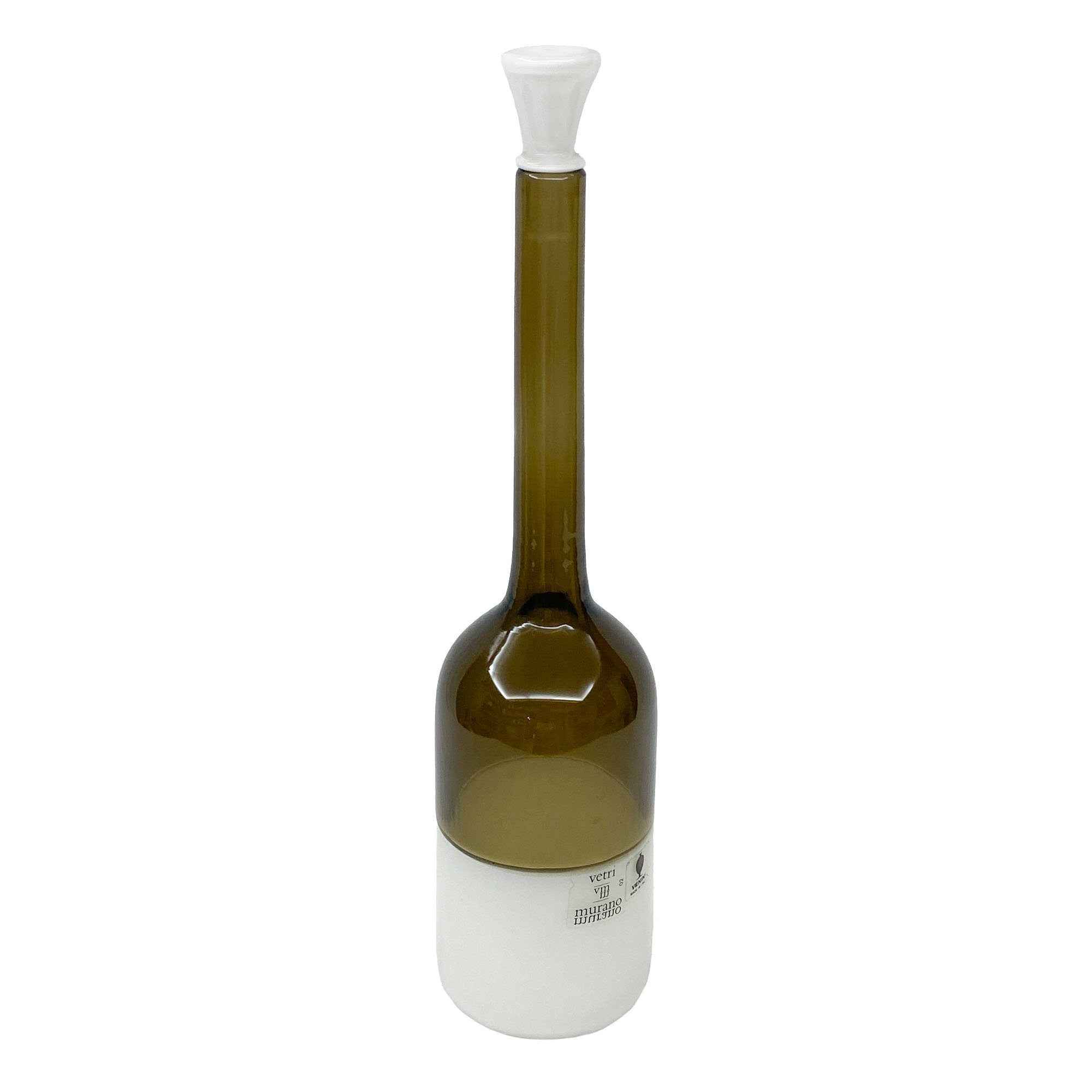
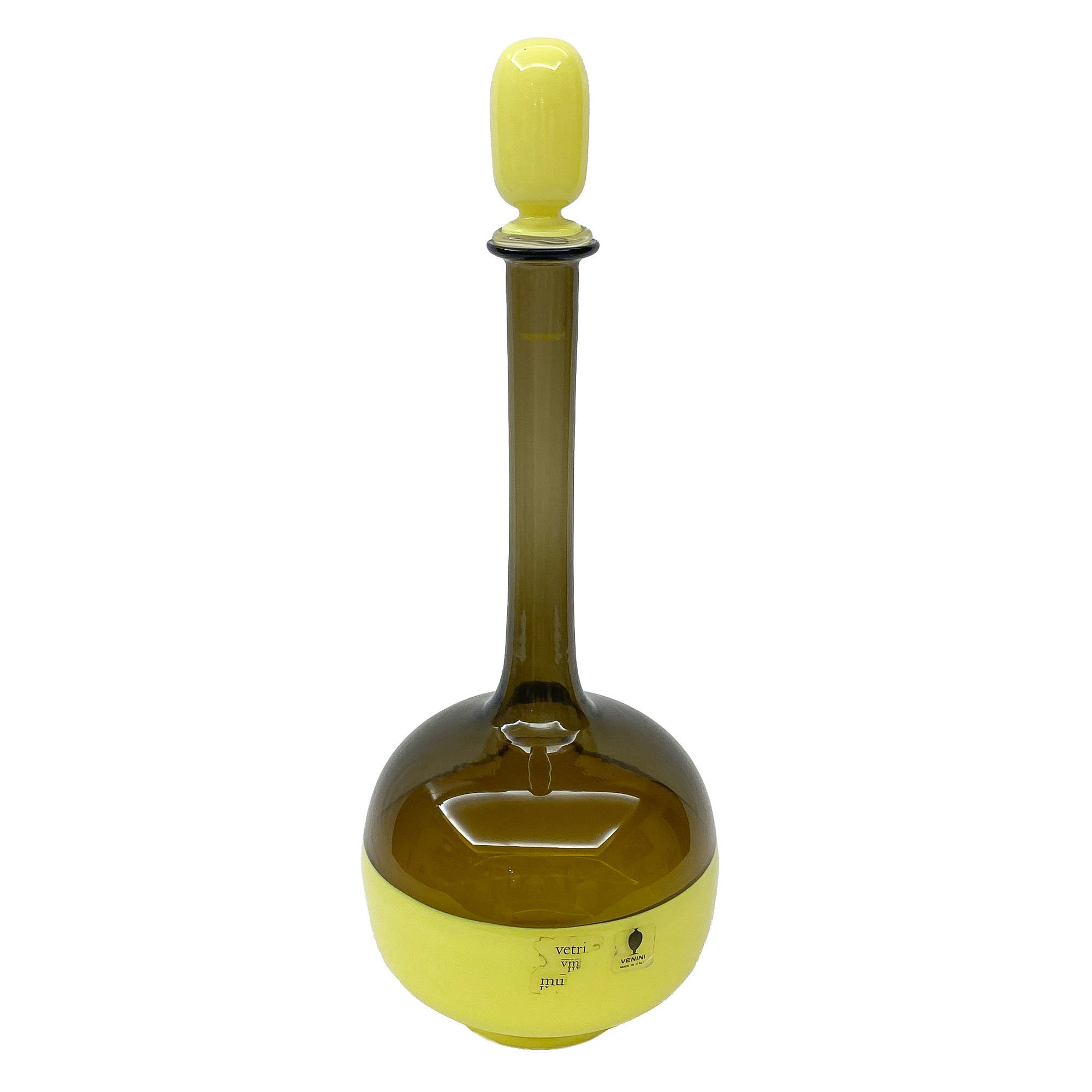
Working with and reinterpreting this ancient material as well, the architect created decorative glassware where he managed to combine rigorous simplicity with a sense of lightness aiming to bring out the glass itself, which was to remain the protagonist. From the “Morandiane” series, presented at the Venice Biennale in 1934, another distinctive element of Ponti's Murano work can be perceived. His color palette ranges from neutral tones to bright and brilliant ones. This contrast seems to be the sole decorative motif of the stylized and pure forms he designs.
 
At Venini, Gio Ponti proves once again that, with his rational and modern yet deeply rooted in traditional craftsmanship approach, he can transform functional objects into true works of art.

Watch the video and follow Gio Ponti's story.

Become a Passionario

Chat with us