it / en
it / en

Coral: the red gold of the sea

Myths and legends about coral
 
It has been well documented that men have known about coral and have loved it since ancient times; in fact, its presence has even been witnessed throughout prehistory. Some Neolithic burials contain preserved fragments of coral, which are believed to have been used as amulets. Even in very distant times, it is certain that this gift of nature was already highly esteemed by humans, who adapted it to the most diverse uses: apotropaic, medicinal, precious stone, coin, ornament, fertilizer ...
 
We can find coral among the jewelry of a Sumerian goddess (4,000 B.C.); in Asian markets it was used in trade as early as 3,000 B.C., while Zarathustra (6th century B.C.) attributed magical powers and virtues to it. The ancient Greeks gave coral a fantastic genesis; in fact, as Ovid reports in Metamorphoses and Pliny the Elder in Naturalis Historia, it was the dripping blood from the head of the gorgon Medusa, severed by Perseus, that caused sea twigs to instantly petrify and turn crimson, giving birth to coral.
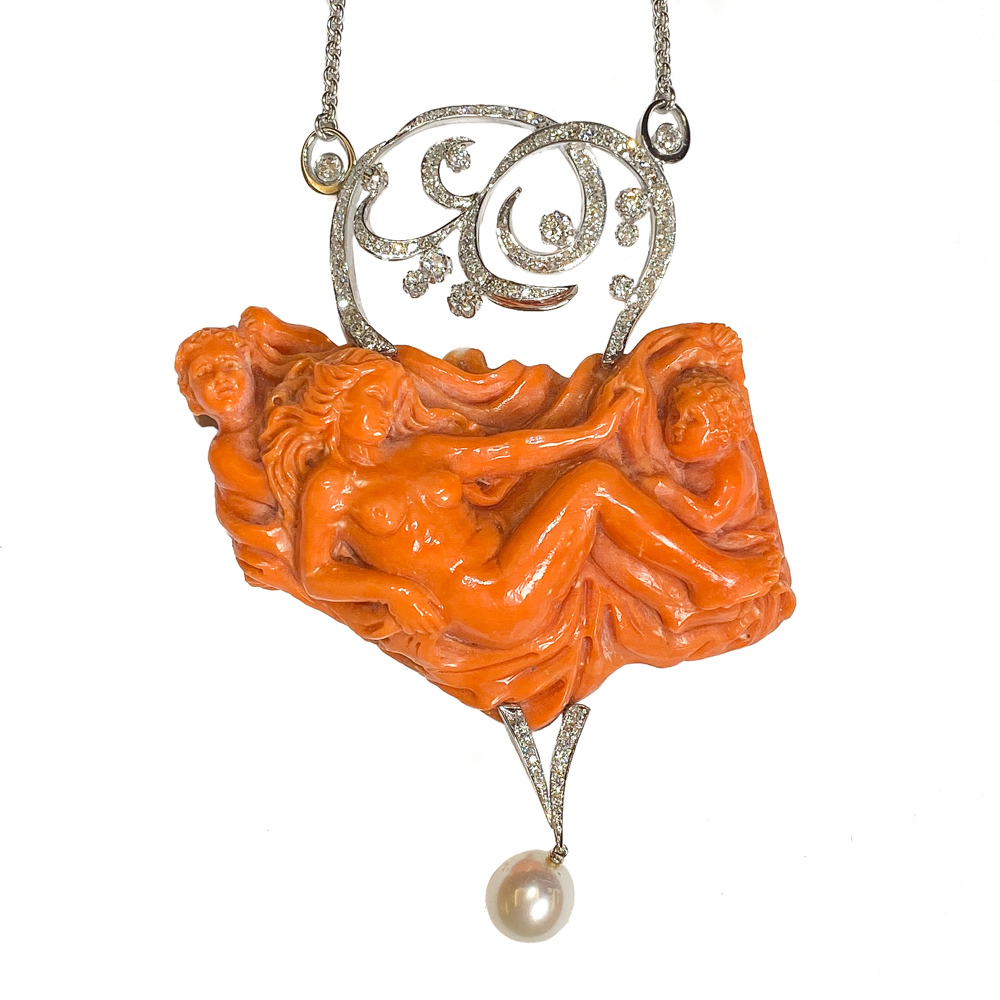
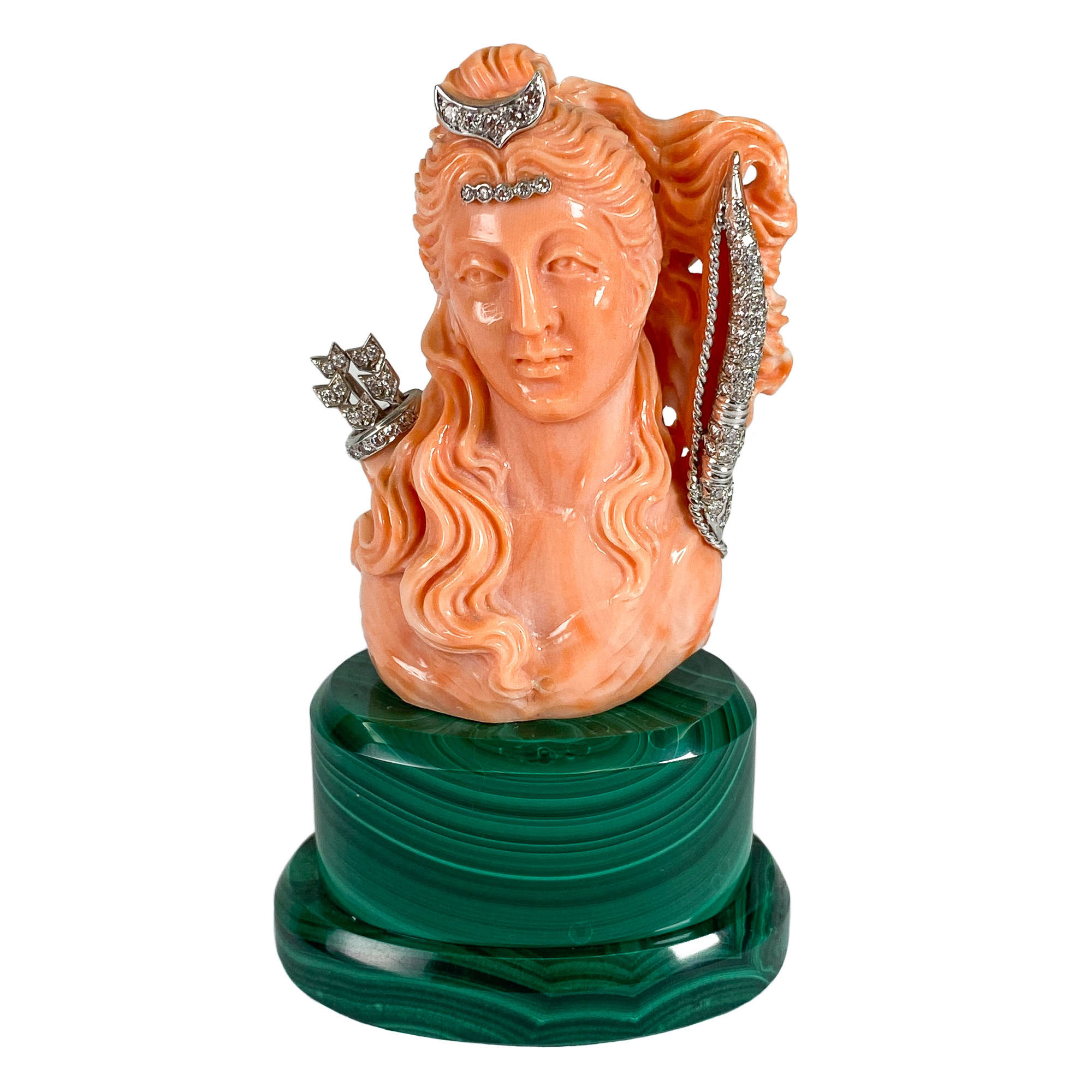
Sculptur in coral and malachite
Italy, 1950s
 
WHAT IS CORAL?
 
Considered for centuries to be a vegetable, or at most a mineral, it was not until the early Eighteenth century that Marseille physician, Payssonnel, placed it in the animal kingdom. Coral is in fact the branched endoskeletal scaffold of minute colonial marine animals, called polyps, belonging to the Phylum of Coelenterates, class of Anthozoans, subclass of Octocorallia.
 
It is composed of crystallized calcium carbonate in the form of calcite, which makes up over 80% of its structure, along with varying amounts of magnesium carbonate, iron oxide and other organic substances. The coral's scaffold is formed by a central axis perpendicular to which, in radial arrangement, are the various branches.
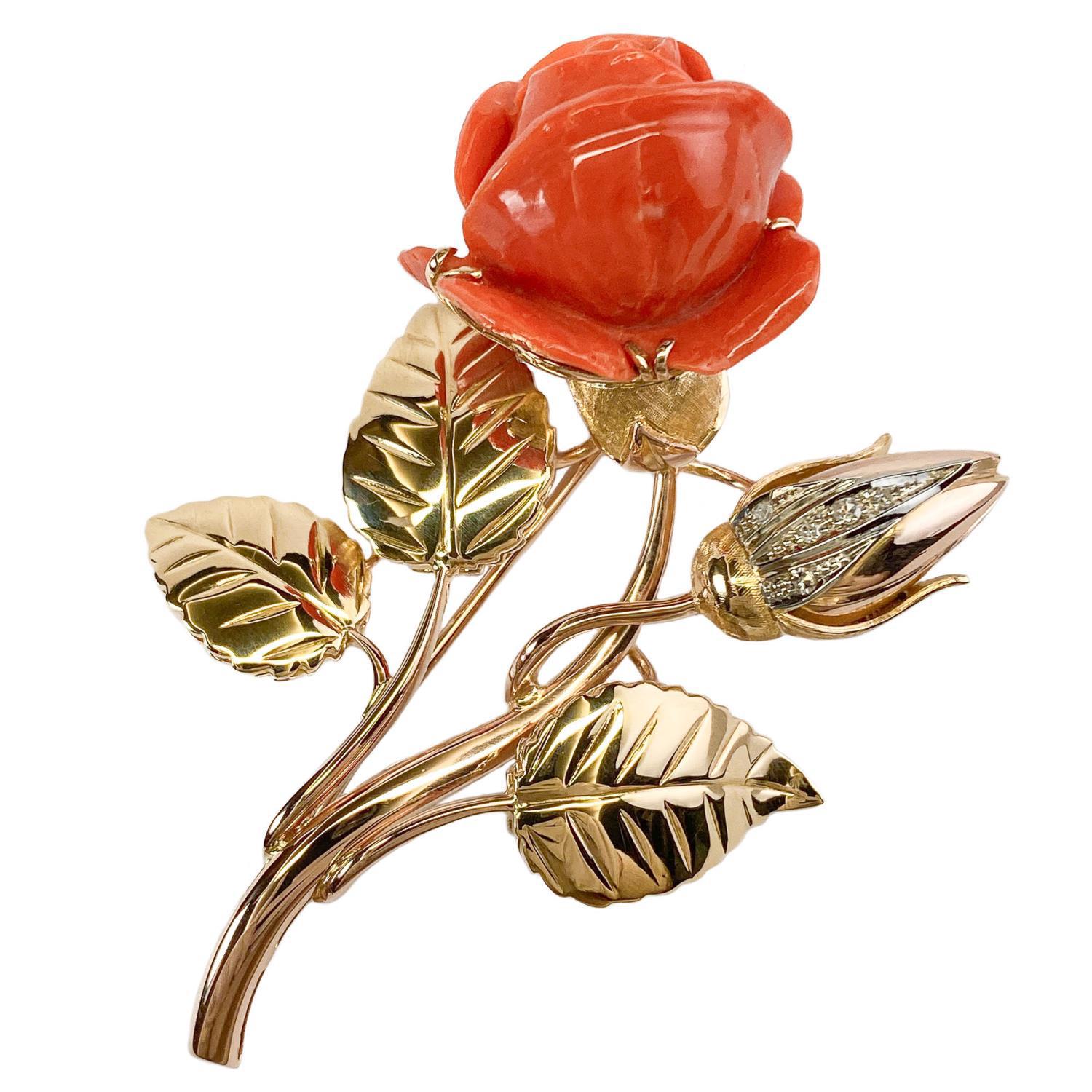
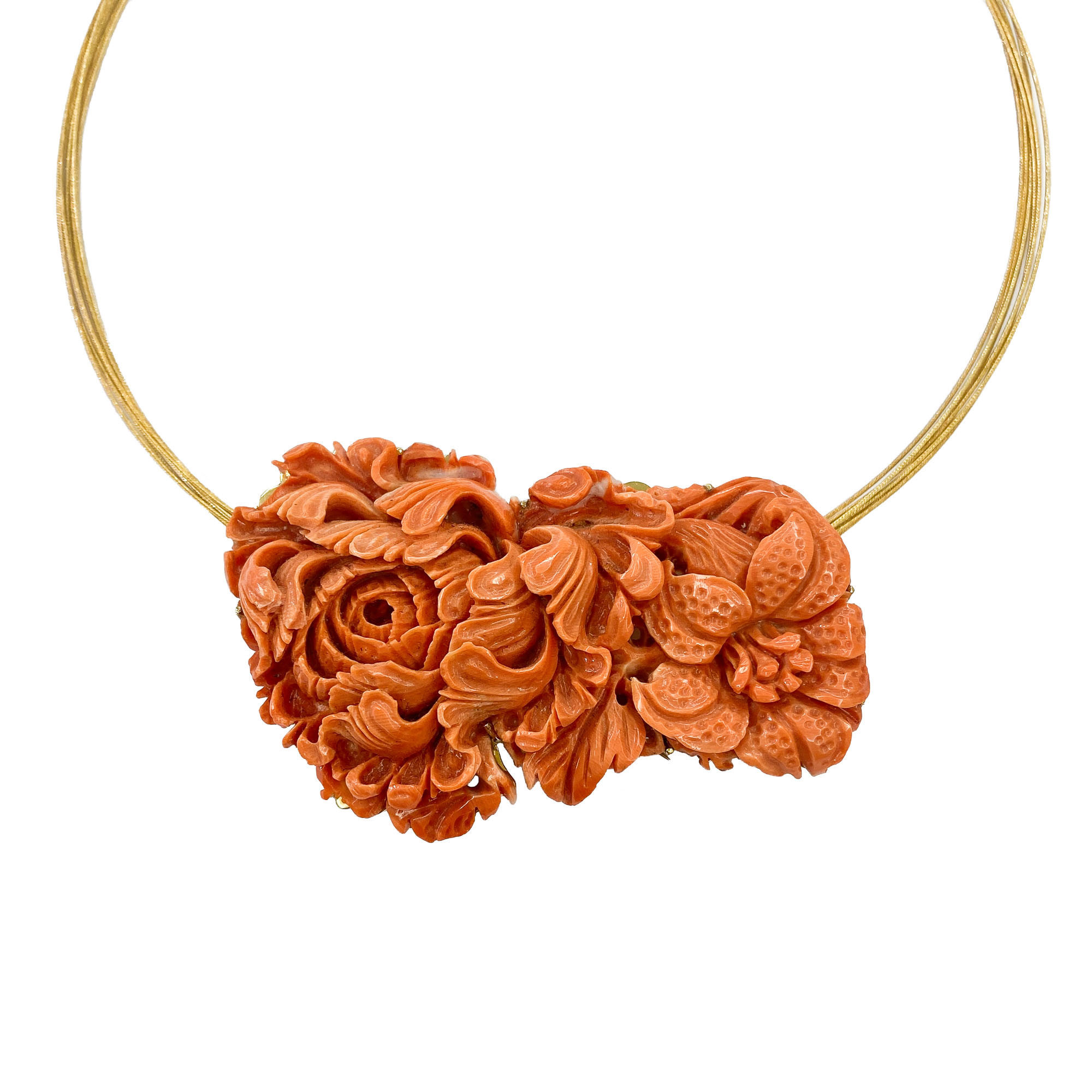
Brooch with Pacific coral
Italy, 1960s
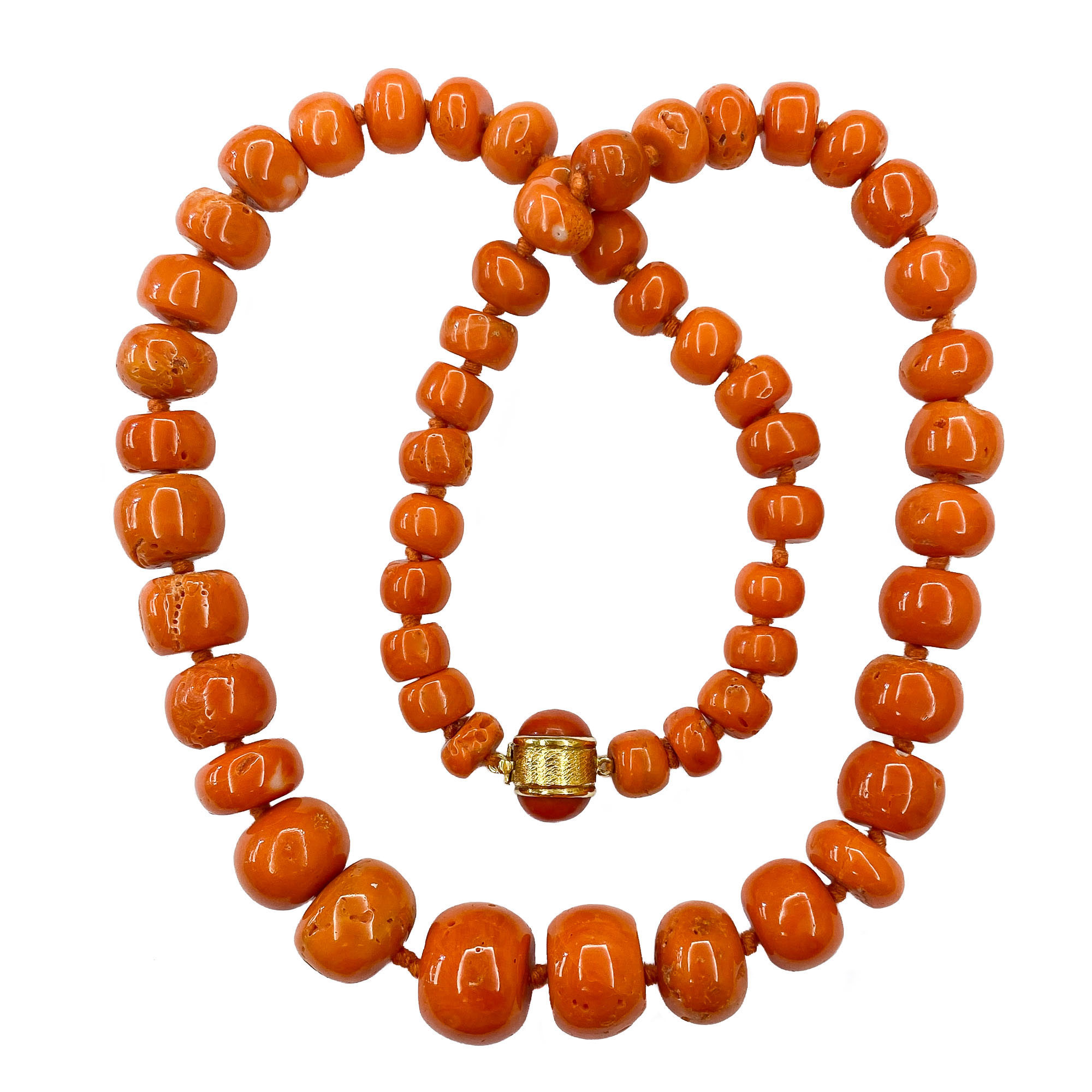
Necklace with Sardinian coral
Italy, 19th century
WHERE TO FIND IT
 
The name coral is used to describe more than 7,000 species of animals belonging to the Class Anthozoa, however, it is important to distinguish between 'precious coral' and 'common coral' . Coral found in reefs, the 'common' coral that can be seen at relatively low depths, is not used in jewelry and, being part of a protected species, cannot be harvested. 'Precious coral' is found more than 50 meters below the surface and lives in completely different ecosystems than 'common' coral. Only eight species of coral belong to this category, and these are the ones used in luxury jewelry.
 
Corallium rubrum, commercially called Sardinia, is found in the Mediterranean basin and is distinguished by its intense, vibrant red colo that is always uniform. It has a 'bush-like' form that can reach a maximum of 50-60 cm in height and 20 cm in average width.
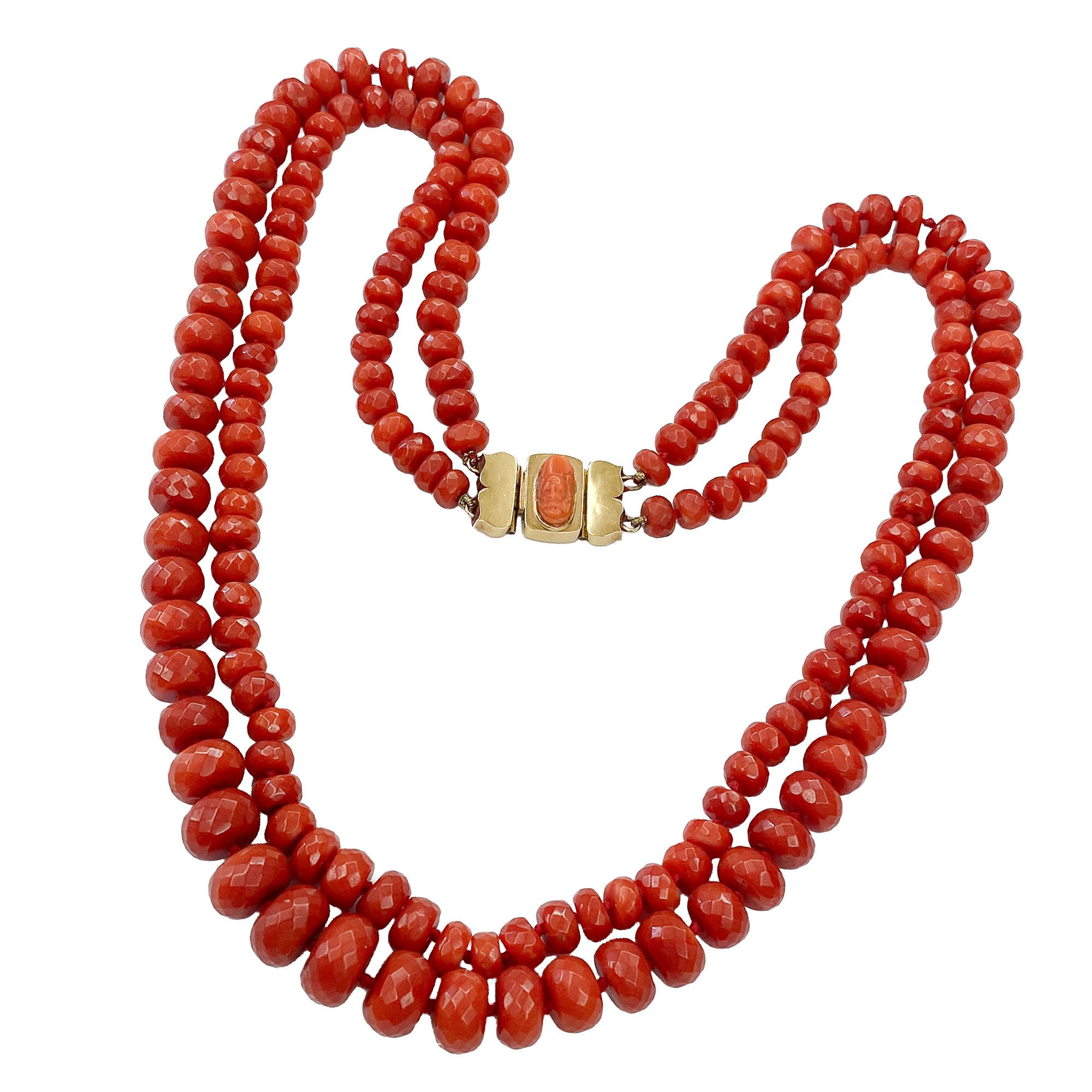
Also to be placed in the rubrum family is the Sciacca coral, which is distinguished by its beautiful orange-red shade. This exceptional coral was found in the late nineteenth century off the town of Sciacca on the Sicilian coast, but it is now considered extinct. Between 1875 and 1880, three huge deposits of dead coral, probably dragged by currents, were found in the locality of Sciacca. They were deposited on the seabed at more then 150 meters below the surface, covered by a first layer of new, still-living coral. This ‘miraculous fishing’ encounter changed the course of the coral trade, and since then, that of Sciacca, is considered one of the most beautiful colorations, absolutely unique to the Mediterranean.
Necklace with Sciacca coral
Italy, early 1900s
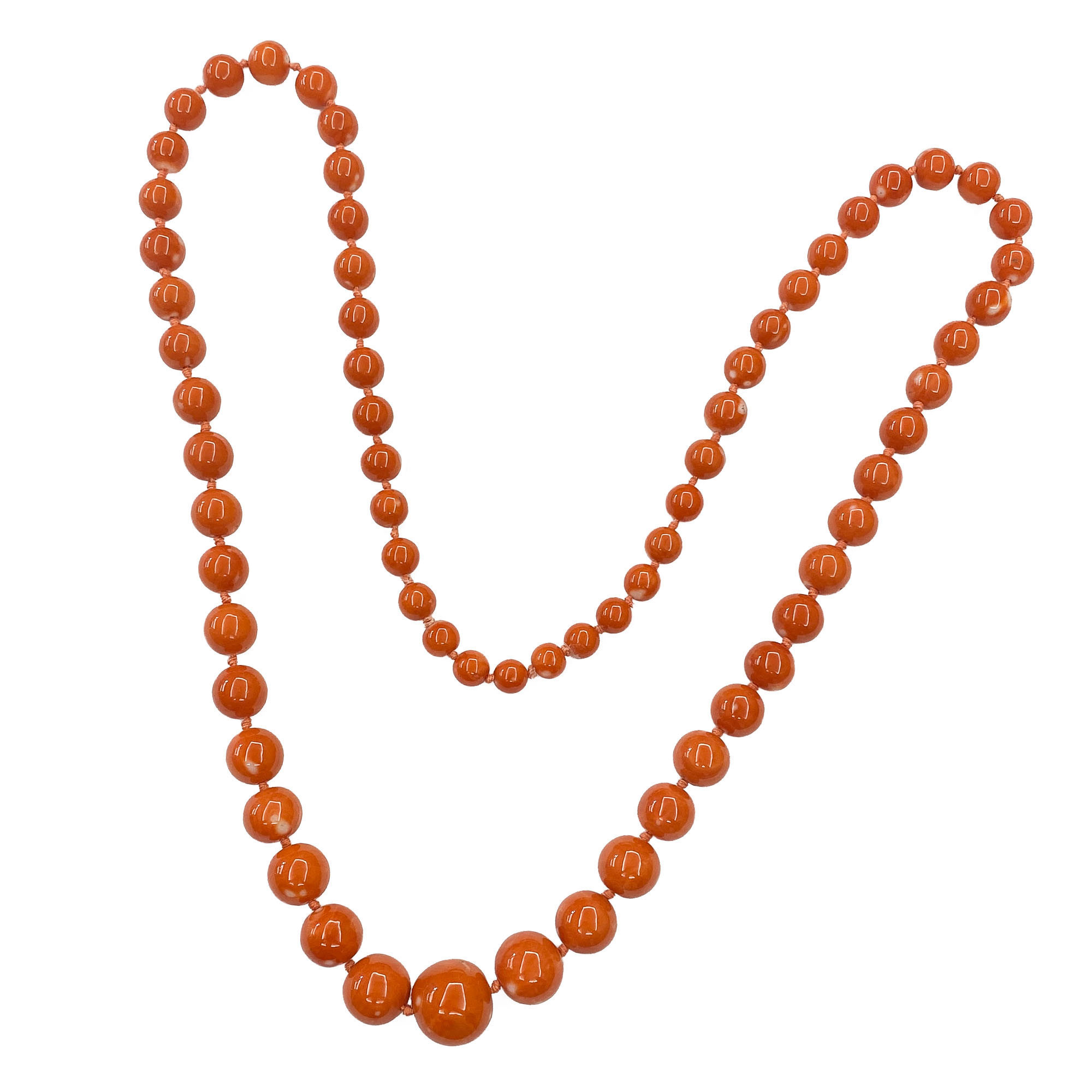
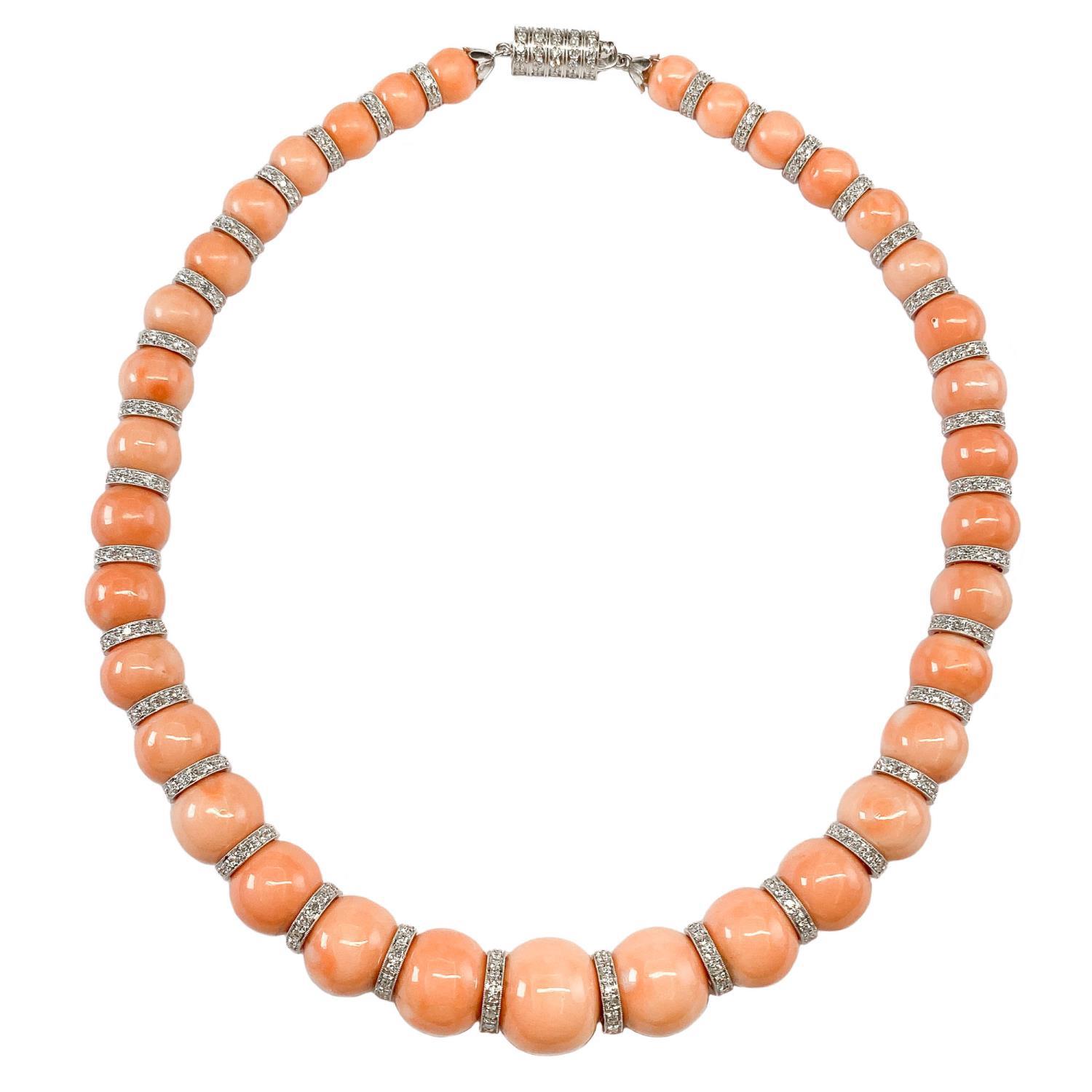
Necklace with Pacific coral
Italy, 1960s
The other important location for 'precious coral' harvest is the North Pacific Ocean. Compared to that of the Mediterranean Sea, this type of coral has a flattened 'fan-like' shape whose reaches a maximum of 70- 80 cm in both height and width. There is also a significant difference in color, in fact, the Pacific has a much larger color range, from white to dark red, and is always characterized by contrasting spots, shades and veins.
 
Several species of coral are found in the Pacific Ocean:
- Corallium japonicum, commercially known as Moro (Aka), is found at depths of 200-300 meters in the Sea of Japan and is dark red;
Pleucorallium elatius is found between Japan and the Philippines at a depth of 250-400 meters. It is commercially distinguished into two types according to its coloration: the Cerasuolo which is red to orange, noticeably mottled; and the Boké of various shades of pink among which the most valuable is the so-called 'Angel Skin, ' which has a pale pink color and is generally free of surface defects;
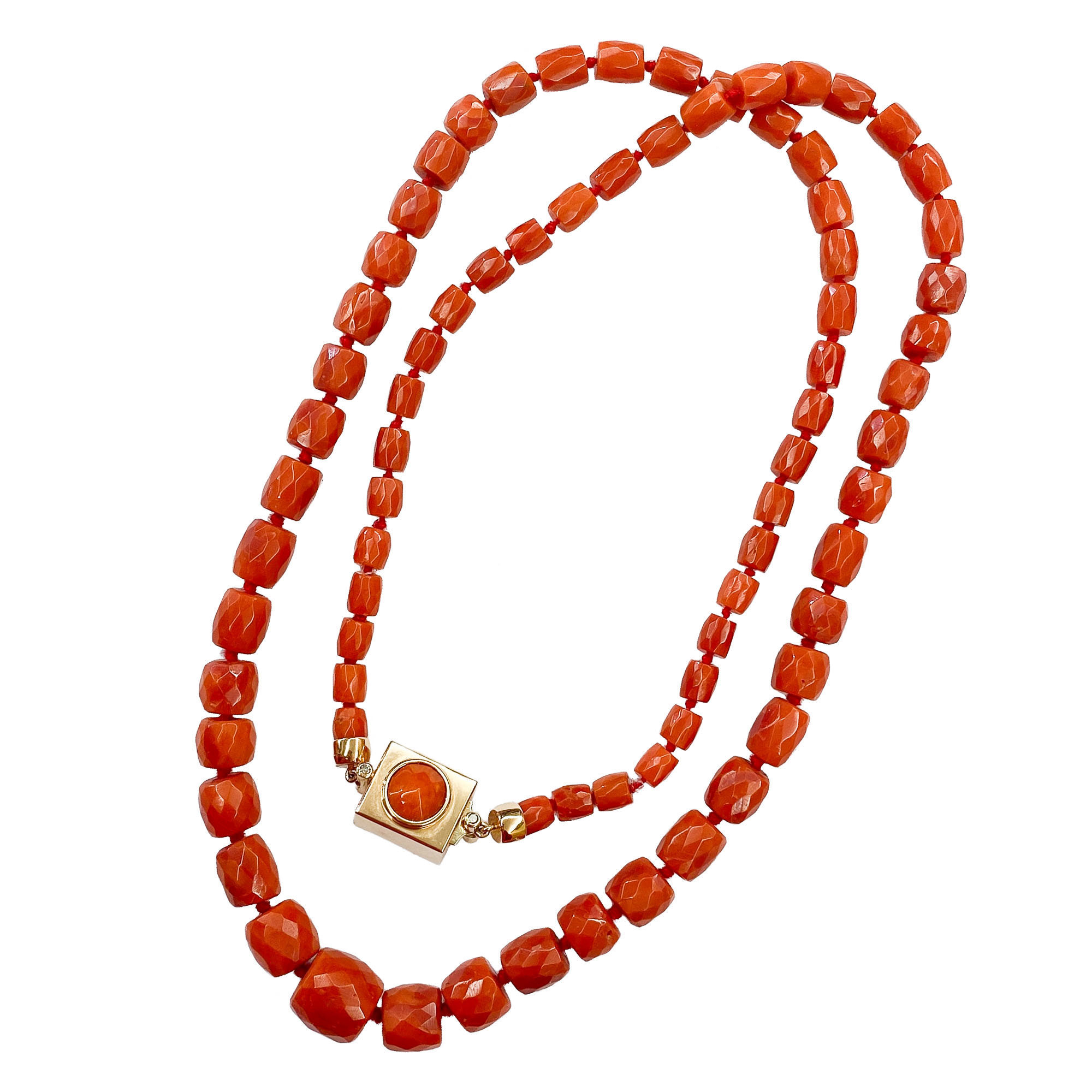
Necklace with Pacific coral
Italy, 1970s
Necklace with Pacific coral
Italy, 1960s
 Pleucorallium konojoi is called White or Shiro because of its milky coloration with a few small reddish spots and is found between Japan and the Philippines at a depth of 100-200 meters;
 
- Hemicorallium sulcatum, called Miss or Misu, is fished between Japan and the Philippines between 200-300 meters depth, and has a red or pinkish coloration;
- the Pleucorallium secundum, called Midway because it is found in the Midway Archipelago at a depth of 350-450 meters, has a white or pinkish coloration usually spotted or streaked with red.
 
- the Hemicorallium regale, discovered in the 1970s in the Hawaiian Archipelago at a depth of 400-600 meters, is purplish-pink with garnet-red veins, hence the trade name Garnet;
 
- the Hemicorallium laauense, called Deep Sea because it is the only species harvested at a depth of 800-2000 meters in the Hawaiian Archipelago, is red in color, light to dark, and never uniform.
Necklace with Pacific coral
Italy, 1970s
HARVEST AND MANIFACTURE
 
The first coral catch has very ancient origins and was entirely accidental; in fact, the twigs were brought to light from being snagged on fishermen's nets, thus making themselves known and
appreciated. Up until the nineteenth century, coral fishing happened only in the Mediterranean Sea, mainly off the coast of Italy and Africa, where fishermen arrived from various Tyrrhenian cities: Genoa, Livorno, Marseille, Naples and Trapani.
 
For a long time, coral was used as ornamentation, left raw as it was fished. Beginning in the Renaissance, the Trapanians began to specialize in manufacturing coral, engraving and setting it on sacred and household objects. Thus, coral entered the daily lives of all social classes throughout Europe.
Necklace with Pacific coral
Italy, early 1900s
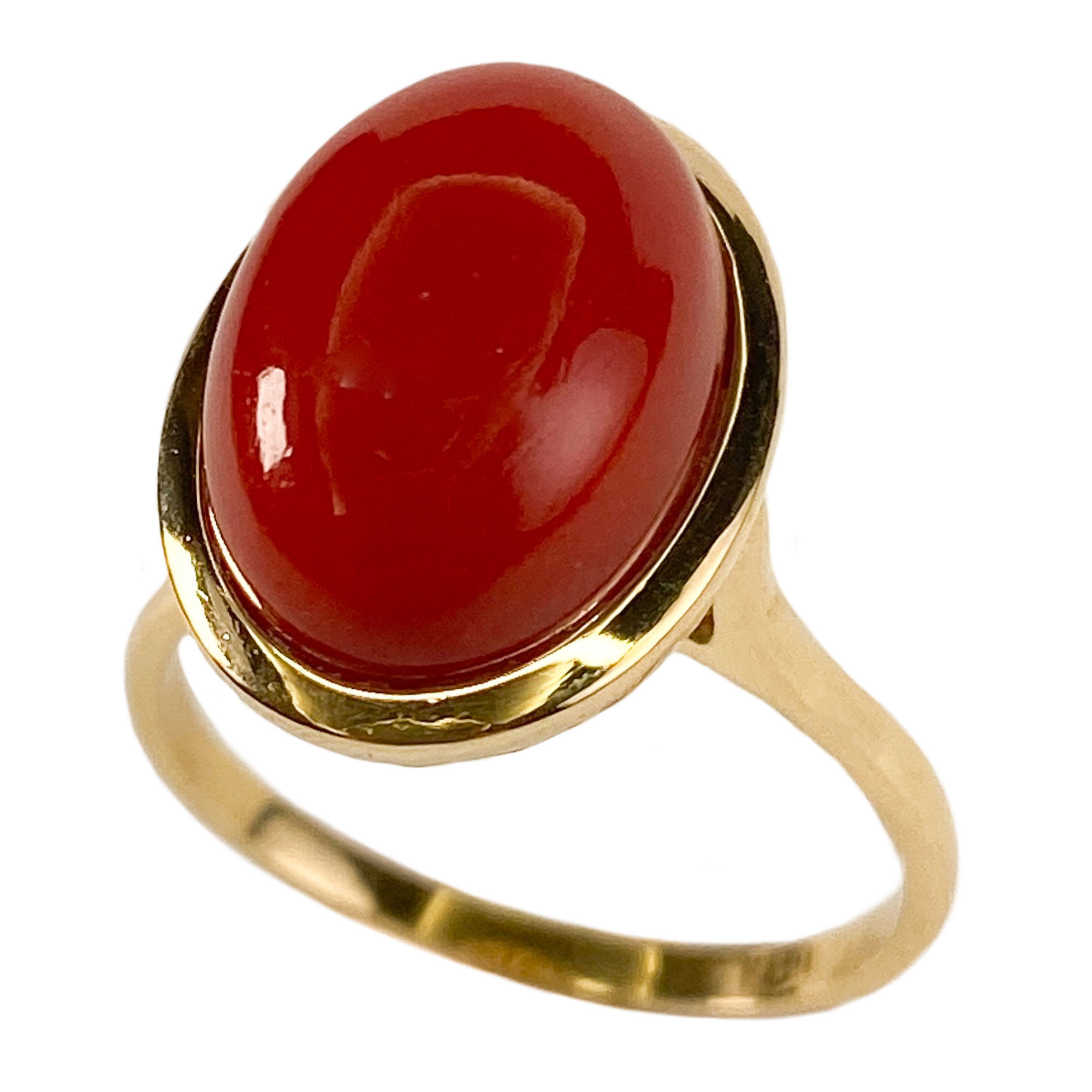
Ring with Sardinian coral
Italy, 1950s
From the end of the eighteenth century, the fishermen of Torre del Greco, by Naples, began to distinguish themselves. They created a fleet of boats specializing in coral fishing, the so-called coralline. These small and agile boats were equipped with a special tool, the Cross of St. Andrew, formed by two crossed wooden planks, of which the ends consisted of the cordazzi where the corals’ branches that protruded would get caught. This type of harvesting, called ‘trawling’ , has since been abandoned and replaced by ‘selective fishing’ carried out by modern specialized divers and subject to strict regulations.
In the early nineteenth century, the first coral manufacturing factory opened in Torre del Greco, to which Ferdinand IV of Bourbon granted a monopoly. Soon coral became the mainstay of the city's economy so much so that, despite the initial prohibition, many other centers specializing in the art of engraving began to rise.
 
Between the seventeenth and nineteenth centuries, masters from Trapani and Naples produced masterpieces of refined craftsmanship: headpieces, holy water fonts, caskets, jewelry and sculptural groups, which are still today highly prized by the international market.
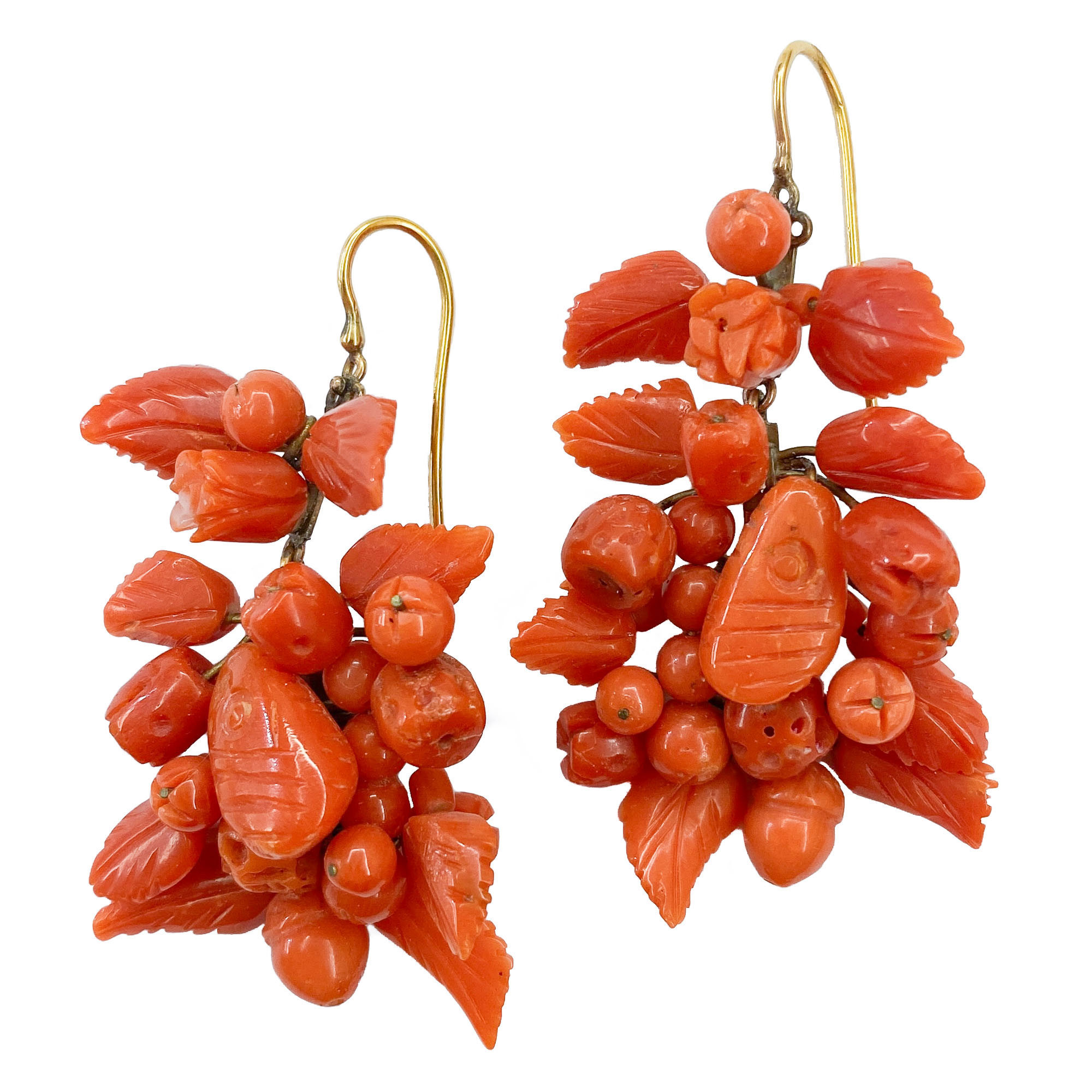
Earrings with Sardinian coral
Italy, 1900s
The establishment of the School for Coral Working (1878) in Torre del Greco was fundamental for the city. Young Torresi were taught this essential craft, which increasingly improved the quality of artistic production. From that point on, the history of coral has gone hand in hand with the history of Torre del Greco and even today remains the spot where much of the international material flows, is finely crafted and is exported all over the world.

Watch the video to see some of ur coral pieces of jewels up close

Become a Passionario

Chat with us