it / en
it / en

An Epoch of Euphoric Excess

The artistic movement which also became a lifestyle
THE ORIGIN OF THE NEW STYLE
 
In April 1925, an exhibition took place in the city of Paris that transcended the limits of its time by defining the characteristics of a new style that would give a shift to modern taste. Indeed, it was the title of this exhibition, Exposition Internationale des Arts Décoratifs et Industriels Modernes, that originated, decades later, the name of what is now known as Art Déco. This movement affected all areas of art, fusing together experimentation and classicism.
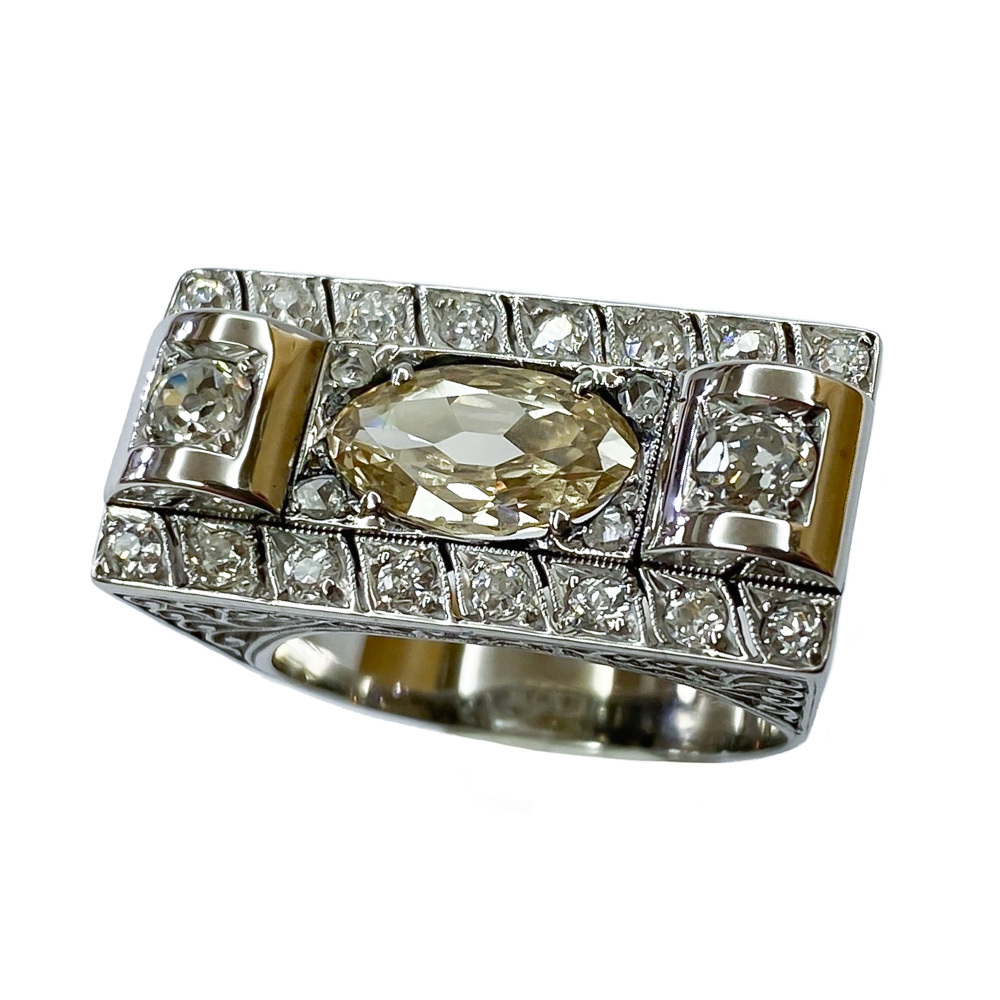
White gold ring with diamonds
Italy, 1930s
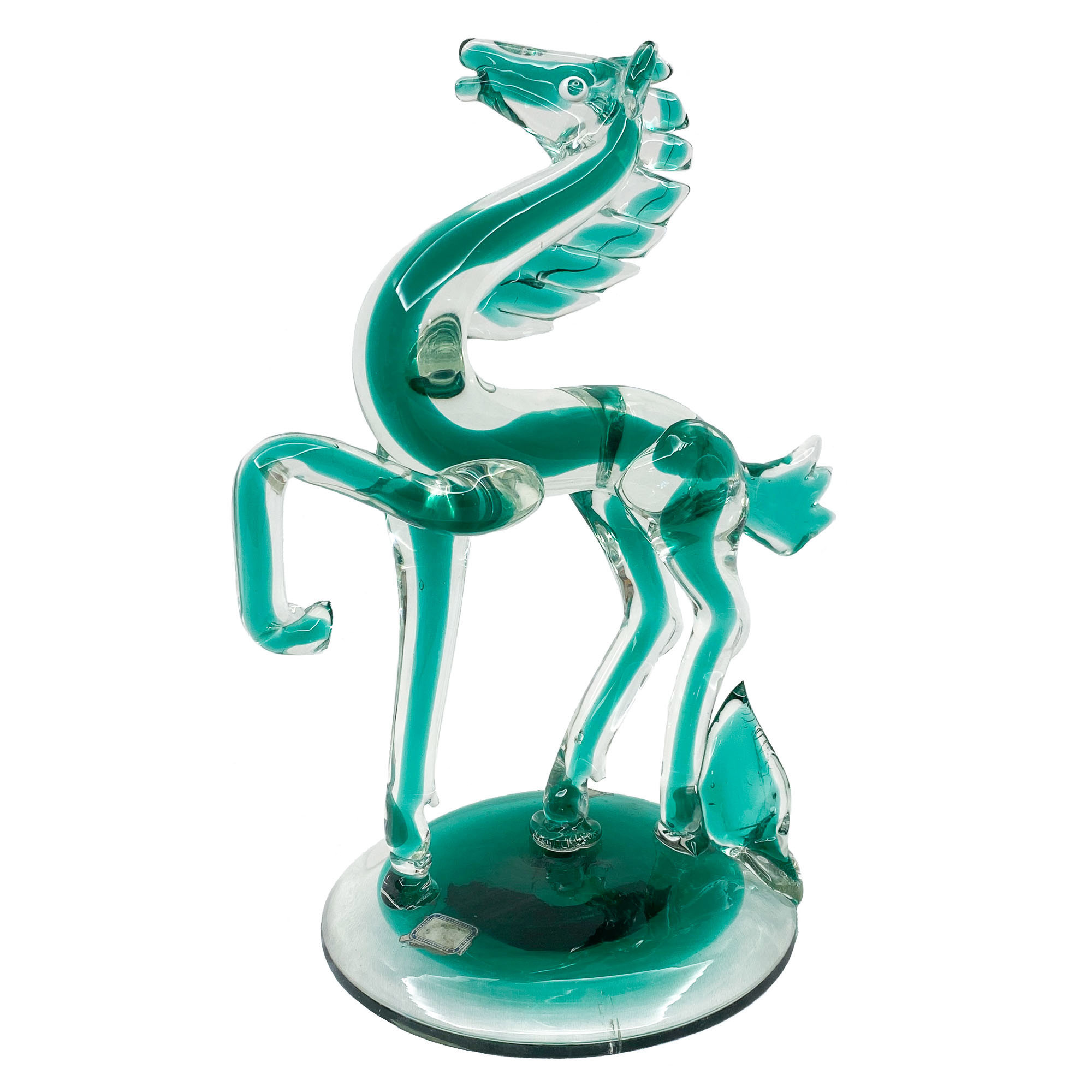
Murano glass horse
Ottone Ferro for A.Ve.M.
Murano, 1930s
At the end of World War I, Europe felt the need to move beyond the tragedy it had experienced. People only wished to immerse themselves in luxury, mundanity and excess. Art Déco belongs to this context. In fact, this artistic movement, which also became a lifestyle, diffused throughout the Old Continent in the 1920s, continuing into the following decade; while in the United States it arrived a little later, after 1929, becoming the emblem of the mundane and glamorous "Gatsby Style."
 
The power of Déco was its ability to look back at the past, from the ancient Egyptian and Aztec arts, to Greek sculpture and vases, to Byzantine mosaics, but at the same time to innovate it. The new hints offered by Cubism and Futurism, the colors of Fauvism, the Russian ballets of Sergei Djagilev, the music of Stravinsky, and the haute couture of Paul Poiret contaminated this style and made it what it became.
 
 
The society of the first postwar period no longer recognized itself in the overwhelming cult of the past; on the contrary, it adopted "modernity "as its code word. The first skyscrapers began to rise in every citiy; production, now industrialized, reached the masses; and technology came to unprecedented heights.
 
Thus was born a style of simplified lines, stylized and geometric forms, and bright colors that contrasted with the myth of nature that had characterized the previous decades with Art Nouveau. The Déco with its elegant and concise style provides its vision of the essence of modernity: pieces of extraordinary class are thus created, which have been coveted by international collectors for years.
 
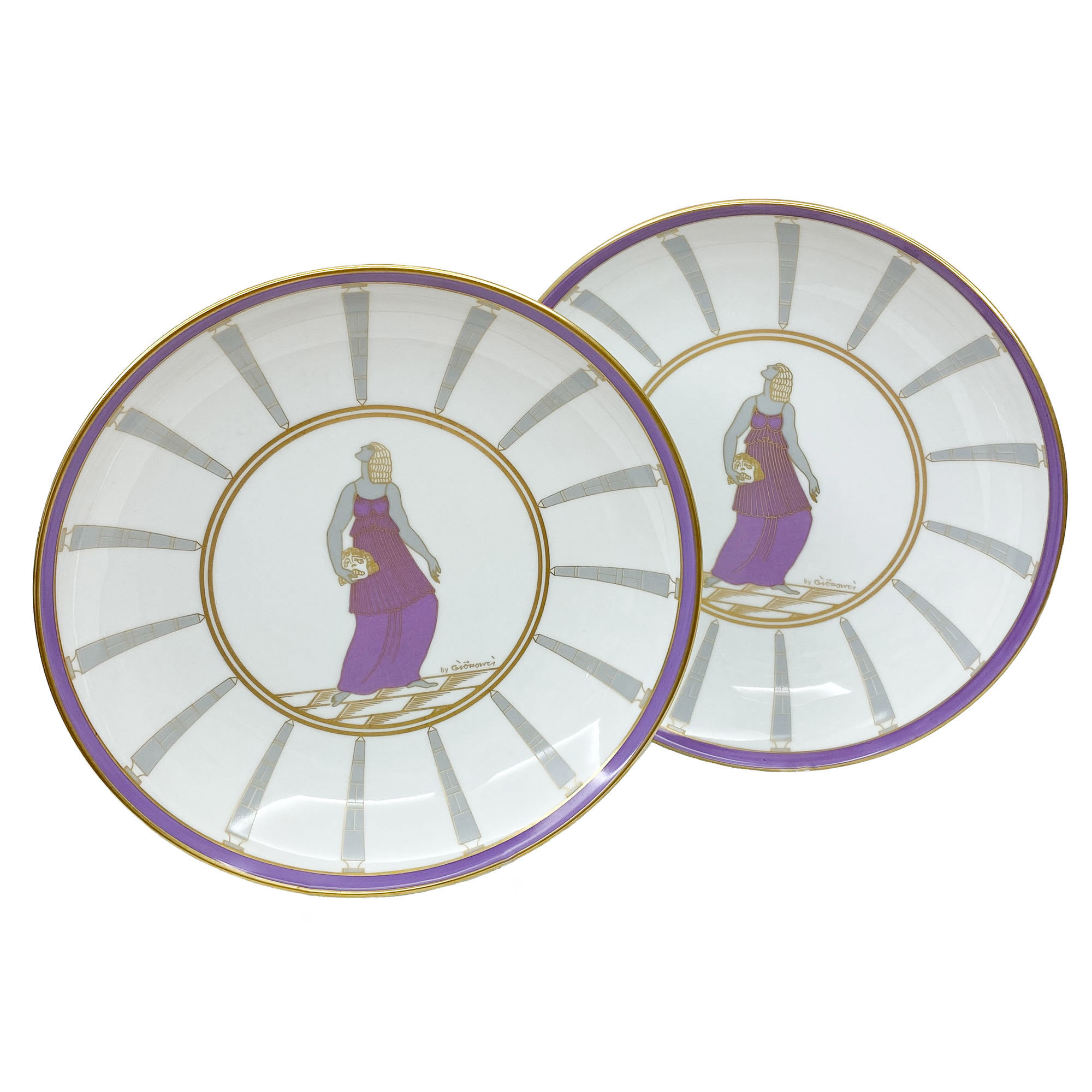
Le muse
Gio Ponti for R. Ginori
Italy, 1920s
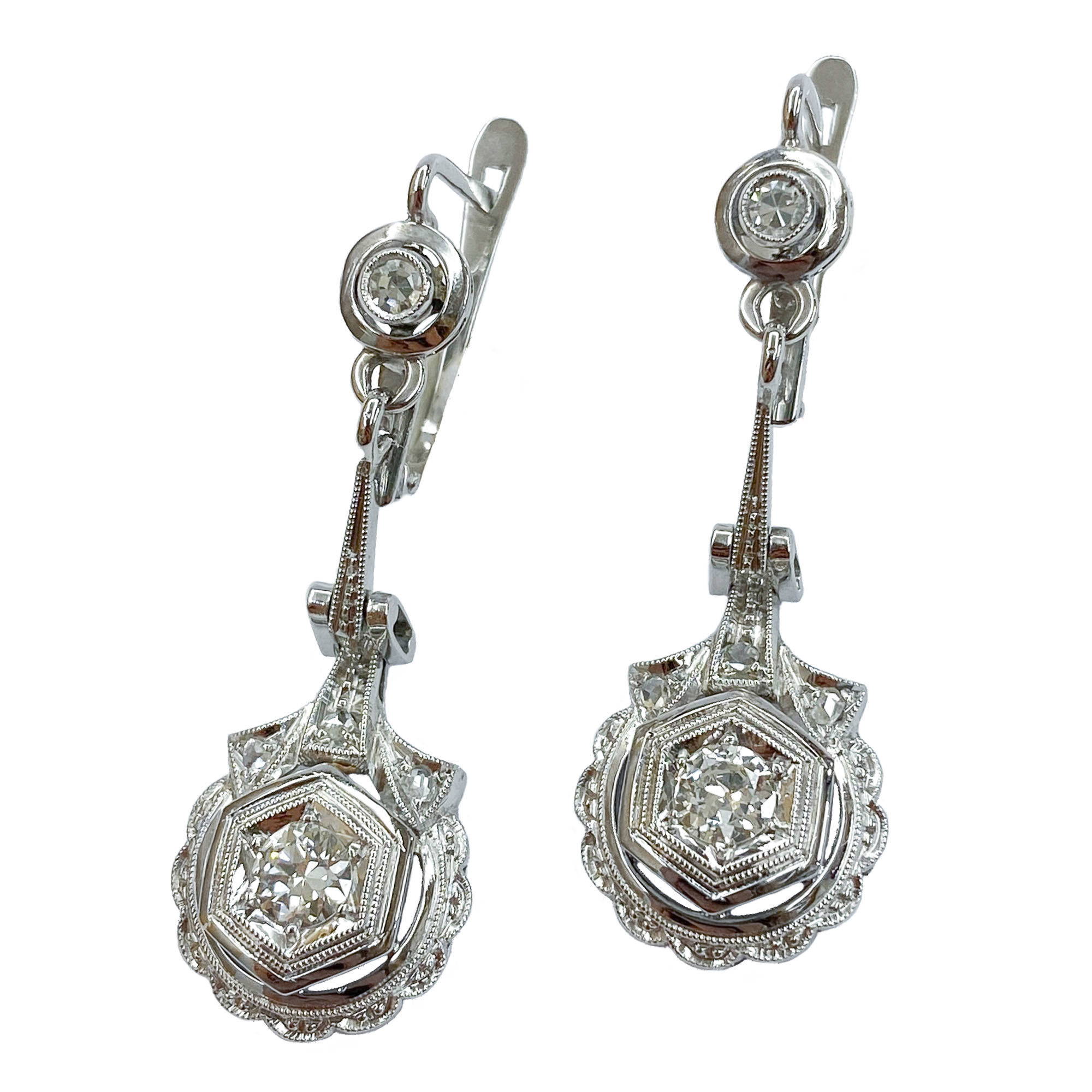
White gold earrings with diamonds
Italy, 1930s
ART DÉCO JEWELS
 
 
The absolute stars of the 1920s were women who, having successfully replaced men in the fields, factories, and offices during the war, were no longer willing to give up the freedom they had acquired. Art Déco reflected and appealed to the new woman, freed from the constraints of the corset and the feathered hat, eager for more comfortable clothes befitting her new status.
The Garçonne, like the protagonist of Margueritte's novel, has short hair, wears dresses that empha her slim silk-covered legs, uses makeup and perfumes. After work, modern women want to have fun on the city streets and, like men, indulge in a few drinks and cigarettes. Therefore, they need new accessories: cigarette cases, lipstick cases and powder cases soon become the new must-haves of feminine elegance.
Spilla in oro e platino con diamanti
Italia, Anni ‘20
 
 
Jewelry makers enhance this new image of women with authentic works of art made by clean, geometric lines characterized by strong color contrasts and great symmetry. Tapered necks, left uncovered by bob cuts, are highlighted by long earrings dangling to the shoulders; bracelets and wristwatches adorn bare arms; long strands of pearls or long chains with large pendants match perfectly with evening gowns.
 
Brooches are among the most beloved pieces of jewelry and are used not only pinned on clothes, but also as an adornment of every accessory: from the hat, to the belt and even on shoes!
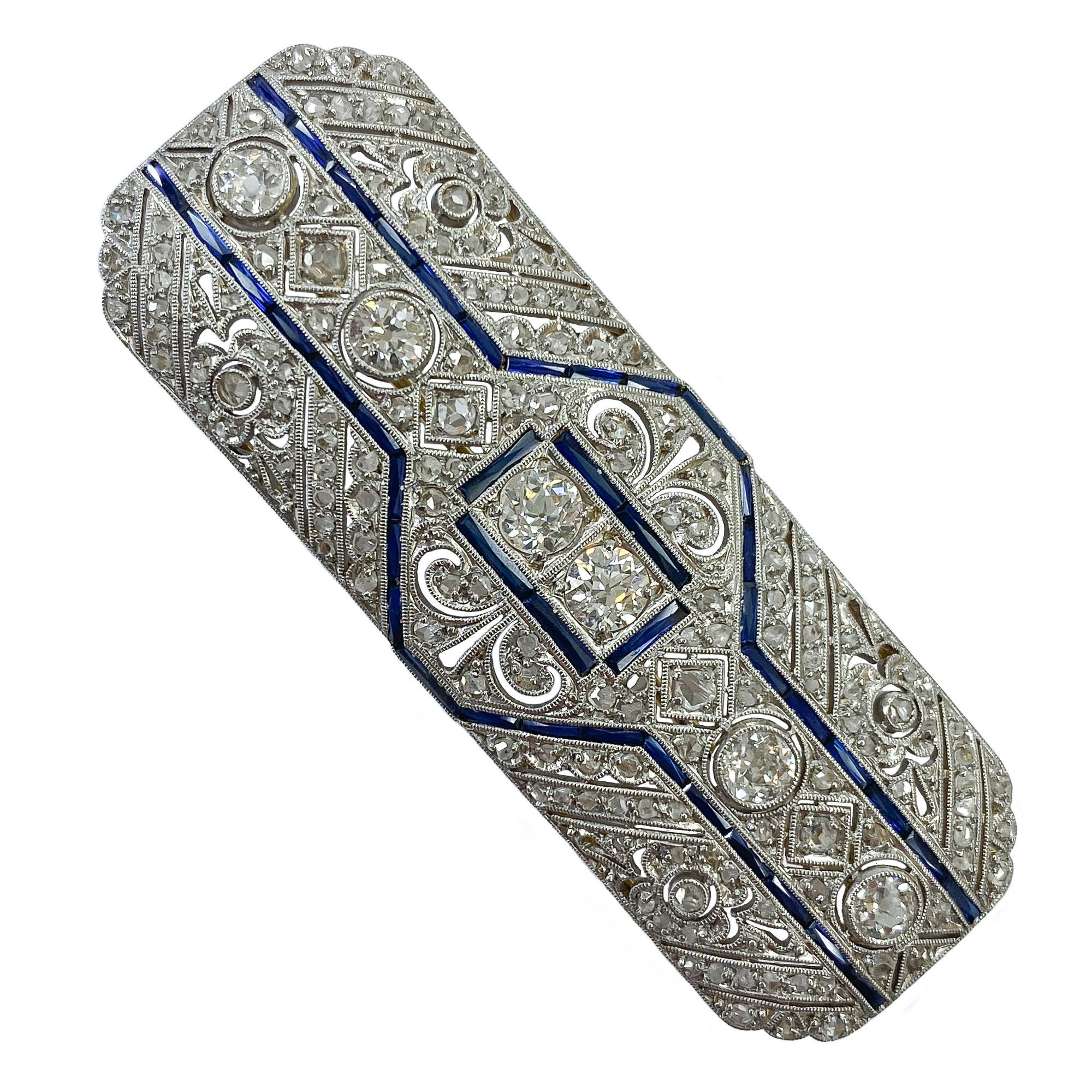
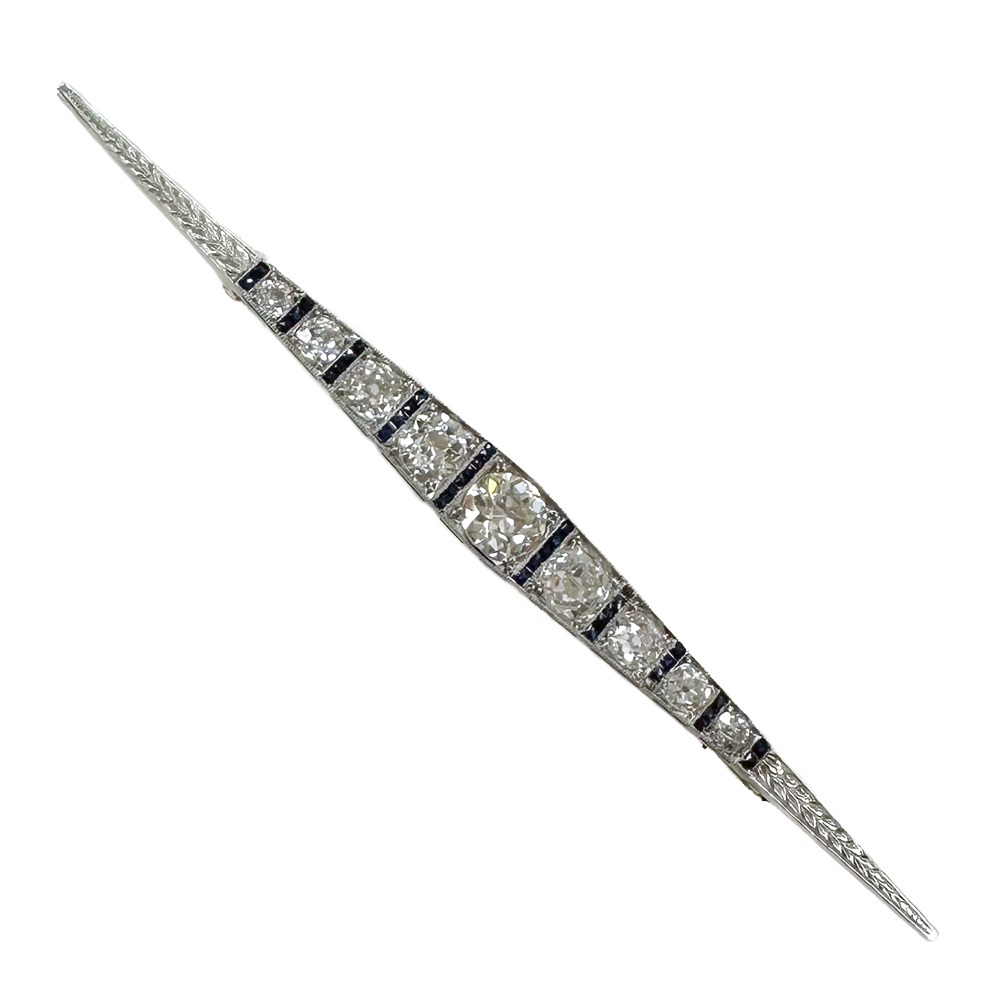
Spilla con diamanti e zaffiri
Italia, anni '30
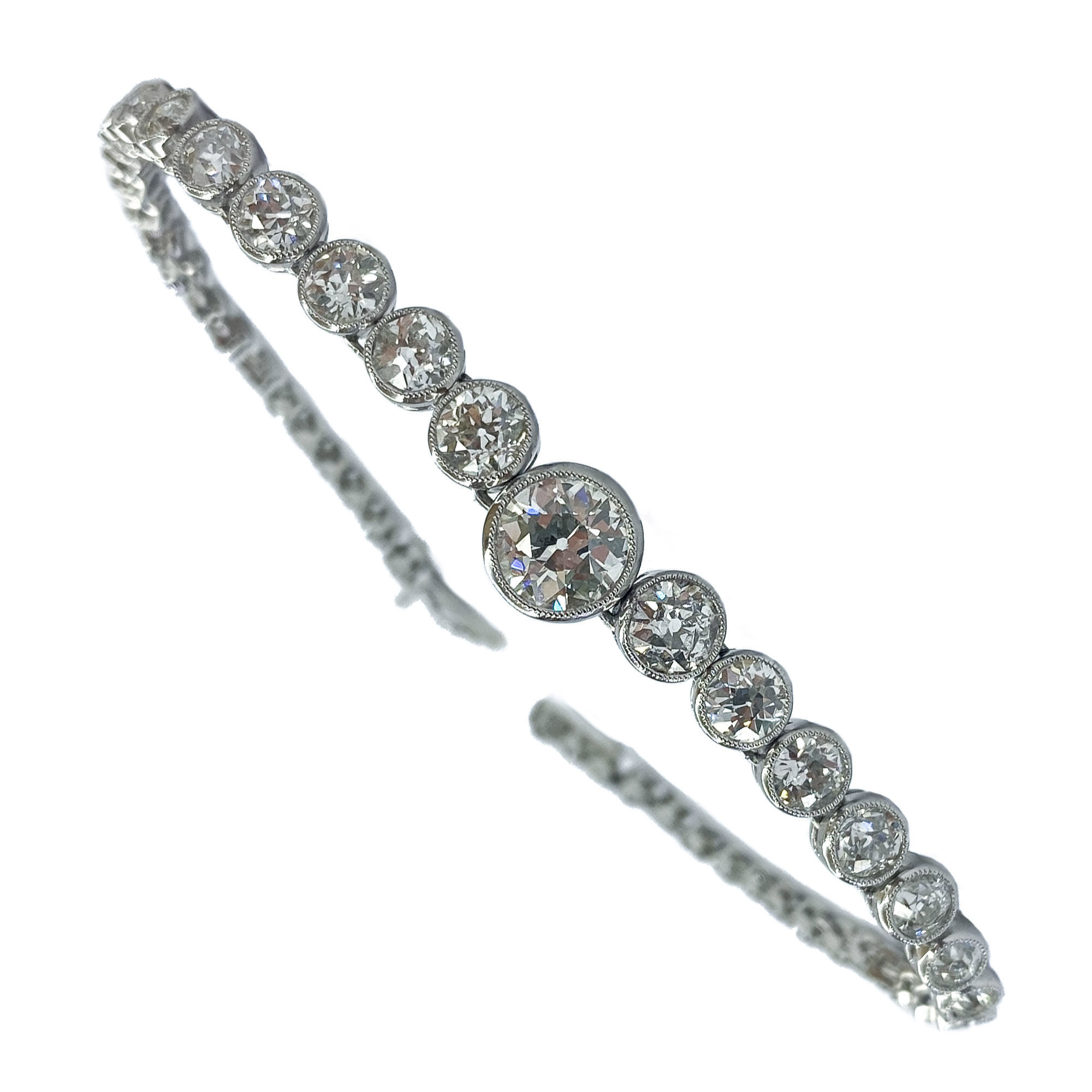
Platinum bracelet with diamonds
Italy, 1920s
Undoubtedly essential to the evolution of Déco jewelry was the discovery of metals other than yellow gold and silver, the only ones that had been used until then. Not only were different gold alloys formulated but, above all, platinum began to be systematically used and preferred.
 
This particularly malleable metal revolutionized diamond setting and gave incredible light to the gems associated with it. Its white tone contrasts well with the shades of colored stones, creating sophisticated combinations. In particular, the trend for black and white became popular in the 1920s, so a lot of jewelry was created by juxtaposing diamonds and onyx on a platinum setting.
The art of cutting stones also reached a moment of peak and cutters created shapes that enhance the inherent wonder of each gemstone. In 1919 Marcel Tolkowski crafted the first modern brilliant cut, the one that best exalts the diamond's shine and brilliance.
 
Also fundamental to the Déco period was the 'baguette' cut, which, with its elongated rectangle shape, allows for maximum stylization and symmetry of shapes. Beloved for colored gems was the 'cabochon' cut, whose convex surface allows for the maximum focus on chromaticism.
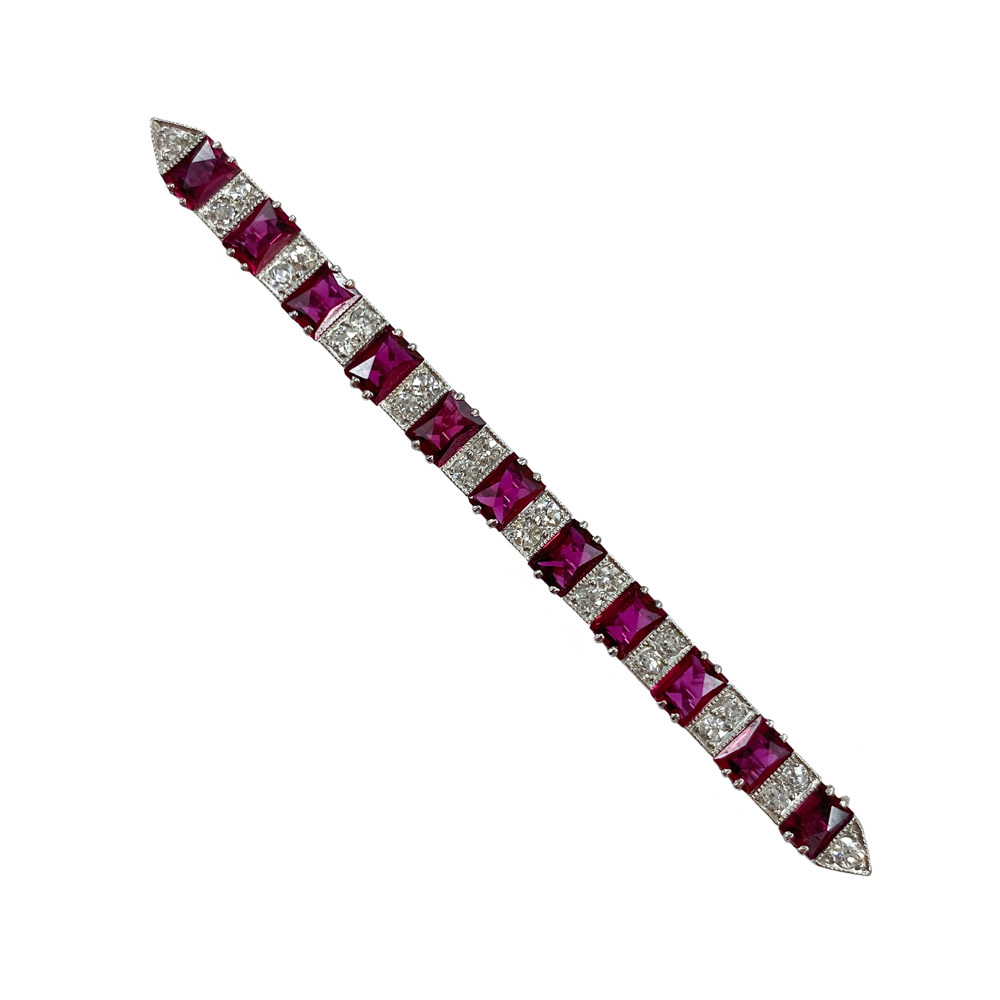
Platinum brooch with diamonds and rubies
Italy, Beginning 20th Century
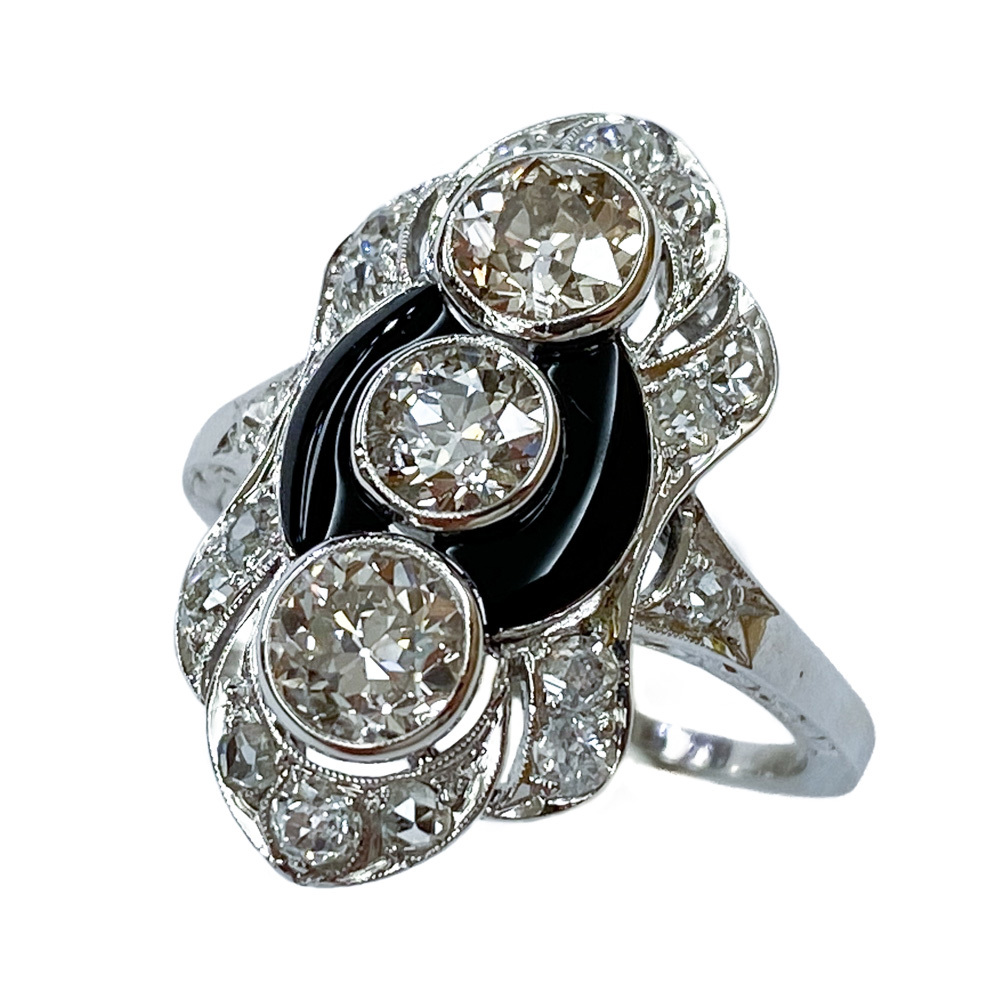
Ring with diamonds and onyx
Italy, 1920s
Thanks to the creativity of designers such as Pierre and Louis Cartier, Claude and Julien Arpels and Alfred Van Cleef, Georges Fouquet and Lucien Hirtz, and the incredible craftsmanship of master goldsmiths, the 1920s and 1930s saw the creation of revolutionary jewelry, created precisely to be admired. These pieces responded perfectly to the cultural impulses of the time.
 
That is why jewelry was at that time one of the most appreciated, esteemed and in-demand arts. It played a leading role, not only in the lives of everyday women, but also at all the shows and Universal Expositions, first of all the one held in Paris in 1925, which was the apotheosis of the magnificent Art Déco jewelry.

Watch the video and enjoy the beauty of déco jewels.

Become a Passionario

Chat with us