it / en
it / en

Earrings

History of the jewel that frames the face
Among all the jewels that have reached us through the centuries, few can boast a history as long and fascinating as that of the earring. Since the Bronze Age, earrings have captivated people across cultures and civilizations. Each era has assigned them different meanings, transforming them into symbols of wealth, elegance, good fortune, personality, or emancipation.
 
More than many other jewels, earrings have continually adapted to changing fashions and social roles, as their primary function has always been to frame the face of the wearer.
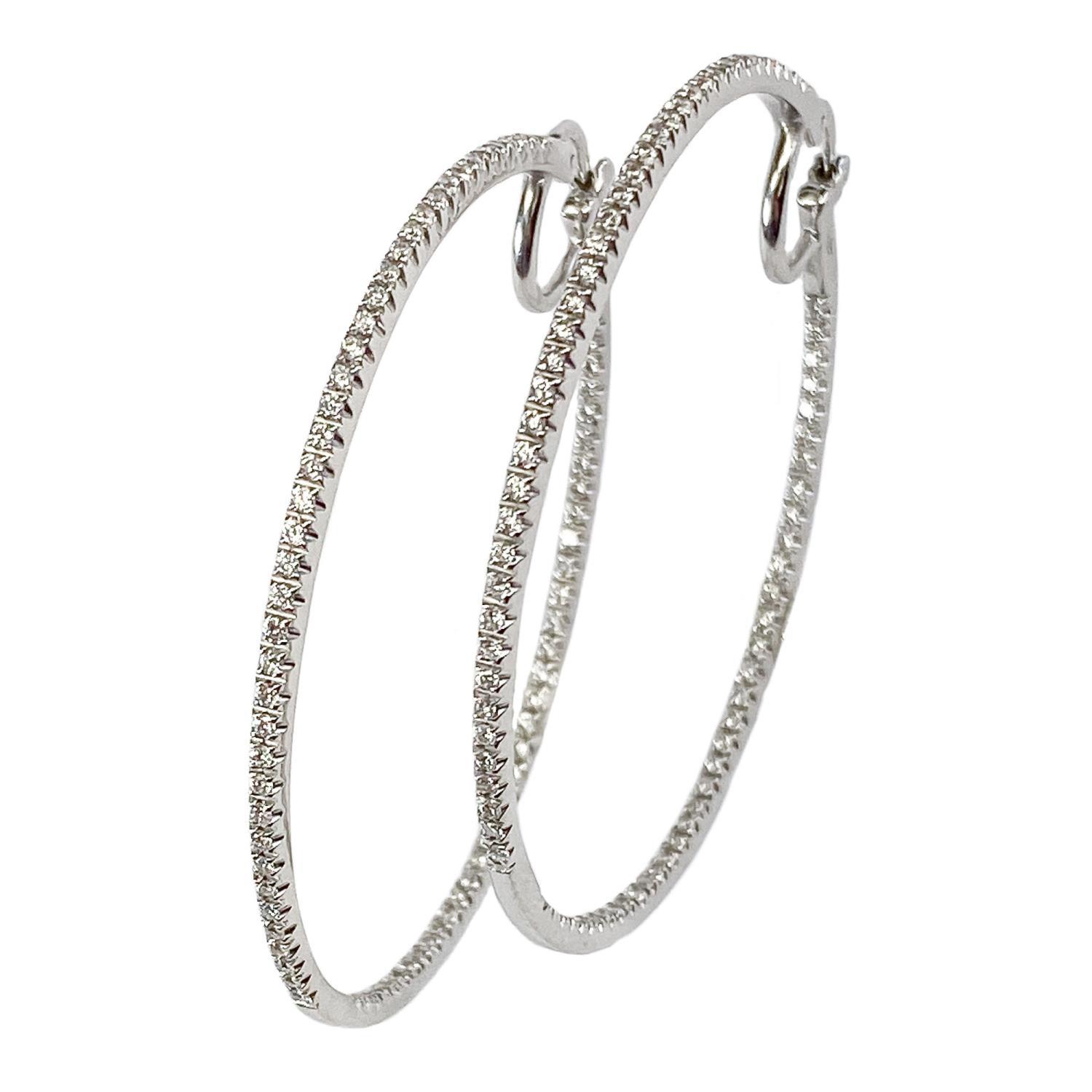
Hoop earrings with diamonds
18k white gold - Italy
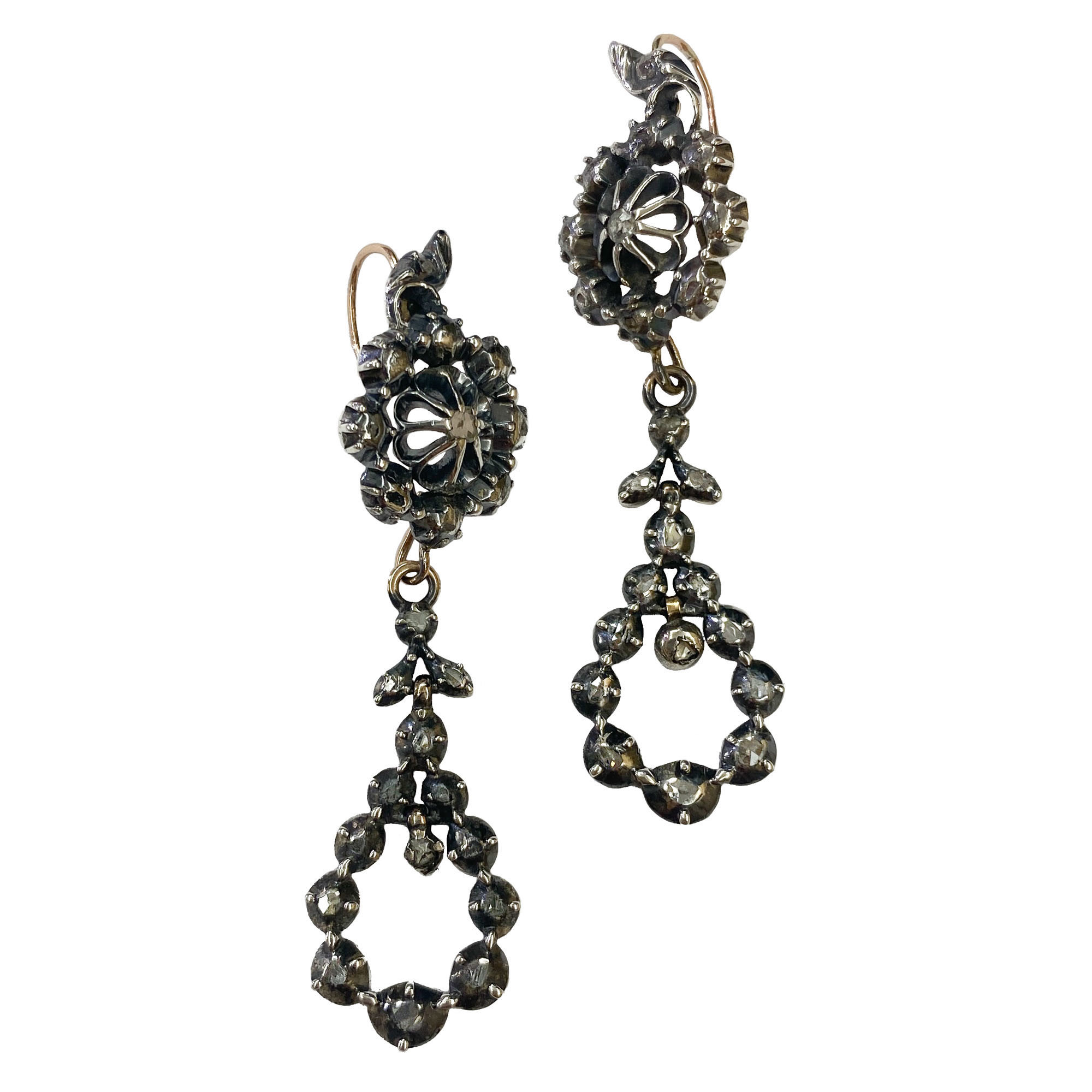
In the eighteenth century, when hairstyles were worn up and receptions were illuminated by candlelight, jewelry was expected to capture and reflect every flicker of light. Pendant earrings were particularly popular, featuring diamonds and precious stones mounted in light, articulated settings designed to maximize movement and brilliance.
 
The goal was not ostentatious, but rather elegance of reflection and refinement of craftsmanship.
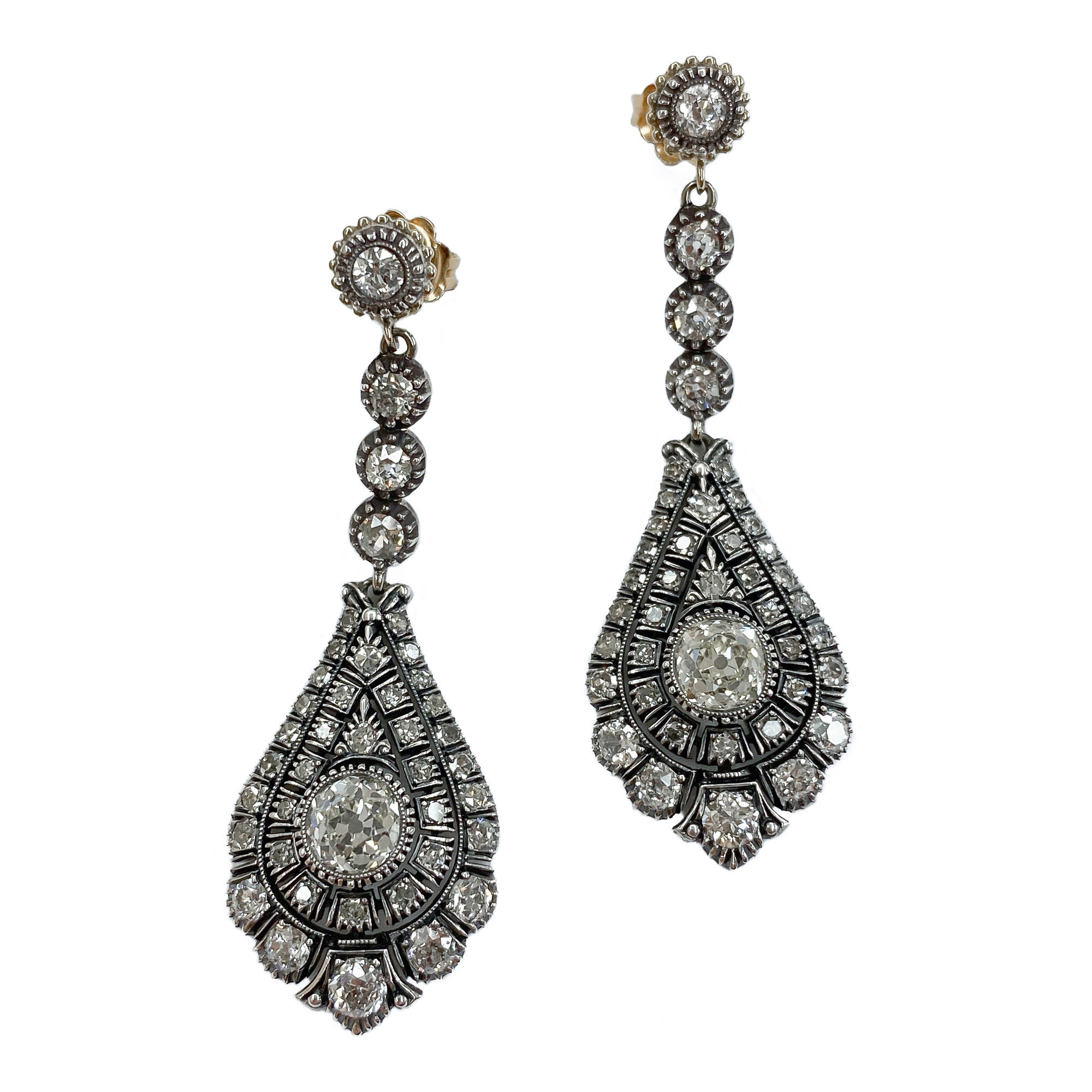
Diamonds earrings
Gold and silver - Venice 18th cent.
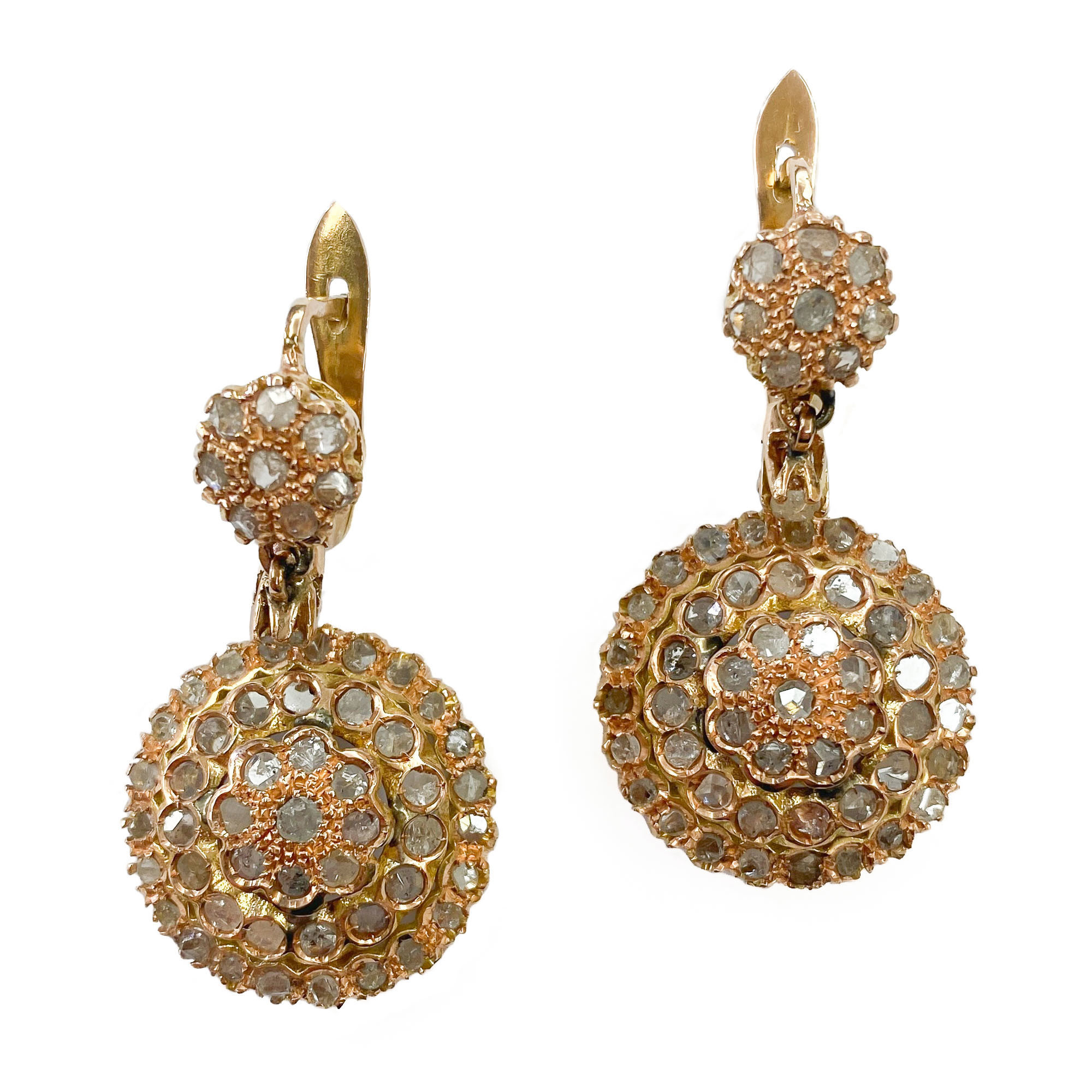
Diamonds earrings
Rose gold - Venice 19th cent.
The nineteenth century brought a shift in the language of jewelry. The Romantic movement encouraged a greater focus on the emotional and symbolic aspects of personal adornment.
 
Earrings were no longer intended merely to impress, but also to express the sensitivity and character of the wearer. Designs became more delicate than their eighteenth-century counterparts, and gemstones, particularly pearls, were often employed to create harmony and grace rather than sheer brilliance.
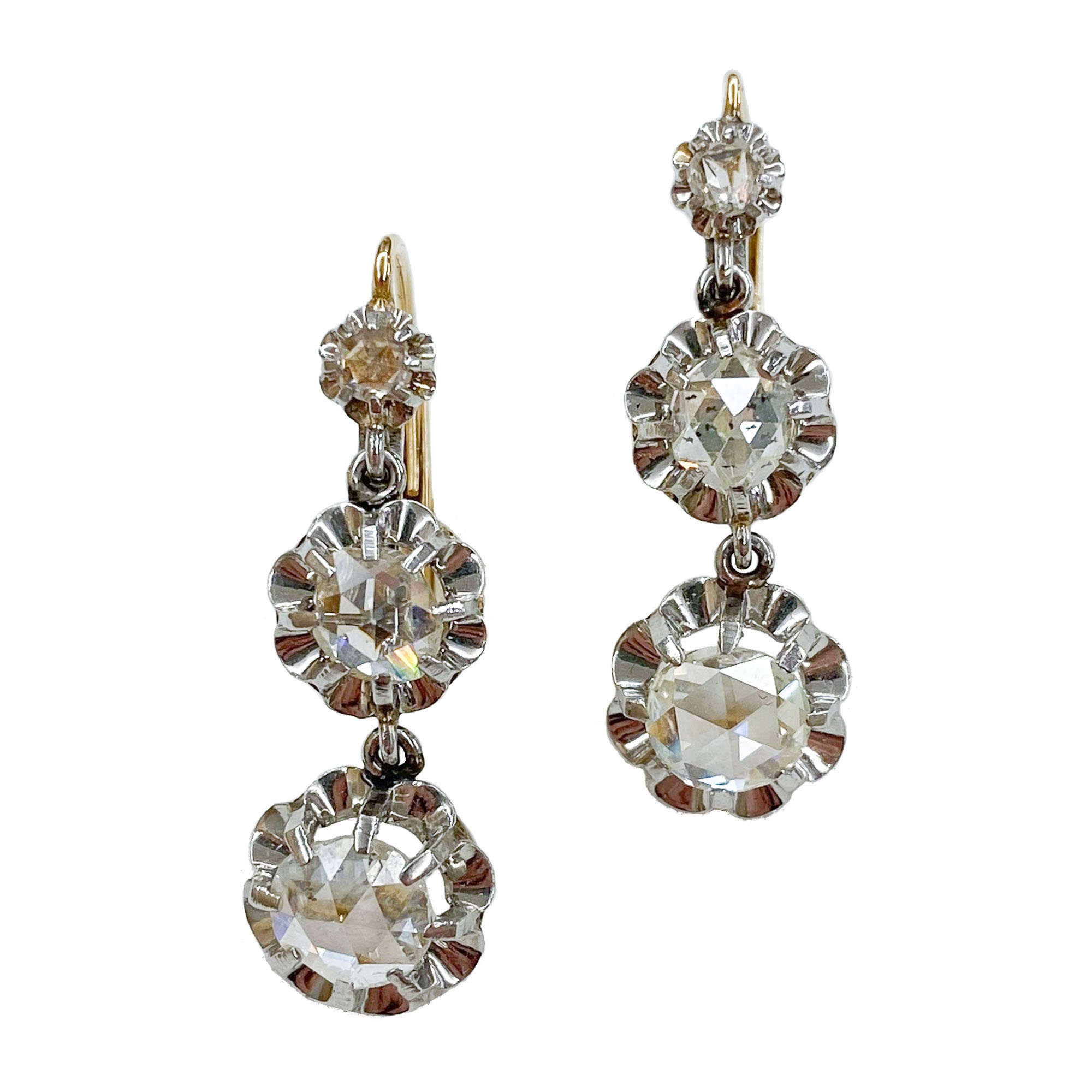
The beginning of the twentieth century marked a profound transformation in feminine taste. The emphasis moved away from the display of wealth toward a more balanced aesthetic characterized by flowing lines and exceptional craftsmanship. The influence of Art Nouveau favored forms inspired by nature, flowers, and the botanical world.
 
Earrings became lighter and acquired an almost ethereal grace, although they still occupied a more modest place compared to other forms of jewelry.
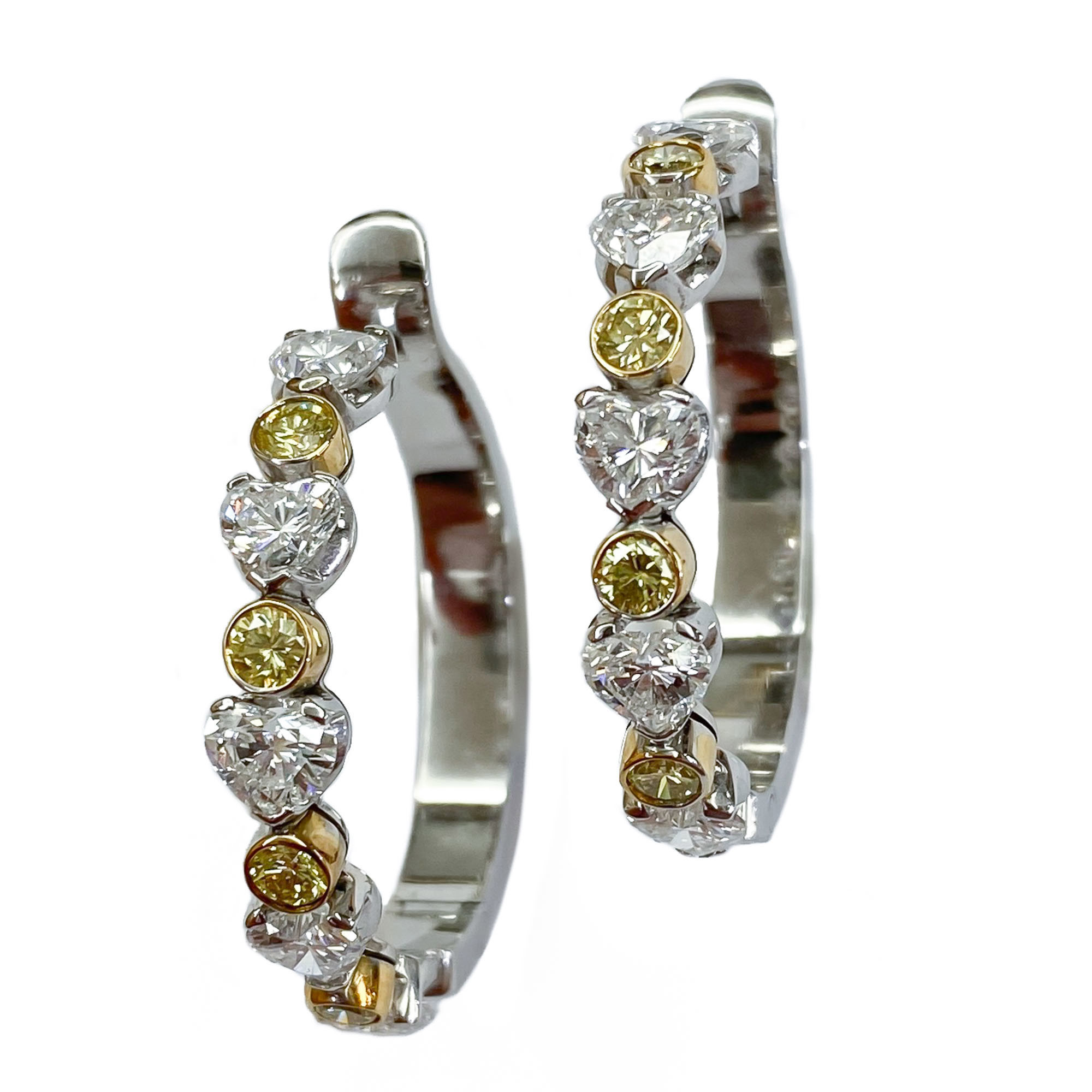
Diamond earrings
White and yellow gold - France early 1900s
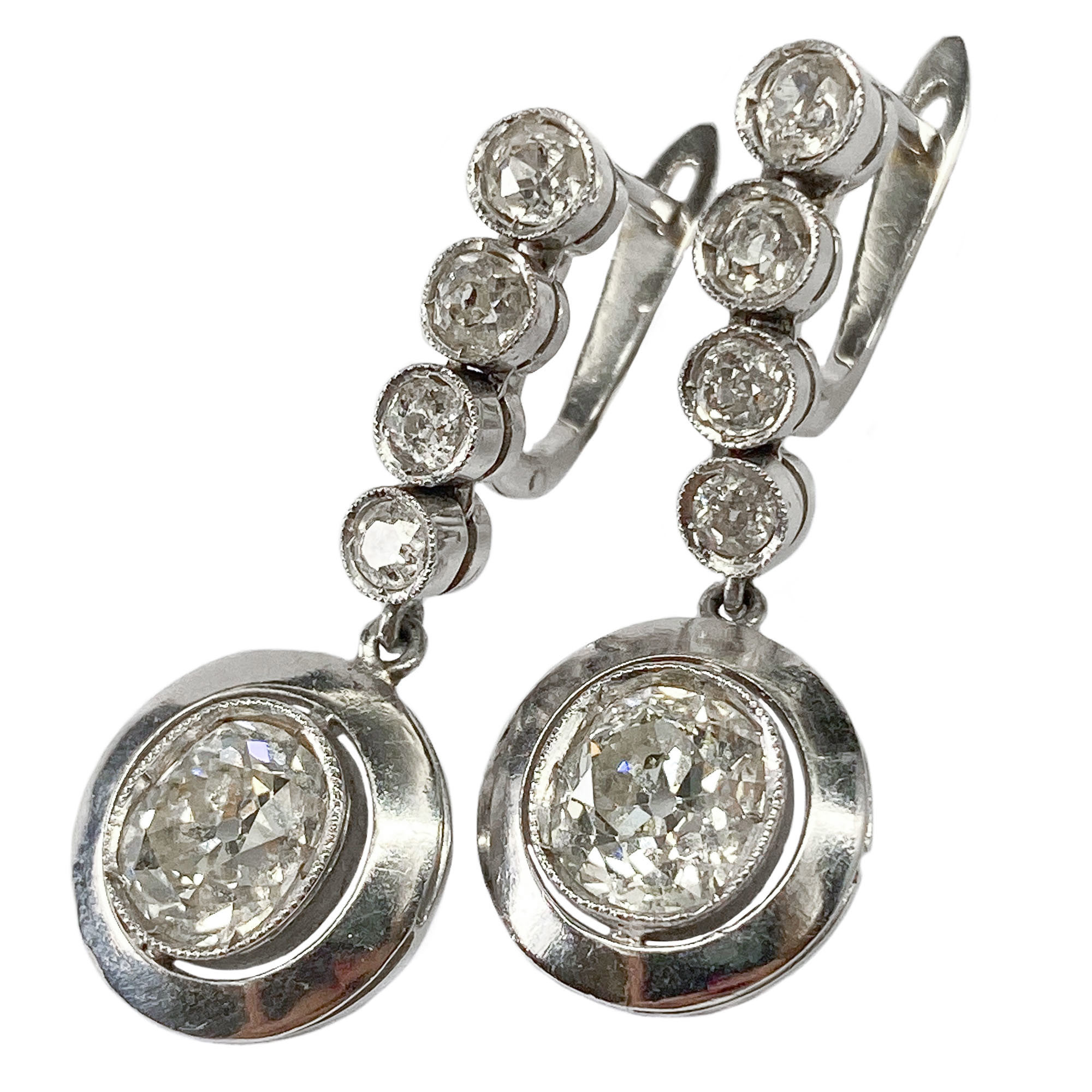
Dimonds earrings
18k white gold - Italy 1920s
The 1920s brought rapid change to both society and jewelry. Naturalistic motifs gave way to rigorous geometry, carefully studied proportions, and sophisticated contrasts.
 
Art Deco introduced a modern aesthetic that deeply influenced earrings, especially as women embraced the fashionable à la garçonne hairstyle, which naturally emphad them. Earrings became one of the defining accessories of the new feminine elegance. Platinum and diamonds dominated elegant, architectural compositions; shapes became sharper, symmetry assumed a central role, and jewelry reflected the optimism of a society looking confidently toward the future.
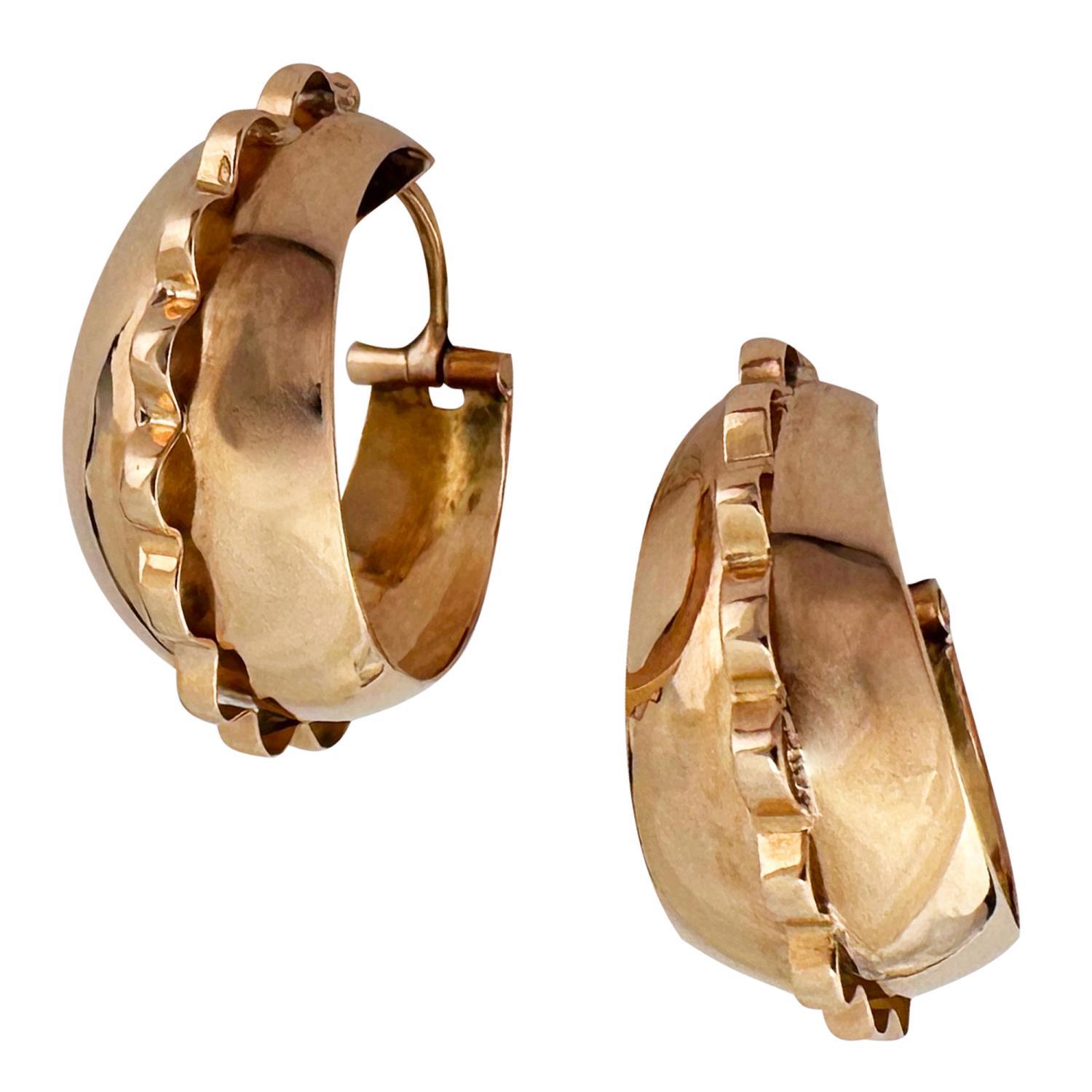
The Second World War inevitably affected the world of jewelry. Material shortages and changing social conditions led to a noticeable stylistic transformation. The postwar woman differed significantly from that of previous decades: more independent, more self-aware, and more active in public life. Jewelry began to reflect this new reality, favoring bold forms and strong individuality.
 
Earrings became more compact, more substantial, and more sculptural. Gold assumed a dominant role, and designs acquired an almost architectural presence. It was no coincidence that the 1940s saw the rise of jewelry capable of expressing strength and character.
Hoop earrings
18k red gold - Italy 1940s
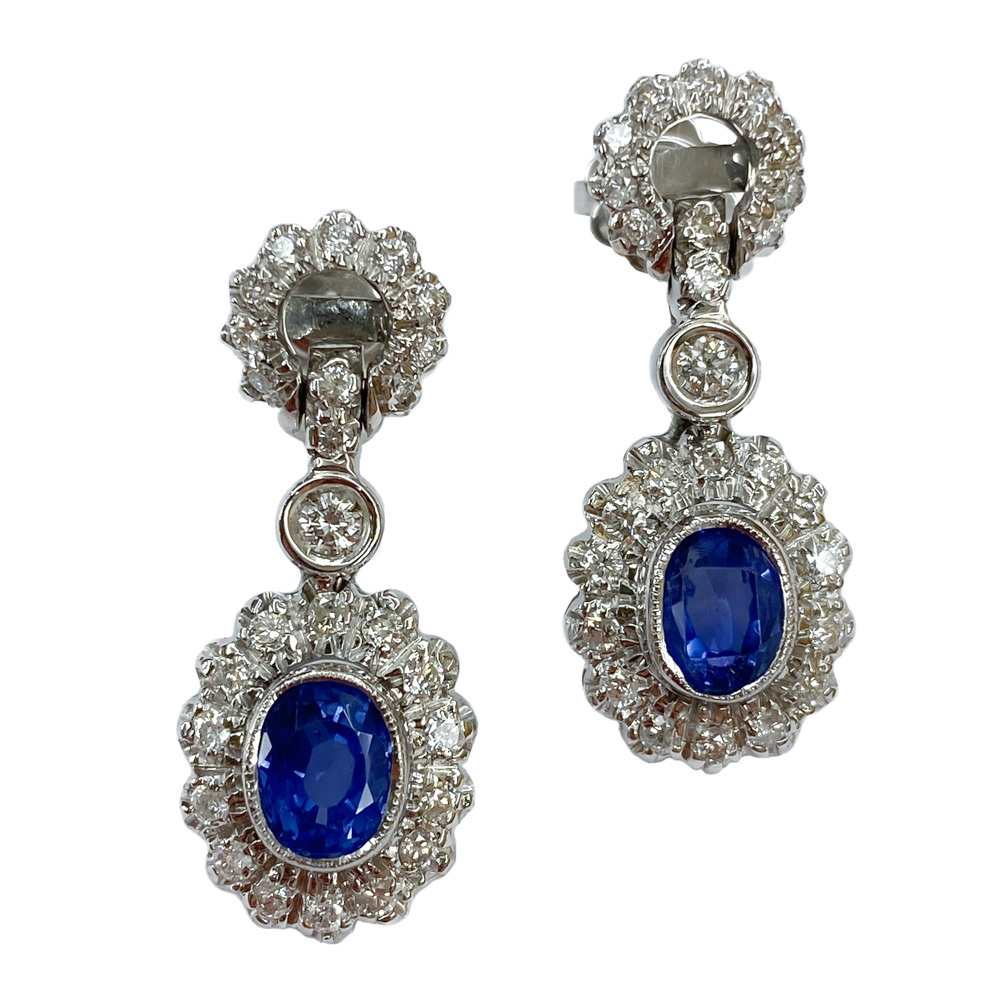
Sapphires and diamonds earrings
18k white gold - Italy 1950s
The jewelry of the 1950s, on the other hand, was characterized by an extraordinary emphasis on brilliance. Diamonds and colored gemstones once again took center stage, and color regained importance. Sapphires, rubies, and aquamarines were frequently combined with diamonds to create rich yet harmonious compositions.
 
Earrings once again accompanied a sophisticated and feminine fashion, in which every detail contributed to an image of elegance and perfection. It was the decade in which luxury returned to prominence, though expressed through controlled refinement rather than excess.
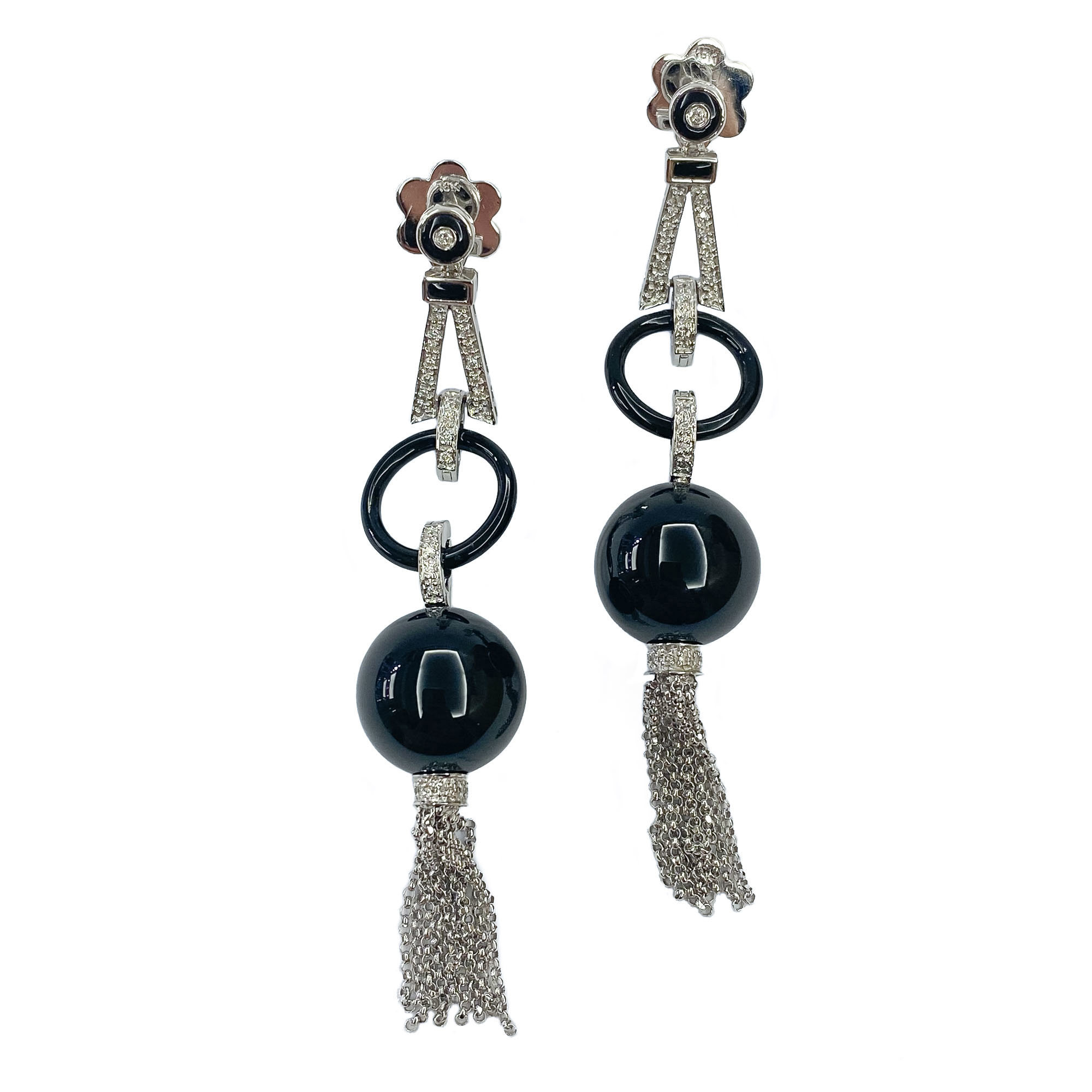
During the 1960s and 1970s, fashion underwent another renewal. Design entered everyday life, and earrings began to assume a different role.
 
Attention gradually shifted from the value of gemstones alone to the search for increasingly personal and recognizable forms. Lines became cleaner and more modern, and earrings started to be perceived as true design objects. No longer constrained by traditional models, they became a means of expressing individuality and character.
Onyx earrings
18k white gold - Italy 1970s
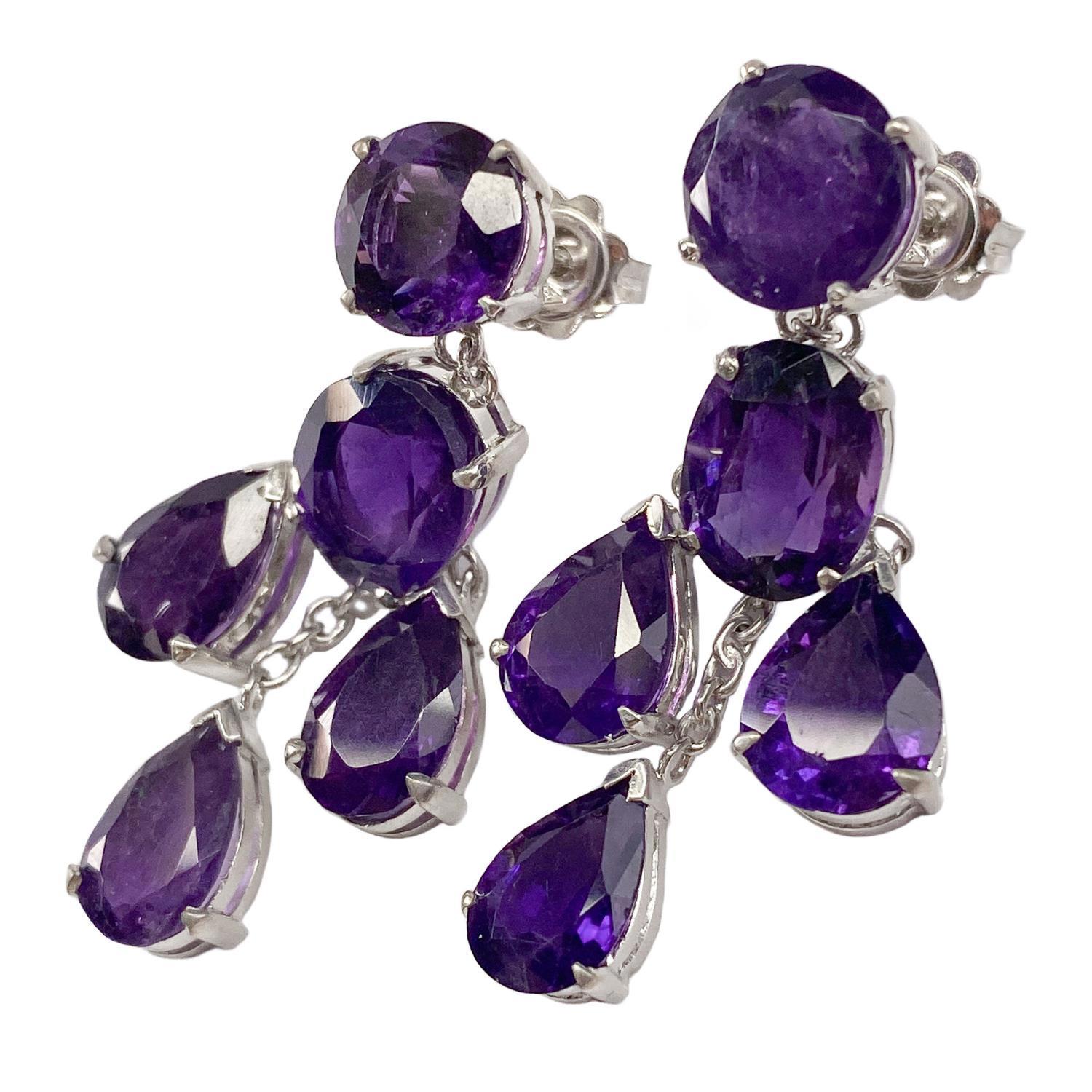
In the 1980s, this focus on personal expression continued through jewelry that embraced bold colors, important gemstones, and more structured settings. Earrings established themselves definitively as a central element of feminine style, capable of combining classic elegance with individual taste.
Amethysts earrings
18k white gold - Italy 1980s
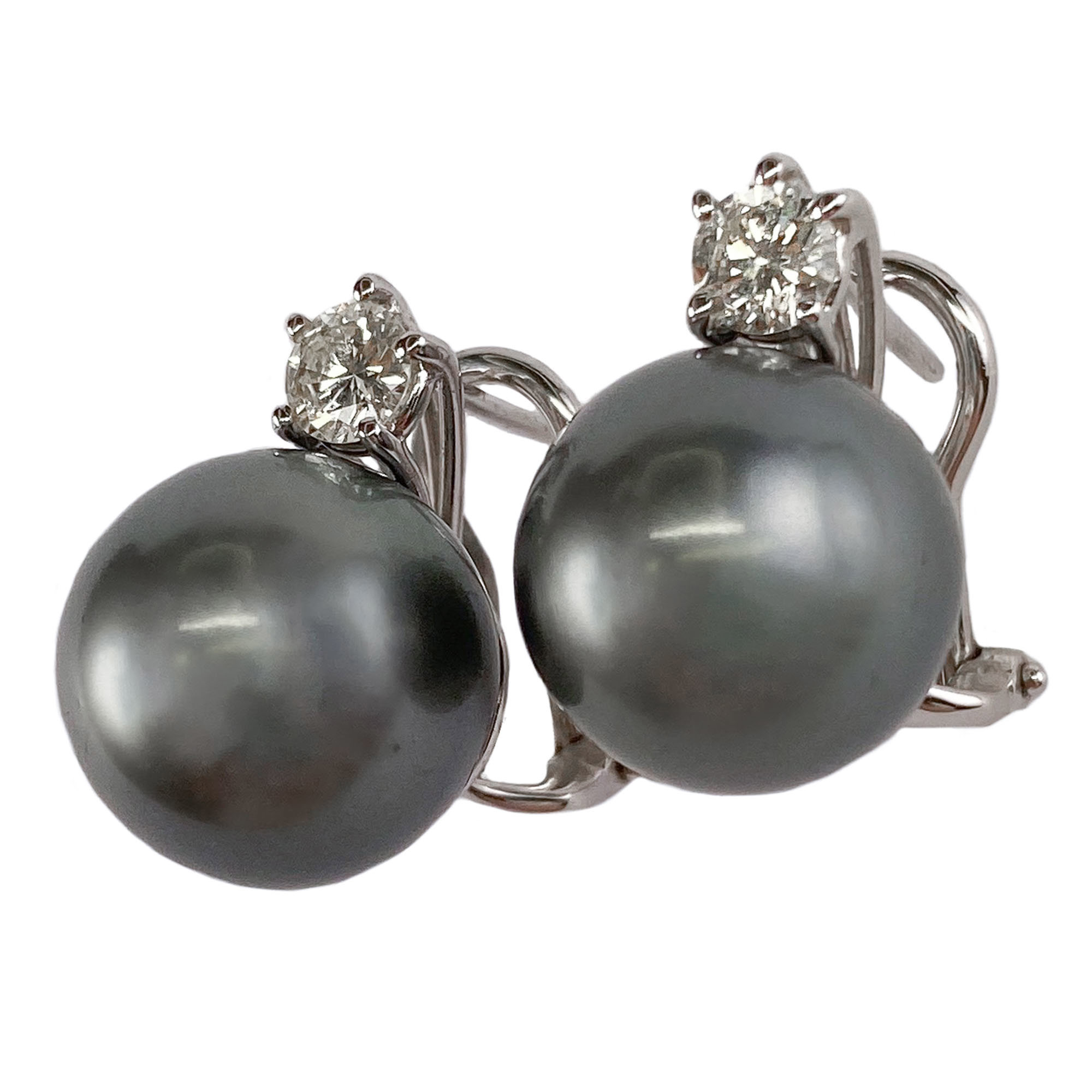
Pearls and diamonds earrings
18k white gold - Italy
The 1990s introduced a new phase of balance. Following the formal and chromatic experimentation of previous decades, jewelry sought greater versatility.
 
Earrings were increasingly designed to accompany everyday life rather than exclusively special occasions. Lines became cleaner, dimensions often more restrained, and wearability once again became a priority. Diamonds, pearls, and colored gemstones continued to coexist, but were reinterpreted through more understated and easily coordinated designs, in keeping with an increasingly international approach to fashion.
With the beginning of the new millennium, this trend evolved even further. Earrings shed any rigid rules and became among the freest forms of jewelry in terms of expression. Essential models such as solitaire studs coexist alongside elaborate creations, while the distinction between everyday jewelry and occasion jewelry has gradually faded.
 
Antique and contemporary styles have once again begun to dialogue, and growing numbers of enthusiasts have rediscovered the appeal of historic craftsmanship and period workmanship.
Spilla con diamanti e zaffiri
Italia, anni '80
Diamonds earrings
Gold and silver - Italy 19th cent.
Unlike many other forms of adornment, earrings have never truly disappeared. Their shapes, materials, and meanings have evolved, yet they have always retained a privileged place in the history of jewelry. From the sparkle of eighteenth-century diamonds to nineteenth-century pearls, from Art Deco geometries to the experimental designs of the late twentieth century, each era has left a distinctive mark.
 
Perhaps it is precisely this ability to reinvent themselves continuously that makes earrings one of the most fascinating and enduring jewels in history, still capable today of uniting elegance, identity, and beauty in a single small object.

Watch the video to find out more!

Become a Passionario

Chat with us